Thursday, 16 July 2026

Nature's Rarest Masterpieces: The World's Most Valuable Coloured Diamonds and the Science Behind Their Extraordinary Colours

 The Rarest Diamond Colours Ranked

While the classic colourless diamond remains the benchmark for brilliance and purity, some of the world’s most valuable gemstones owe their beauty to something entirely different rare imperfections deep within the Earth. These exceptional coloured diamonds, known as Fancy Colour Diamonds, represent some of the rarest natural treasures ever discovered.

Unlike colourless diamonds, which are prized for the absence of colour, fancy coloured diamonds derive their remarkable hues from trace elements, atomic irregularities and geological forces that occurred billions of years ago during their formation under immense heat and pressure.

Only around one in every 10,000 gem-quality natural diamonds possesses a naturally occurring fancy colour, and only a tiny fraction of these display the intense saturation required to achieve the highest values.

The Rarest Diamond Colours Ranked

1. Red Diamonds – The Rarest Diamond on Earth

Red diamonds occupy the pinnacle of rarity.

Red diamonds occupy the pinnacle of rarity.

Fewer than 30 true Fancy Red diamonds are known to exist worldwide, with most weighing less than one carat. The famous 5.11-carat Moussaieff Red Diamond remains one of the most celebrated coloured diamonds ever discovered.

Unlike many coloured diamonds, red diamonds contain no measurable trace elements responsible for their colour.

Instead, scientists believe their colour results from extreme plastic deformation of the diamond crystal lattice while deep within the Earth’s mantle. As enormous tectonic pressures distort the crystal structure, light passing through the diamond is selectively absorbed, producing its remarkable crimson appearance.

Because the exact combination of deformation required is extraordinarily rare, red diamonds remain virtually impossible to find.


2. Blue Diamonds – Coloured by Boron

Blue diamonds owe their magnificent colour to one of the rarest impurities found in diamonds—boron

Blue diamonds owe their magnificent colour to one of the rarest impurities found in diamonds boron.

Only a few atoms of boron replacing carbon atoms during crystal growth are enough to create shades ranging from pale blue to vivid ocean blue.

Boron also gives blue diamonds another unusual property they conduct electricity, unlike ordinary diamonds.

The legendary Hope Diamond, weighing 45.52 carats, is perhaps the world’s best-known blue diamond.

Natural Fancy Vivid Blue diamonds regularly command prices exceeding US$3–5 million per carat, making them among the world’s most valuable gemstones.


3. Pink Diamonds – Formed by Crystal Distortion

For decades, Australia’s Argyle Mine produced over 90% of the world’s pink diamonds before closing in 2020.

Like red diamonds, pink diamonds derive their colour not from impurities but from plastic deformation of the crystal lattice during formation.

The difference lies in the degree of distortion.

Slight deformation creates pink tones, while much greater distortion may produce the exceptionally rare red diamonds.

Because no new major source of pink diamonds has replaced Argyle, prices have risen dramatically over recent years.


4. Green Diamonds – Naturally Irradiated

Green diamonds receive their colour from natural radiation exposure over millions of years.

Radioactive minerals surrounding the diamond emit particles that alter the crystal’s atomic structure, affecting only the outer layers in most cases.

Unlike laboratory irradiation, natural irradiation occurs over geological time and is exceptionally uncommon.

The famous Dresden Green Diamond, weighing over 41 carats, is one of the finest examples known.


5. Orange Diamonds – Pure Fire

Pure orange diamonds are among the least frequently encountered fancy colours.

Their colour is generally associated with complex interactions involving nitrogen atoms within the crystal structure.

Finding an orange diamond without secondary yellow or brown modifiers is exceptionally rare.

Collectors prize diamonds graded simply as Fancy Vivid Orange because of their scarcity.


6. Violet Diamonds – An Enigmatic Beauty

Violet diamonds remain one of gemology’s greatest mysteries.

Scientists believe their colour may result from a combination of hydrogen impurities, crystal defects and trace structural irregularities.

Only a handful of significant violet diamonds exist, making them highly desirable among collectors.

Several originated from Australia’s Argyle Mine, further increasing their rarity.


7. Purple Diamonds – A Delicate Combination

Purple diamonds are even less common than many collectors realise.

Their colour often results from a combination of crystal deformation together with hydrogen-related defects within the crystal lattice.

Many display subtle pink or grey secondary hues.

Pure Fancy Purple diamonds remain exceptionally scarce.


8. Yellow Diamonds – Nature’s Sunshine

Yellow diamonds are created by the presence of nitrogen atoms replacing carbon atoms during crystal growth.

Nitrogen absorbs blue wavelengths of light, allowing yellow tones to dominate.

Yellow is the most common naturally occurring fancy colour, yet highly saturated Fancy Vivid Yellow diamonds remain rare and valuable.

The famous Tiffany Yellow Diamond, weighing 128.54 carats, demonstrates the extraordinary beauty achievable from this natural process.


9. Brown Diamonds – The Power of Pressure

Brown diamonds are among the most abundant fancy colours but still have fascinating origins.

Rather than impurities, their colour results primarily from plastic deformation within the crystal lattice caused by intense geological pressure.

The distortion changes the way light travels through the diamond.

In recent decades, carefully selected brown diamonds have gained popularity under luxury trade names such as Champagne, Cognac and Chocolate Diamonds.


How Trace Elements Create Colour

Every diamond begins as pure carbon.

However, during crystallisation deep beneath the Earth’s surface, tiny changes can occur.

Some carbon atoms may be replaced by other elements:

Element or Structural ChangeResulting Colour
BoronBlue
NitrogenYellow, Orange
Hydrogen-related defectsViolet, Purple
Plastic deformationPink, Red, Brown
Natural radiationGreen

These changes occur at the atomic level sometimes involving only a handful of atoms within billions of carbon atoms—yet they dramatically alter how the diamond interacts with light.


Why Are Fancy Coloured Diamonds So Rare?

Natural coloured diamonds require an extraordinary sequence of geological events.

First, the diamond must form approximately 150 to 250 kilometres beneath the Earth’s surface under immense pressure and temperatures exceeding 1,000°C.

Then, during or after formation, precisely the right combination of trace elements, radiation exposure or crystal deformation must occur without damaging the stone.

Finally, the diamond must survive billions of years before being transported to the Earth’s surface through volcanic kimberlite eruptions.

The probability of every one of these conditions occurring together is extraordinarily small.

That is why exceptional coloured diamonds continue to command record-breaking prices at auction and remain among the most coveted gemstones in the world.

DCLA Expert Insight

Understanding the origin of a diamond’s colour is one of the most specialised areas of modern gemology. Advanced laboratory analysis is essential to determine whether a colour is natural, treated or laboratory-induced, as many enhancement techniques can imitate nature’s rarest creations.

At DCLA (Diamond Certification Laboratory of Australia), sophisticated gemological testing enables the accurate identification and grading of natural fancy coloured diamonds, providing confidence for collectors, jewellers and investors alike.

In the world of diamonds, it is often nature’s tiniest imperfections that create its greatest masterpieces. From the almost mythical Fancy Red to the electrically conductive Fancy Blue, each coloured diamond tells the story of billions of years of geological evolution making every natural fancy colour diamond truly one of a kind.

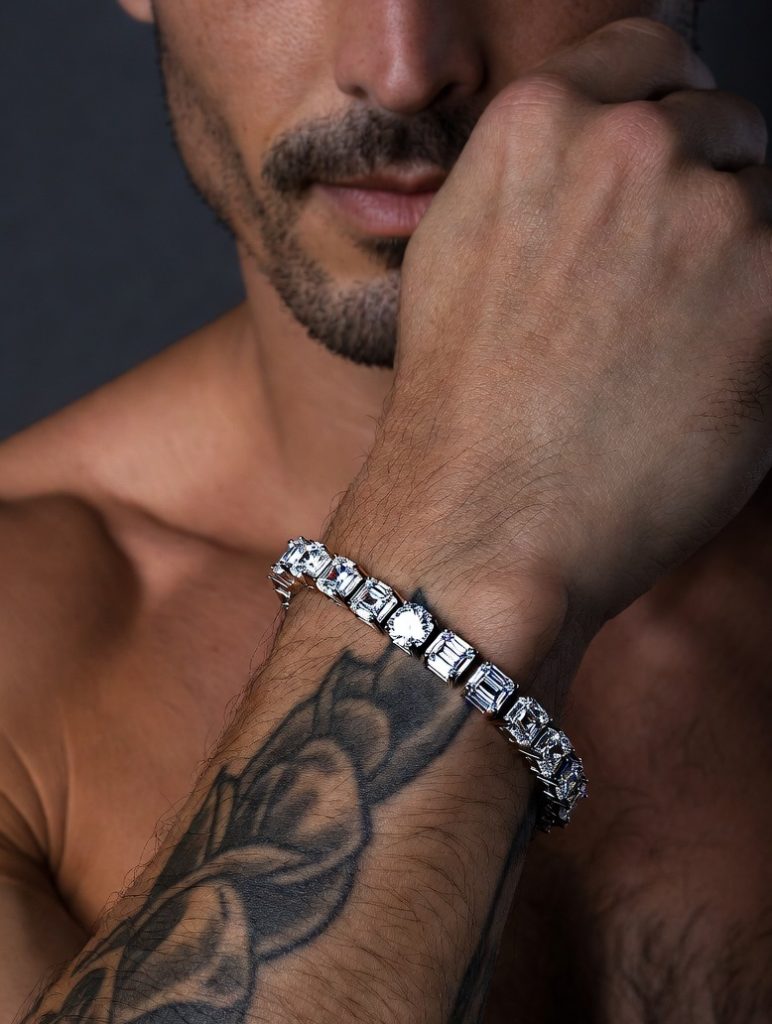
Wednesday, 15 July 2026

Oversized Tennis Bracelets: The Men's Jewellery Trend Defining Modern Luxury

 For decades, the diamond tennis bracelet was regarded as an elegant accessory reserved almost exclusively for women.

For decades, the diamond tennis bracelet was regarded as an elegant accessory reserved almost exclusively for women. Today, that perception has changed dramatically. One of the strongest trends in fine jewellery is the rise of the oversized men’s tennis bracelet—a bold statement piece that combines exceptional craftsmanship with contemporary masculine style.

Driven by celebrity influence, luxury fashion houses and changing attitudes towards men’s jewellery, oversized tennis bracelets have become an essential accessory for men seeking understated luxury with unmistakable presence. Fashion editors and jewellers alike have identified men’s tennis bracelets as one of the fastest-growing categories in luxury jewellery.

Bigger, Bolder and More Confident

Unlike traditional tennis bracelets featuring smaller diamonds in delicate settings, today’s men’s versions are designed to command attention.

The modern oversized tennis bracelet typically features:

  • Larger round or emerald-cut diamonds
  • Diamond sizes ranging from 4 mm to over 8 mm
  • Total diamond weights between 15 and 50 carats
  • Heavier, reinforced settings designed for everyday wear
  • Hidden box clasps with double safety catches for security

The result is a bracelet that delivers maximum brilliance while maintaining clean, symmetrical lines.

Luxury Meets Streetwear

One of the biggest changes in men’s fashion is the blending of luxury jewellery with casual clothing.

An oversized diamond tennis bracelet is no longer reserved for formal occasions. Today it is just as likely to be worn with:

  • Designer denim
  • Tailored T-shirts
  • Relaxed linen shirts
  • Bomber jackets
  • Luxury sneakers
  • Bespoke suits

The contrast between casual fashion and high-end jewellery creates a confident look that feels effortless rather than extravagant.

White Gold Leads the Way

While yellow gold continues its resurgence, 18-carat white gold remains the preferred metal for oversized men’s tennis bracelets.

Its neutral colour enhances the brilliance of diamonds while pairing seamlessly with stainless steel watches and platinum jewellery.

For those wanting an even more luxurious finish, platinum offers greater density, exceptional durability and a naturally white appearance that never requires rhodium plating.

Yellow gold versions are increasingly popular for collectors wanting a vintage-inspired aesthetic, while rose gold appeals to those looking for a more individual statement.

Natural or Laboratory-Grown Diamonds?

Oversized tennis bracelets require significant diamond weight, making them a considerable investment.

Natural diamonds remain the benchmark for rarity, long-term value and collectability, while laboratory-grown diamonds offer the opportunity to achieve a larger visual impact at a lower purchase price.

The choice ultimately depends on whether the buyer prioritises rarity and investment potential or size and affordability.

The Celebrity Effect

The popularity of men’s diamond jewellery has accelerated thanks to athletes, musicians and actors who regularly incorporate tennis bracelets into their everyday style.

Rather than appearing overly formal, today’s styling focuses on confidence and simplicity. Many wear a single oversized bracelet alongside a luxury watch, while others stack multiple bracelets to create greater visual impact.

Luxury fashion has increasingly embraced fine jewellery as an everyday expression of personal style rather than something reserved for special occasions.

Quality Matters

A well-made tennis bracelet should feel as impressive as it looks.

When purchasing an oversized bracelet, buyers should consider:

  • Secure individual stone settings
  • Excellent diamond matching in colour and clarity
  • Smooth flexibility across the entire bracelet
  • High-quality clasp construction
  • Professional finishing with no sharp edges or loose settings

Poor craftsmanship becomes increasingly noticeable as bracelet size increases, making precision manufacturing essential.

A Modern Classic

While fashion trends evolve, certain jewellery designs become timeless. The oversized men’s tennis bracelet has all the qualities of a future classic.

It offers sophistication without being conservative, luxury without unnecessary excess, and versatility that allows it to transition effortlessly from business attire to weekend wear.

For the modern gentleman, it represents more than simply wearing diamonds it reflects confidence, craftsmanship and an appreciation for exceptional jewellery.

As men’s fine jewellery continues its rapid evolution, one thing is becoming increasingly clear: the oversized tennis bracelet is no longer a passing trend. It has established itself as one of the defining luxury accessories of the modern era.

Source: DCLA

Tuesday, 14 July 2026

The Three Essential Jewellery Pieces Every Woman Should Own

 A Timeless Jewellery Wardrobe Beyond the Engagement Ring and Wedding Band

A Timeless Jewellery Wardrobe Beyond the Engagement Ring and Wedding Band


An engagement ring and wedding band are among the most treasured pieces of jewellery a woman will ever own. They represent love, commitment and life’s most significant milestones. However, beyond these iconic symbols, there are three jewellery pieces that form the foundation of a truly elegant and versatile collection.

These timeless pieces transcend fashion trends, complement virtually every wardrobe, and can be worn for decades. Whether crafted in platinum or gold and adorned with diamonds or coloured gemstones, they become heirlooms that tell a personal story.

The Three Essential Jewellery Pieces Every Woman Should Own

A Timeless Jewellery Wardrobe Beyond the Engagement Ring and Wedding Band

An engagement ring and wedding band are among the most treasured pieces of jewellery a woman will ever own. They represent love, commitment and life’s most significant milestones. However, beyond these iconic symbols, there are three jewellery pieces that form the foundation of a truly elegant and versatile collection.

These timeless pieces transcend fashion trends, complement virtually every wardrobe, and can be worn for decades. Whether crafted in platinum or gold and adorned with diamonds or coloured gemstones, they become heirlooms that tell a personal story.

1. Diamond Stud Earrings – The Ultimate Everyday Luxury

The Three Essential Jewellery Pieces Every Woman Should Own

7

If there is one piece of jewellery every woman should own, it is a pair of beautifully proportioned diamond stud earrings.

Simple yet sophisticated, diamond studs have remained the benchmark of elegance for generations. Their understated brilliance suits every age, every occasion and every style.

Why they’re essential

Unlike fashion jewellery, quality diamond studs never become outdated. They effortlessly transition from business meetings to formal dinners, weddings and casual weekends.

Women who prefer colour can choose sapphire, ruby or emerald studs, which offer a striking alternative while maintaining the same timeless appeal.

Best metal choices

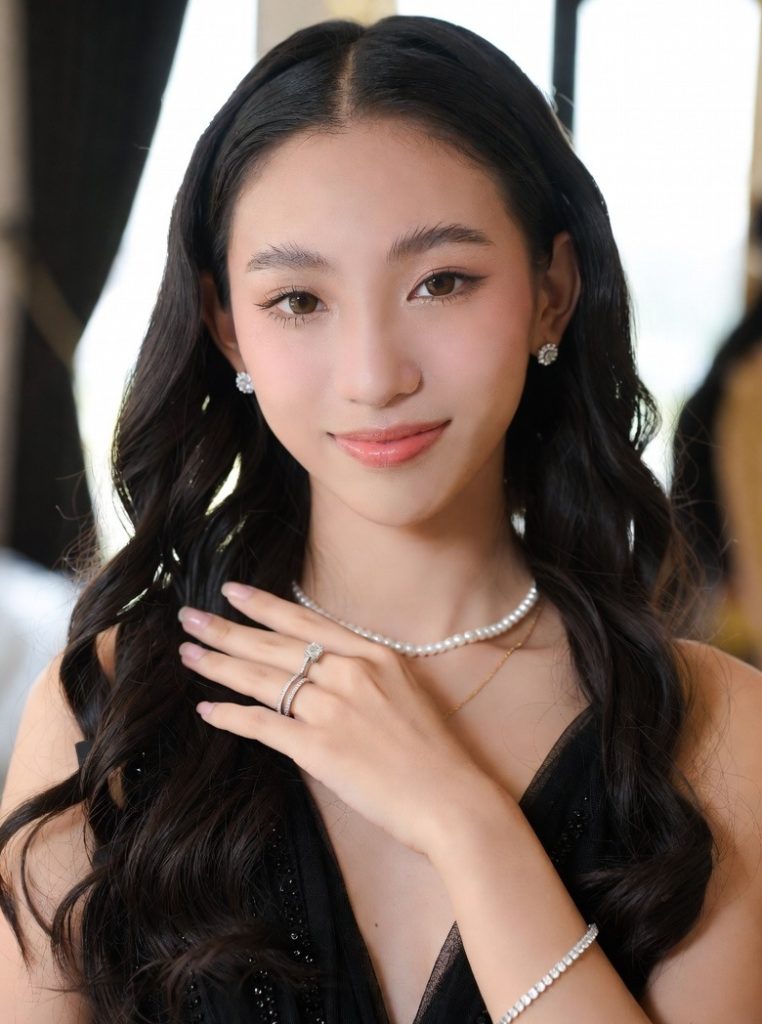
  • Platinum provides exceptional durability with a naturally white finish that enhances a diamond’s brilliance.
  • 18ct White Gold offers a contemporary appearance with excellent value.
  • 18ct Yellow Gold creates a beautiful contrast against white diamonds and pairs especially well with warmer skin tones.
  • 18ct Rose Gold offers a softer, romantic aesthetic that complements pink diamonds and many coloured gemstones.

When to wear them

Diamond or gemstone studs are among the few pieces of jewellery appropriate for almost every occasion—from the office and business travel to evening events and black-tie functions.


2. A Diamond Tennis Bracelet – Effortless Sophistication

The Three Essential Jewellery Pieces Every Woman Should Own

6

The diamond tennis bracelet has become one of the world’s most recognised luxury jewellery pieces.

Originally popularised during professional tennis in the 1980s, today’s tennis bracelet has evolved into an everyday symbol of understated luxury.

Its continuous row of perfectly matched diamonds creates elegant sparkle without overwhelming an outfit.

Why it’s important

Unlike statement jewellery reserved for special occasions, a tennis bracelet is remarkably versatile.

It can be worn alone for a refined appearance or layered with a watch or delicate bangles for a modern look.

For women wanting something distinctive, alternating diamonds with sapphires, rubies or emeralds creates a colourful interpretation of this classic design.

Best metal choices

  • Platinum for maximum longevity and security.
  • White gold for contemporary styling.
  • Yellow gold for timeless warmth and vintage appeal.

When to wear it

A tennis bracelet transitions effortlessly from professional attire to cocktail events and formal celebrations. Many women choose to wear theirs daily because of its comfort and enduring style.


3. A Signature Pendant or Necklace – Jewellery with Meaning

The Three Essential Jewellery Pieces Every Woman Should Own

6

Every jewellery collection deserves a centrepiece that carries personal significance.

A finely crafted pendant worn on a quality chain becomes one of the most personal pieces a woman can own.

Whether featuring a brilliant-cut diamond, an elegant coloured gemstone or a family heirloom stone, the pendant often represents an important milestone, anniversary or personal achievement.

Why it’s essential

Unlike rings or bracelets, a pendant naturally draws attention to the face while adding elegance without dominating an outfit.

It also layers beautifully with shorter or longer necklaces, allowing endless styling possibilities.

Diamond or coloured gemstone?

Diamonds remain the classic choice, but coloured gemstones allow personality to shine.

Popular options include:

  • Sapphires – symbols of wisdom, loyalty and elegance.
  • Rubies – representing love, confidence and passion.
  • Emeralds – admired for their rich green colour and timeless sophistication.
  • Aquamarines, spinels and tourmalines – increasingly popular among collectors seeking individuality.

When to wear it

A signature pendant can become an everyday favourite while also elevating formal attire. It is often the jewellery piece most closely associated with its wearer.


Building a Jewellery Collection That Lasts a Lifetime

Luxury jewellery should never be viewed simply as an accessory. Well-crafted pieces become part of a family’s history, often passed from one generation to the next.

When investing in fine jewellery, quality should always take precedence over size alone.

Consider:

  • Natural diamonds with independent grading certificates.
  • High-quality coloured gemstones with strong colour saturation and transparency.
  • Platinum or 18-carat gold for durability and lasting value.
  • Expert craftsmanship that ensures longevity and ease of future maintenance.

The DCLA Perspective

At the Diamond Certification Laboratory of Australia (DCLA), we believe exceptional jewellery begins with exceptional gemstones.

Whether selecting natural diamonds or rare coloured gemstones, independent certification provides confidence in quality, authenticity and value. Understanding the characteristics of diamonds and coloured gemstones enables buyers to make informed decisions that will endure for generations.

The most treasured jewellery is rarely the most extravagant. Instead, it is the jewellery worn often, cared for carefully and filled with personal meaning. A pair of elegant diamond earrings, a classic tennis bracelet and a signature pendant together form the foundation of a jewellery collection that will remain beautiful, relevant and cherished for a lifetime.

Source: DCLA

Monday, 13 July 2026

Jewellery Trends Defining 2026: Colour, Layers and Individual Expression

 Coloured Gemstones Take Centre Stage

For several years, minimalist jewellery dominated fashion, with fine chains and delicate diamond pendants becoming everyday staples. In 2026, however, the industry has taken a noticeable turn. Jewellery is becoming more expressive, more colourful and, above all, more personal.

Consumers are no longer choosing a single statement piece. Instead, they are curating collections that reflect their own style through layered necklaces, stacked rings, colourful gemstones and a mix of precious metals. The result is a fresh approach to fine jewellery that celebrates individuality rather than conformity.

Coloured Gemstones Take Centre Stage

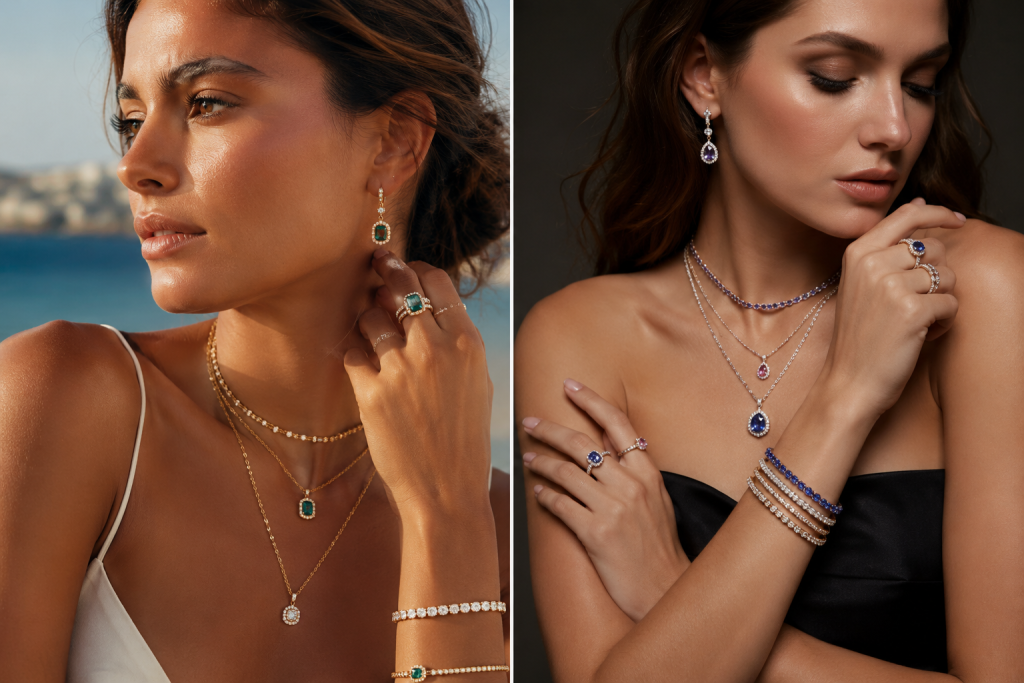
While diamonds remain the cornerstone of fine jewellery, coloured gemstones are experiencing a remarkable resurgence. Designers are increasingly incorporating vibrant sapphires, emeralds, rubies, spinels, tourmalines, aquamarines, morganites and even lesser-known gems into both everyday and high jewellery collections. Recent high jewellery collections from the world’s leading luxury houses have placed exceptional coloured gemstones at the forefront, reflecting growing consumer demand for rarity, individuality and vibrant colour.

Consumers are seeking jewellery that tells a story, and colour provides an emotional connection that white diamonds alone cannot always achieve.

Each gemstone carries its own symbolism:

  • Blue sapphires represent wisdom and loyalty.
  • Emeralds symbolise renewal and prosperity.
  • Rubies continue to represent passion and strength.
  • Tourmalines offer an extraordinary palette of colours that appeals to younger buyers.
  • Morganite and aquamarine provide softer pastel tones that complement modern fashion.

Increasingly, clients are choosing gemstones based not only on beauty but also on personal meaning, birthstones or unique colour combinations.

Layering Has Become an Art Form

One of the strongest trends throughout 2026 is jewellery layering.

Rather than wearing a single necklace or bracelet, consumers are combining multiple pieces of varying lengths, textures and gemstone colours to create a personalised look. The trend extends across virtually every jewellery category:

  • Multiple necklaces worn together.
  • Diamond tennis necklaces paired with coloured gemstone pendants.
  • Stacked bangles and bracelets.
  • Several rings worn across both hands.
  • Earrings featuring multiple piercings with coordinated designs.

Layering allows jewellery collections to evolve over time. Instead of purchasing one large statement piece, clients can add individual items over many years, creating combinations that are unique to them. The growing popularity of personalised layering has become one of the defining luxury jewellery trends of the year.

Mixing Metals Is No Longer a Fashion Mistake

For decades, jewellery etiquette suggested that yellow gold should never be worn with white gold or silver.

Today, that rule has largely disappeared.

Designers are actively encouraging combinations of yellow gold, white gold, rose gold and platinum within the same outfit. Mixed-metal jewellery creates greater versatility and allows existing collections to work together rather than limiting clients to one metal colour. Fashion editors and luxury designers now regard mixed-metal styling as one of the year’s defining jewellery looks.

Larger Gemstones Are Making a Comeback

After years of understated designs, larger centre stones are once again attracting attention.

This does not necessarily mean extravagant jewellery. Instead, jewellers are using bold coloured gemstones as centrepieces, surrounded by refined diamond settings that allow colour to become the hero.

Oval, emerald-cut and cushion-cut gemstones remain particularly popular due to their ability to maximise colour while maintaining elegant proportions.

Personalisation Continues to Drive Buying Decisions

Perhaps the biggest change is the consumer’s desire for jewellery that feels unique.

Rather than following trends alone, buyers increasingly want pieces that represent milestones, family, travel or personal achievements.

Custom-designed engagement rings featuring coloured centre stones continue to grow in popularity, while remodelled heirloom jewellery allows families to preserve sentimental value in contemporary designs.

Bespoke manufacturing has become one of the fastest-growing areas of the jewellery industry as clients seek one-of-a-kind creations that cannot be replicated by mass production.

Natural Diamonds Continue to Complement Colour

Although coloured gemstones are enjoying unprecedented popularity, natural diamonds remain the foundation of fine jewellery.

Rather than replacing diamonds, coloured stones are enhancing them.

Diamond halos surrounding vibrant sapphires, emerald side stones paired with oval diamonds, and alternating diamond-and-gemstone tennis bracelets are all becoming increasingly common.

The contrast between colourless diamonds and richly saturated gemstones creates visual depth while maintaining the timeless elegance that natural diamonds have always provided.

Quality Matters More Than Ever

As colourful jewellery becomes increasingly desirable, buyers should remember that not all gemstones are equal.

Natural gemstones vary enormously in colour, clarity, cut and origin, while laboratory-grown alternatives are becoming more widely available across several gemstone categories.

Professional grading and independent laboratory assessment remain essential for consumers seeking confidence in the authenticity and quality of significant gemstone purchases.

Whether purchasing a natural diamond, a vivid sapphire or an exceptional emerald, independent certification provides assurance regarding identity, treatments and quality characteristics.

Looking Ahead

The jewellery industry is entering a vibrant new era where individuality is replacing uniformity. Layered jewellery, colourful gemstones, mixed metals and bespoke design are redefining luxury for a new generation of buyers.

Rather than following rigid fashion rules, today’s consumers are building collections that evolve over time combining diamonds with coloured gemstones, vintage pieces with contemporary designs, and treasured heirlooms with modern craftsmanship.

For jewellers, designers and laboratories alike, the trend is clear: jewellery is becoming increasingly personal, expressive and colourful, with quality, authenticity and expert craftsmanship remaining at the heart of every exceptional piece.

Source: DCLA

Friday, 10 July 2026

WFDB Leadership Vote Signals a Turning Point for the Global Diamond Trade

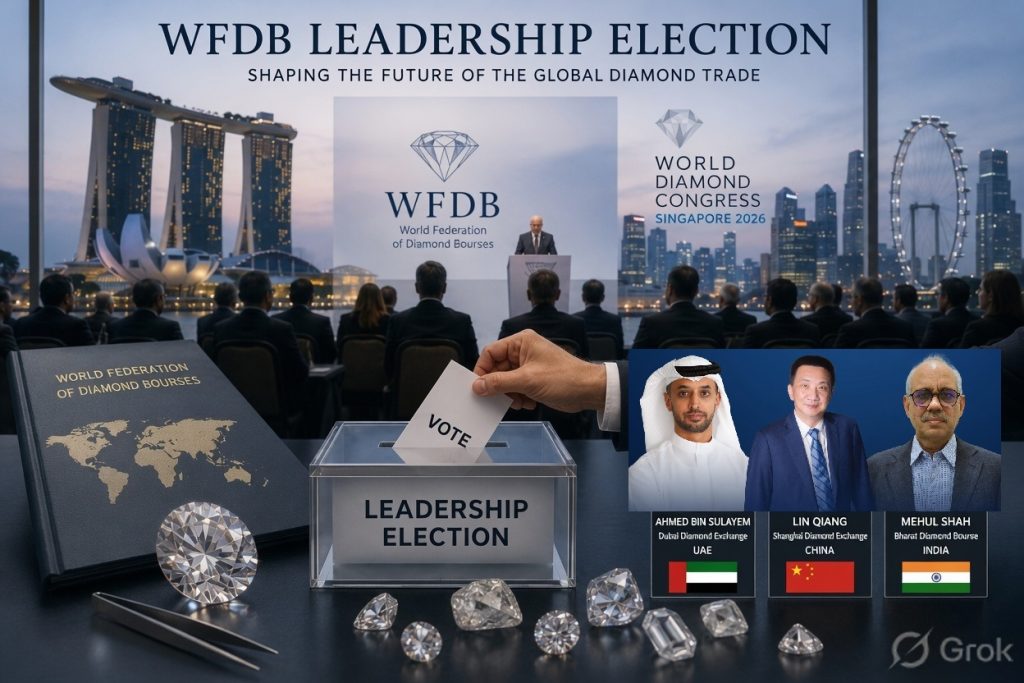
 The World Federation of Diamond Bourses (WFDB) is preparing for one of its most closely watched presidential elections in decades, with three prominent industry figures competing to lead the organisation at a time when the natural diamond sector faces unprecedented change.

The World Federation of Diamond Bourses (WFDB) is preparing for one of its most closely watched presidential elections in decades, with three prominent industry figures competing to lead the organisation at a time when the natural diamond sector faces unprecedented change.

Delegates will cast their votes during the World Diamond Congress in Singapore, where a new president will succeed Yoram Dvash after he completes the maximum two consecutive three-year terms.

While leadership contests have traditionally attracted little public attention, this year’s election has become a reflection of much larger issues confronting the international diamond industry.

A Federation at a Crossroads

For more than 80 years, the WFDB has represented the world’s diamond exchanges and promoted ethical trading standards, cooperation and confidence in the natural diamond market.

Today, however, the role of traditional diamond bourses has evolved significantly.

Digital trading platforms, changing supply chains, direct manufacturer-to-retailer relationships and the rapid growth of laboratory-grown diamonds have transformed the industry. Many market participants now question how the WFDB should adapt to remain relevant in a rapidly changing commercial landscape.

The next president will inherit an organisation that must redefine its purpose while maintaining unity among members from vastly different markets and business models.

Three Candidates, Three Perspectives

The election features candidates representing three of the world’s most influential diamond centres.

  • Mehul Shah of India’s Bharat Diamond Bourse brings decades of experience within both the WFDB and the international natural diamond trade. His campaign focuses on strengthening existing institutions, preserving industry traditions and gradually introducing new leadership through experience and mentorship.
  • Lin Qiang, President of the Shanghai Diamond Exchange, advocates greater international cooperation while seeking fresh strategies to stimulate global consumer demand for natural diamonds. His emphasis is on building consensus and maintaining stability across the federation.
  • Ahmed Bin Sulayem, Chairman of the Dubai Diamond Exchange, represents a more modern and commercially aggressive approach. Having helped establish Dubai as one of the world’s fastest-growing diamond trading hubs, he has attracted support from younger industry members calling for structural reform and renewed relevance for the federation.

Rather than simply choosing between individuals, member exchanges are effectively deciding which strategic direction the WFDB should follow over the coming decade.

Experience Versus Modernisation

One of the defining themes of the campaign has been the balance between experience and innovation.

Supporters of established leadership argue that governing an international federation requires decades of industry knowledge, trusted relationships and an understanding of the complex political and commercial issues affecting the global diamond trade.

Others believe the organisation must modernise more rapidly, attracting younger leadership capable of responding to changing consumer behaviour, digital commerce and increased competition from alternative luxury products.

The debate mirrors similar discussions taking place throughout the jewellery industry, where many long-established organisations are reassessing their relevance in a rapidly evolving marketplace.

The Lab-Grown Diamond Challenge

Perhaps no issue better illustrates the industry’s changing landscape than laboratory-grown diamonds.

Natural diamonds remain the core focus of the WFDB, yet the commercial reality is that many member companies now operate in both natural and laboratory-grown sectors.

This creates a delicate balancing act.

Some industry leaders believe the federation should remain exclusively focused on protecting and promoting natural diamonds.

Others argue that ignoring the growing laboratory-grown sector risks reducing the organisation’s influence over a significant portion of today’s diamond market.

The differing views among the candidates highlight the broader debate taking place throughout the global jewellery industry.

Shifting Centres of Influence

The election also reflects changing geographical power within the diamond business.

India continues to dominate cutting and polishing, while China remains one of the world’s largest consumer markets despite softer demand in recent years.

Meanwhile, Dubai has rapidly emerged as a major international trading hub, attracting significant volumes of rough and polished diamonds through its strategic location, favourable business environment and expanding infrastructure.

These shifting trade flows have altered the traditional balance of influence once dominated by historic centres such as Antwerp, Tel Aviv and New York.

More Than a Presidential Election

Beyond selecting a new president, the World Diamond Congress will consider broader initiatives aimed at strengthening international cooperation among member exchanges.

Delegates are also expected to discuss expanding membership and improving collaboration as the industry responds to changing market conditions, evolving consumer expectations and ongoing economic uncertainty.

The outcome of the election will not determine the future of the diamond industry on its own. However, it will provide a clear indication of how the world’s leading diamond exchanges believe the sector should respond to one of the most significant periods of transformation in its history.

Whether the federation chooses continuity, reform or a balance between the two, the decision will help shape the direction of the natural diamond trade for years to come.

Disclaimer: This article is provided for industry news and informational purposes only. The views expressed by election candidates and industry representatives are their own and do not necessarily reflect the opinions of DCLA. Leadership outcomes and organisational policies remain subject to the official decisions of the World Federation of Diamond Bourses (WFDB).

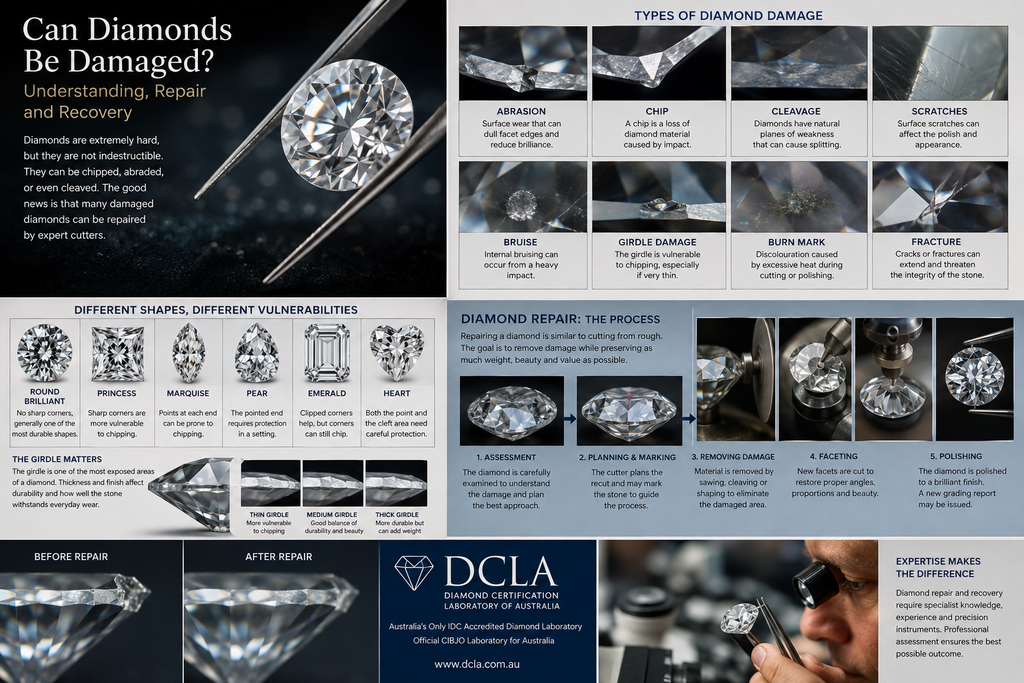
Can Diamonds Be Damaged? Understanding Chips, Abrasions, Burns and Diamond Repairs

  Diamonds are famous for being exceptionally hard. In fact, diamond ranks 10 on the Mohs scale of hardness , making it highly resistant to ...