Thursday, 26 June 2025

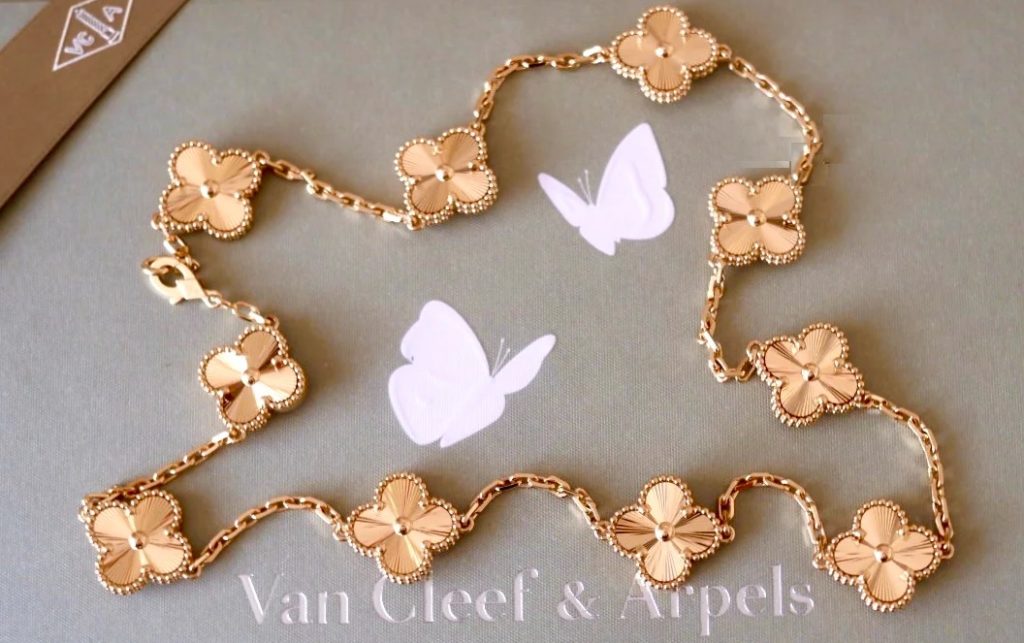
Seized: $25m of Fake Cartier and Van Cleef and Arpels Jewelry

Seized: $25m of Fake Cartier and Van Cleef and Arpels Jewelry

US customs officers seized five shipments of counterfeit Cartier and Van Cleef and Arpels jewelry mostly from China, with a combined “if genuine” value of over $25m.

Almost 2,200 items – rings, earrings, bracelets, and necklaces – were intercepted by Customs and Border Protection (CBP) officers in Louisville, Kentucky, as they arrived in the country.

The first shipment arrived from China on 19 June, heading to a residence in Pennsylvania. Officers seized 318 bracelets with fake Cartier trademarks.

The second arrived the same day from Hong Kong, destined for a residence in Tampa with 490 necklaces, 205 pair of earrings, and 80 rings, all with fake Van Cleef and Arpels trademarks.

Three more shipments arrived from China the following day containing 800 “Cartier” bracelets. Two shipments were heading to a residence in Fayetteville, North Carolina, the other was heading to Michigan.

The 2,193 items were deemed to bear counterfeit marks,” the CBP said. “Had these goods been genuine, the five shipments would have had a combined manufacturer’s suggested retail price of over $25.32m.”

LaFonda D. Sutton-Burke, director of field operations, Chicago field office, said: “Intellectual property theft threatens America’s economic vitality and funds criminal activities and organized crime.

“When consumers purchase counterfeit goods, legitimate companies lose revenue, which can force those companies to cut jobs. Our officers are dedicated to protecting private industry and consumers by removing these kinds of shipments from our commerce.”

Source: DCLA

Wednesday, 25 June 2025

Gemologists Uncover the Secrets Behind the Rarity of Red Diamonds

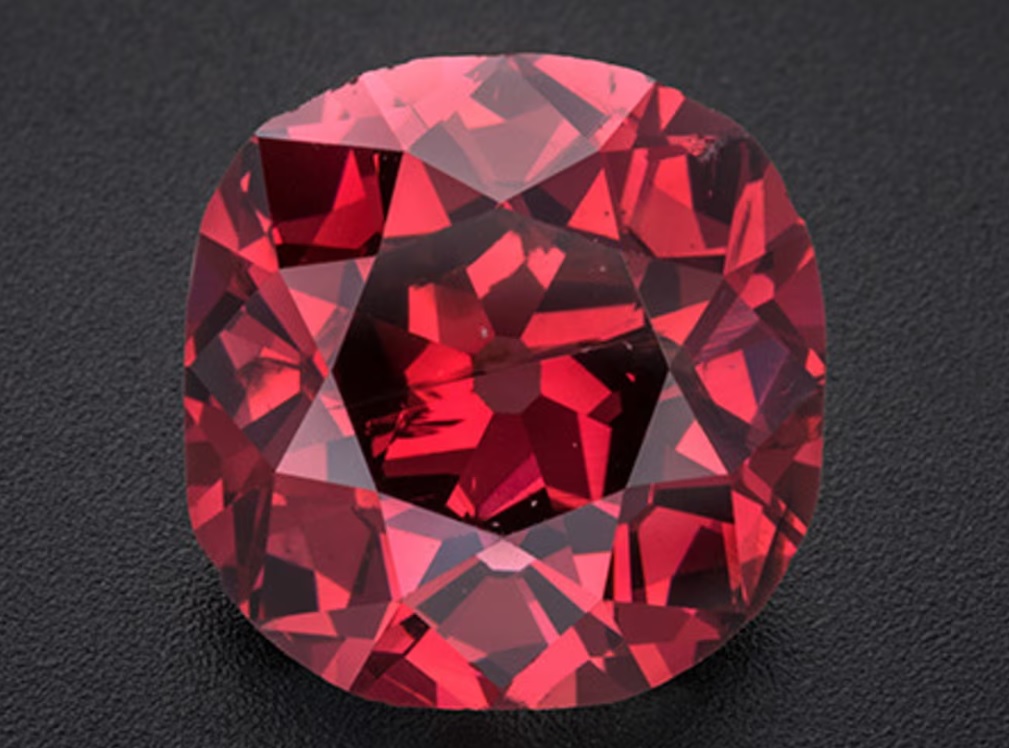
The Winston Red on display at the Smithsonian sheds light on nature’s rarest colour in diamonds

Red diamonds remain one of nature’s most elusive and captivating treasures. With only 24 specimens over one carat ever publicly recorded, their scarcity is legendary. Among them, the remarkable Winston Red has now taken centre stage at the Smithsonian National Museum of Natural History in Washington, DC.

This exceptional gem was donated in December 2023 by Ronald Winston, son of the renowned American jeweller Harry Winston. Weighing over one carat, the Winston Red is not only a visual marvel but also a scientific mystery—until now.

Recent research published in Gems & Gemology has provided unprecedented insight into what makes red diamonds so rare. Using advanced imaging and spectroscopic techniques, gemologists have identified that the Winston Red’s vivid crimson hue results from a combination of factors: a unique distribution of nitrogen impurities and a heavily deformed crystal lattice structure composed of tightly stacked red-to-pink layers.

These structural distortions—formed under extraordinary heat and pressure—are thought to alter the way light interacts with the diamond, giving rise to its intense red colour. Such conditions are extremely rare in the Earth’s mantle, further explaining the diamond’s scarcity.

Historical records trace the Winston Red as far back as 1938, when Jacques Cartier sold the stone to the Maharajah of Nawanagar. Combined with its cutting style and geological characteristics, the evidence suggests the gem likely originated from diamond-producing regions in Brazil or Venezuela.

For gemologists and collectors alike, the Winston Red represents both a scientific breakthrough and a pinnacle of natural beauty—an enduring reminder of the Earth’s ability to create something truly extraordinary.

Source: DCLA

Tuesday, 24 June 2025

Russia Still World’s Biggest Diamond Producer

Russia Alrosa Diamonds

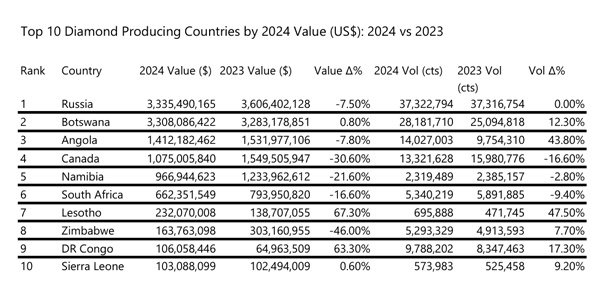
Russia remained the biggest rough diamond-producing country in the world in 2024, by both volume and value, despite the impact of G7 sanctions.

By volume it accounted for 32 per cent of global production in 2024 – or 37.3m carats – according to newly-released figures by the Kimberley Process Certification Scheme.

And by value it accounted for 29 per cent – or $3.335bn.

Botswana came second by volume – 24 per cent, 28.2m carats – and a very close second by value – 28.8 per cent, $3.308bn.

Overall global rough output fell 10 per cent to $11.48bn.

India was the biggest importer (40 per cent by carats, 39 per cent by dollars) followed by UAE (29 per cent by carats, 24 per cent by dollars).

Source: DCLA

Monday, 23 June 2025

Moscow Investigators Uncover Diamond Theft Scheme Involving Alrosa Employee

diamond producer Alrosa

Moscow investigators on Monday said they сharged an employee of the state-run diamond producer Alrosa, her son and two others in connection with a diamond theft scheme at the company.

Valentina Matyushenkova, an Alrosa employee, is accused of swapping high-value diamonds with cheaper industrial-grade stones between September 2024 and January 2025, according to Russia’s Investigative Committee.

Authorities say the stolen diamonds were smuggled to Armenia.

Matyushenkova was caught in the act while attempting to steal a batch of diamonds valued at more than 1.7 million rubles ($21,700), investigators said. Her son, Alexei Matyushenkov, is accused of acting as a middleman.

Two other suspects, Armen Petrosyan and Arman Sahakyan, allegedly transported the stolen stones across the border to Armenia.


A video published by the Kommersant business newspaper showed Matyushenkova confessing to her role in the scheme during questioning. One of the other suspects claimed he was working as a deliveryman at the time of his arrest.

Searches of the suspects’ homes uncovered some 200,000 carats of low-grade industrial diamonds, which investigators say were used to replace the high-quality raw stones.

All four suspects have been placed in pre-trial detention. If convicted, they face up to 10 years in prison on theft charges and up to seven years for the illicit trafficking of precious stones and metals.

Source: DCLA

Sunday, 22 June 2025

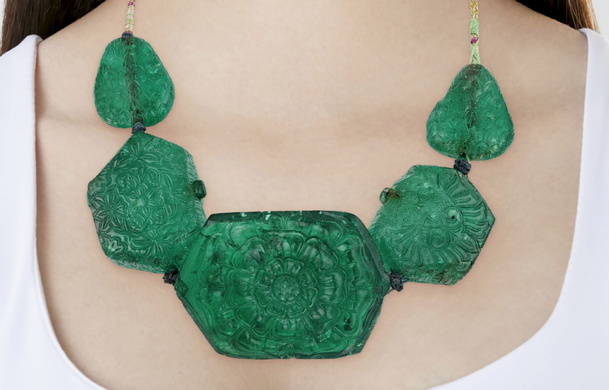
Historic Emerald Necklace Sells for $6.2m

A 275-year-old carved emerald necklace from the Mughal Empire sold for $6.2m, more than double its high estimate, at Christie's New York.

A 275-year-old carved emerald necklace from the Mughal Empire sold for $6.2m, more than double its high estimate, at Christie’s New York.

It is made of five Colombian emeralds, with a combined weight of 1,178.50 carats (8.3oz/235g) on gold and magenta cords.

Three are carved hexagonal – the largest is 470 carat and inscribed “Ahmad Shah Durr-i Durran” (Pearl of Pearls) – and two are carved pear-shaped.

The necklace once belonged to Nader Shah, one of the most powerful rulers in Iranian history, and one-time owner of the Koh-i-Noor diamond.

He seized the necklace after capturing Delhi in 1739 and taking control of the royal treasury of the Mughal Empire, which ruled much of the Indian subcontinent from 1526 to 1857.

The necklace carried a pre-sale estimate of $2m to $3m.

Source: DCLA

Thursday, 19 June 2025

HRD to Stop Grading Lab Growns

HRD


Belgium’s HRD lab says it will no longer grade lab grown diamonds.

It wants to create what it calls a “clear distinction between natural and synthetic diamonds”.

HRD, a subsidiary of the Antwerp World Diamond Centre (AWDC), says it is the first lab to stop lab grown certification, although it will still issue certificates for jewelry containing lab growns.

The move, announced yesterday (18 June) follows GIA’s decision earlier this month to grade lab growns only as “premium” or “standard”, without scores for color or clarity.

It further emphasizes the distinction between natural and lab grown diamonds.

“As of 2026, we will no longer issue quality certificates for loose synthetic diamonds intended for commercial use,” said Ellen Joncheere, CEO of HRD Antwerp.

“In limited cases, we will continue to analyze synthetic diamonds, but strictly for research purposes. Jewellery containing synthetic stones will still be eligible for certification.”

HRD started grading lab growns in 2013, albeit with fewer grades of color and clarity than natural diamonds. In 2019 it aligned lab growns with natural stones, a move that appeared to signal greater parity between the two sectors.

Karen Rentmeesters, CEO of parent company AWDC, said: “By becoming the first diamond lab in the world to take an explicit and exclusive stance in favour of natural diamonds, HRD Antwerp is sending a strong signal.

“A clear distinction between natural and synthetic diamonds is essential to strengthen consumer trust and help safeguard the future of natural diamonds.”

Source: IDEX

Wednesday, 18 June 2025

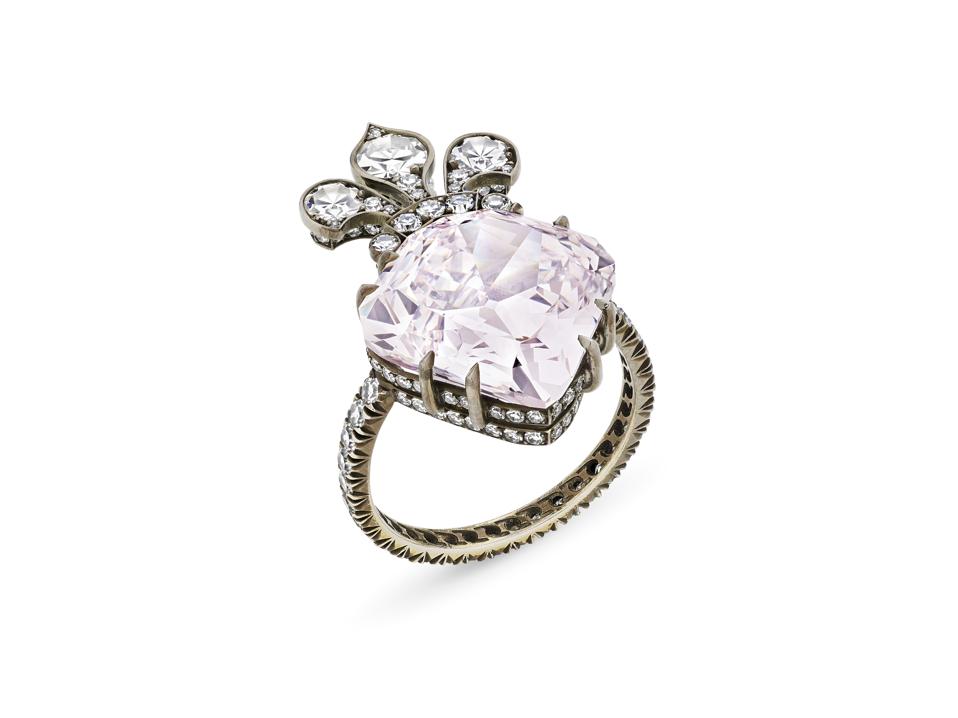
Historic “Marie-Thérèse Pink Diamond” Fetches Over $13.9 Million at Christie’s

A remarkable piece of royal history captivated the global jewellery market this week. The 10.38-carat “Marie-Thérèse Pink Diamond” achieved more than USD $13.9 million

A remarkable piece of royal history captivated the global jewellery market this week. The 10.38-carat “Marie-Thérèse Pink Diamond” achieved more than USD $13.9 million (including buyer’s premium) at Christie’s New York Magnificent Jewels auction, nearly doubling its high estimate. The hammer price alone reached USD $11.8 million.

This fancy purple-pink, modified kite brilliant-cut diamond boasts not only exceptional rarity and colour but also a royal provenance tracing back through French, Bavarian, and Austrian imperial families. It was most recently set in a ring by renowned Franco-American jewellery artist JAR, further enhancing its artistic and collectible value.

According to Christie’s, the pink diamond is believed to have been part of a group of jewels entrusted by Marie Antoinette to her hairdresser in 1791, just before her attempted escape from Paris. These jewels were later passed to her only surviving child, Duchess Marie Thérèse de Angoulême, and subsequently to her niece, Duchess Marie Thérèse de Chambord.

“Generations later,” Christie’s noted, a will identified Queen Marie Theresa of Bavaria as the next known custodian of the gem, referring to it as “a pink solitaire diamond from Aunt Chambord.” The diamond last appeared at auction in Geneva in 1996, offered by a European royal family member, and had remained out of public view until this recent sale.

The impressive result underscores continued global demand for rare, historically significant coloured diamonds — particularly those with noble provenance.

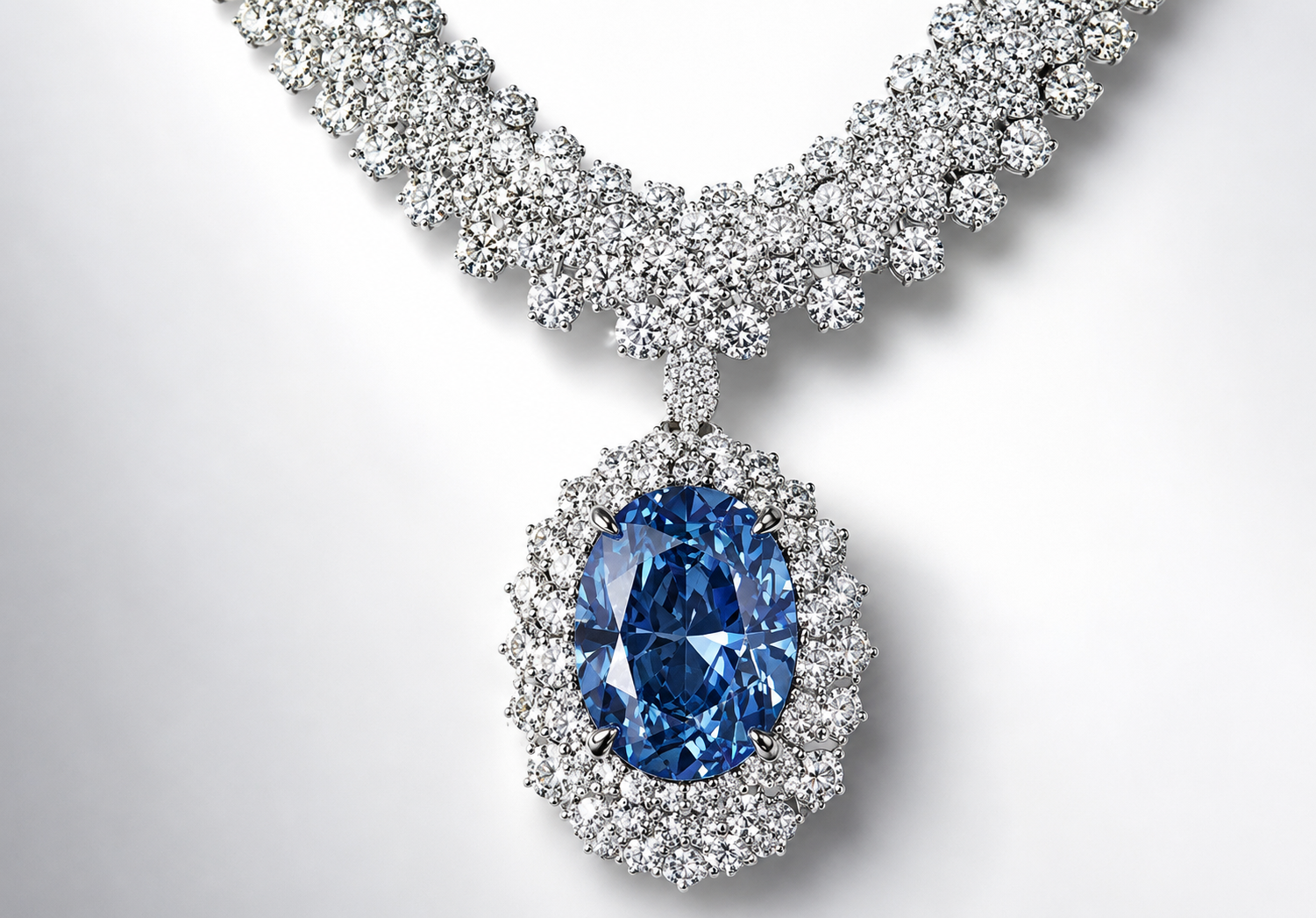
Messika Showcases Botswana’s Extraordinary Okavango Blue Diamond in One of the World's Rarest High Jewellery Creations

  French high jewellery house Messika has unveiled an exceptional necklace featuring one of the rarest natural diamonds ever discovered, th...