Showing posts with label polished diamonds. Show all posts

Thursday, 24 July 2025

Dubai’s Polished Diamonds – an Industry Hanging in the Balance

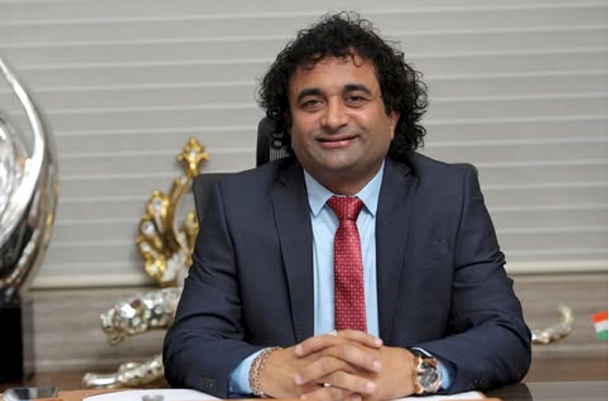
Peter Meeus is former managing director of Antwerp Diamond Bourse and HRD

Dubai’s ascent in the global diamond trade is undeniable, yet its polished diamond business now confronts a critical threat. Opaque regulations, punitive taxes, and mounting costs are pushing diamantaires, particularly from key markets, to look elsewhere – a stark reminder of past industry shifts that demand urgent, decisive action to preserve its hard-won leadership.

A century ago, Dubai stood as the undisputed pearling capital of the world, yet the advent of cultured pearls ushered in an overnight shift that shattered that dominance, forcing the emirate to adapt, pivot, and ultimately thrive through oil, trade, and tourism. History, however, whispers a stark warning: once a hub loses its competitive edge, recovery often remains out of reach. Today, as Dubai asserts its pre-eminence in the global diamond sector, particularly as the world’s leading hub for rough diamonds since 2021 and a top-three global centre overall, its polished diamond business stands at a similar precipice. Mounting tax ambiguities, punitive regulations, and soaring operational costs threaten to drive traders away, risking a mass exodus that could see its hard-won sparkle fade for good.

Firstly, it is important to acknowledge that Dubai’s journey to becoming a global trading powerhouse is truly exceptional. Dubai’s rise to eminence did not come easy. I have had the honour to work for over 12 years with Ahmed Bin Sulayem, Executive Chairman and CEO at Dubai Multi Commodities Centre (DMCC). Under his outstanding leadership, Dubai’s diamond sector had to sail through difficult weather, often culminating in storms instigated by NGOs who on their turn often were pushed against Dubai by competing entities.

However, bearing in mind the Ruler of Dubai, HRH Sheikh Mohammed bin Rashid Al Maktoum’s mantra: “In the race to excellence there is no finish line,” Dubai meticulously cultivated an ecosystem of world-class infrastructure, unmatched connectivity, and a business-friendly environment.

This soon propelled Dubai to the forefront of the gold and rough diamond trade. In 2024, its polished diamond trade alone surged past USD 13.1 billion, contributing to a remarkable cumulative total (rough and polished) of USD 57.5 billion over the past five years. Growing by a staggering 32 per cent to USD 16.9bn in 2023, polished diamonds represent nearly 50 per cent of the UAE’s total diamond trade, underscoring their pivotal role in its strategic expansion.

In the same spirit, any business, company and government entity – no matter how successful it becomes – has to keep a deep sense of self-criticism and always check for weaknesses and threats. Indeed, despite these impressive figures and inherent advantages, a significant share of the global polished diamond trade, particularly from key players in Israel, continue to bypass the UAE in favour of direct routes to established markets such as the United States, Antwerp, and Hong Kong. Through a combination of predictable regulatory landscapes, deep pools of experienced professionals, and often, more favourable tax treatments for polished diamonds, each of these centres have instilled greater business confidence, and all this despite the recently enacted U.S. trade tariffs. For Dubai to truly hold on to, and leverage opportunities presented by agreements like the Abraham Accords in boosting the UAE-Israel polished diamond trade, the UAE must urgently address its existing and forthcoming structural barriers.

One of the most critical obstacles is the existing VAT framework. While the UAE applies a reverse-charge VAT mechanism to rough diamonds, this crucial benefit does not consistently extend to polished diamonds, thereby diminishing Dubai’s global competitiveness. Although Cabinet Decision No. 127 in January 2025 aimed to extend the VAT reverse-charge mechanism to polished diamonds and a broader range of precious stones, for many, this feels like too little, too late. This inconsistency, coupled with high corporate tax rates directly undermines the UAE’s ability to attract high-value polished diamond activity and compete effectively. As an example, in Belgium and the U.S., inter-company diamond trades are entirely VAT exempt.

As an additional issue, albeit one for another day, the culpability of highly-paid consultants in this evolving crisis, cannot be overstated. Global advisory firms like PwC find themselves in a glaring conflict of interest, reportedly advising the UAE Ministry of Finance on imposing these very taxes, while simultaneously counselling entities like the Dubai Multi Commodities Centre (DMCC) on mitigating them. This duality has only amplified uncertainty, leaving traders in a state of paralysis. One must question what advice these consultants offer their clients in competitive markets, and how they are delivering tangible growth.

Beyond VAT, the additional spectre of B2B taxation and opaque regulation has also made Dubai less competitive. Anecdotal statements from industry stakeholders include fines being issued for unclear reasons, with practically no recourse for contestation due to the absence of any industry ombudsman, while significant taxes and fees are actively pricing out SMEs from the market.

While praise should be given to the UAE government for its equally giant leaps in combatting anti-money laundering and counter terrorism financing, AML regulations have now become more stringent than in any other major centres. Diamantaires in Dubai are effectively being treated like banks, with every transaction above AED 55,000 (USD 15,000) requiring full disclosure. Even an elementary cost comparison with other key markets reveals some startling comparisons. For instance, Belgium has a special corporate incomes tax regime for diamond traders which is reportedly substantially cheaper than Dubai, while any large companies in the emirate paying amounts over USD 3 million in interest (or 30 per cent of EBITDA, whichever is higher) are not eligible for tax deductions, even if paid to banks. Operating expenses in Dubai are also notorious, running an estimated 35 per cent higher than its competitors, while shipment and customs charges are 45 per cent steeper than in Belgium or the U.S. As a result, Dubai has already seen some lab-grown diamond businesses move their operations to Belgium as a direct consequence of these mounting pressures.

This situation echoes the stark warning from Dubai’s pearling legacy, which didn’t vanish due to competition, but inaction in the face of disruptive change. The diamond sector, now a cornerstone of its economic diversification, faces a similar fate. Traders are already voting with their feet, convinced the environment is becoming less hospitable, and once they depart, reclaiming their business will be an insurmountable challenge.

All this being said, this isn’t the first time the UAE has found itself in a similar situation. In the face of mounting pressure on gold and rough diamonds, the UAE Cabinet recognised the imperative for swift action, and on 1st May 2018, decisively reversed the tax on both commodities. This pivotal and wise decision was taken based on a DMCC in-depth analysis of Dubai’s competitive position in the rough diamond trade and not only saved both industries from decline but allowed them to flourish, cementing Dubai’s position as a top global destination.

The same decisive intervention is now urgently required for Dubai’s polished diamond sector. By extending the VAT reverse-charge mechanism consistently to polished diamonds, enhancing corporate tax incentives, easing the administrative burden of AML for legitimate trades, and ensuring regulatory clarity ahead of the corporate tax filing deadline on 30th September 2025, the emirate still has time to avoid both the legal and compliance ambiguities that lead to costly retrospective adjustments. Additionally, this proactive approach will attract high-value polished diamond activity, enabling the emirate to fully leverage its underutilised bonded free zones, while highlighting Dubai’s strategic advantages and robust infrastructure.

Global market volatility and shifting tariff regimes present a timely opportunity for the UAE to assert and uphold itself as a world leader in polished diamonds. Policy enhancements, particularly around taxation and regulation, could yield substantial gains in trade flows, investment, and economic diversification, while unequivocally elevating the UAE’s prestige within the international gemstone sector. Dubai’s diamond empire stands at a crossroads where a sobering assessment of its competitiveness and decisive action will undoubtedly dictate its ongoing success or untimely demise. As there is no finishing line in the search for excellence, the time to act is NOW.

Source: DCLA

Wednesday, 15 January 2025

Some Recovery in India’s Polished Exports

India's gross exports of polished diamonds showed some signs of recovery during December, after a couple of months of volatility.

India’s gross exports of polished diamonds showed some signs of recovery during December, after a couple of months of volatility.

Foreign sales were $773m, down 10.4 per cent in dollar terms on the same month in 2023, according to the latest figures from the Gems and Jewellery Export Promotion Council (GJEPC).

But that compares to a steep year-on-year drop of 40 per cent in November, with total sales of $660m.

That came after a 11.3 per cent increase in October, when sales hit just over $1.4bn.

Before that GJEPC recorded significant year-on-year drops for every month of the year, with foreign sales in September down 22.9 per cent to $1.29bn.

India’s diamond manufacturing has been badly hit by the ongoing slump in prices and demand, with an estimated 30,000 workers having been laid off in Surat over the last six months.

December’s fall in polished diamond exports was broadly in line with the whole gem and jewelry sector (down 10.3 per cent at just under $2bn).

Source: DCLA

Sunday, 8 December 2024

Shutdown for 15,000 Diamond Workers after Boss Suffers Stroke

Maruti Impex, described as one of the world's biggest manufacturers of small natural diamonds, is halting operations, and has advised its 15,000 workers to seek employment elsewhere.

Maruti Impex, described as one of the world’s biggest manufacturers of small natural diamonds, is halting operations, and has advised its 15,000 workers to seek employment elsewhere.

The company’s founder, Suresh Lakhani, aged 45, suffered a stroke three months ago and remains in a coma.

He’s been the driving force behind the business, which he launched in 1995 when he was just 16 years old. He is said to be the sole decision maker.

The future of Maruti Impex, which operates over 100 units, directly and indirectly, in Surat, Bhavnagar, Amreli, and Junagadh, is now uncertain.

Staff were informed of the closure by audio message, just as diamond units re-open after the Diwali break.

They received salaries up to the holiday, but have been told it’s not clear when operations could resume. The company made mention of “three or four months”.

Family members stepped in short term following Lakhani’s stroke, but have reportedly decided to pause operations because of weak market conditions.

Times of India quotes Dinesh Navadiya, chairman of the Indian Diamond Institute, as saying: “Without his (Lakhani’s) leadership and given the current challenging market conditions, the management is unable to continue operations.”

Lakhani describes himself on LinkedIn as a “self-made entrepreneur and philanthropist who has built a successful global business – “Maruti Impex” from scratch. Maruti Impex is one of the largest companies in the world in cut and polished diamonds.”

Source: DCLA

Sunday, 3 November 2024

Another Big Drop for India’s Rough Exports

India's exports of polished diamonds suffered yet another big fall in September


India’s exports of polished diamonds suffered yet another big fall in September, down 22.9 per cent, according to the latest figures from the GJEPC (Gem and Jewellery Export Promotion Council).

That’s a marginally better performance than August, when year-on-year exports were down by 23.8 per cent. Between April and September total foreign sales fell 20.6 per cent (all figures in US dollars).

Actual monthly sales tell a different story from year-on-year decreases. Total foreign sales for September were $1.29bn, compared to $1.04bn in August and $908m in July.

Across the whole gems and jewelry industry in India, gross exports were $2.54bn, down 15.9 per cent year-on-year (compared to 22.9 per cent for polished diamonds).

Exports of polished lab growns – still a tiny minority of all diamond sales – were down 16.5 per cent to $111m.

Source: DCLA

Wednesday, 22 March 2023

Diamond Importers Might Have to Declare Russian Origin

Polished diamonds

Polished diamonds

G7 countries could oblige companies to affirm that their imported polished diamonds are not of Russian provenance, according to the US’s top sanctions official.

Leaders of the bloc will meet at a summit in mid-May and are looking to have a plan in place by then, according to a member alert the Jewelers Vigilance Committee (JVC) released Tuesday summarizing remarks by Ambassador James O’Brien, who heads the US’s Office of Sanctions Coordination.

“There could be a required declaration that finished diamonds imported to the US and other G7 markets were not originally mined in Russia or other kinds of restrictions that apply to polished diamonds,” O’Brien said, according to the note. “The aim is to ensure this is phased in at a time and flow that will accommodate the work of the industry.”

O’Brien made his comments at last week’s annual JVC luncheon, where he was the guest speaker. The summary contained a mix of direct and paraphrased quotes, wrote JVC president and general counsel Tiffany Stevens.

The G7 includes the US, as well as Canada, France, Germany, Italy, Japan and the UK. The European Union is known as its “eighth member.”

Alrosa, in which the Kremlin holds a stake, “is deeply rooted to the power structure within Russia, and our government wants to make sure its revenue is not available for them to raid,” O’Brien explained. The state is seeking sources of funds to keep the war in Ukraine going, he added.

Important issues to tackle include how long to wait for Russian diamonds that are currently in the market to exit the system, the sizes of stones to which sanctions would apply, and how enforcement will work, the ambassador pointed out. “Having thoughts on these questions that can contribute to a framework in time for the mid-May meeting is a goal of the US government,” he said.

He also said that the US wanted to make sure Burma — also known as Myanmar — didn’t help Russia. The Asian country has been subject to various US sanctions since a military takeover in 2021.

“Russia is going to its allies and asking them to give back military equipment,” the official said, according to the JVC summary. “Burma supports Russia, so the government also wants to make sure Burma is restricted in its sources of revenue, so it doesn’t help Russia as well. This includes ensuring the regime does not earn money from the sale of rubies and other gemstones.”

Source: Diamonds.net

Wednesday, 7 December 2022

Israel’s exports of polished diamond up since start of this year


Rough Diamonds
                           Rough Diamonds

Israel’s exports of polished diamond have shown positive growth over the past 11 months, a statement issued by Israeli Economic Ministry revealed yesterday.

According to the statement, the net rough diamond imports reached about $1.68 billion, recording an eight per cent decline compared to the same period last year.

Meanwhile, the net rough diamond exports reached $1.46 billion during the same period, recording a 9.5 per cent decline compared to the same period last year.

Last month, net Israeli exports of rough diamonds to the UAE reached about $10.7 million – about 14 per cent of the total Israeli exports of rough diamonds in November.

Israel imported rough diamond worth $25.7 million from the UAE – 21 per cent of the total Israeli imports of rough diamond.

Israel recently began exporting diamonds to Bahrain and the Ministry of Economy and Industry expects this market to grow next year.

The global diamond industry has faced massive interruptions as a result of Russia’s war on Ukraine. US sanctions on Russia, the world’s third largest diamond exporter, includes diamond trade.

Source: DCLA

Tuesday, 15 September 2020

HB Antwerp Buys Sightholder’s Cutting Factory


HB Antwerp has acquired the manufacturing facility of Belgian large-stone specialist AMC Diamonds, gaining 13 employees alongside the company’s machinery and technology.

“With this acquisition, HB Antwerp confirms its ambition to bring the diamond-polishing process back to Antwerp in its entirety by combining the typical Antwerp savoir faire with the latest techniques in the field of laser technology, blockchain and [artificial intelligence],” a spokesperson for HB said.

Two-thirds of HB’s workforce now comprises technicians such as diamond polishers, software engineers and mechanical engineers, the company explained. It plans to carry out more recruitment in the coming months, HB added.

AMC, a De Beers sightholder, will maintain this status, and still has manufacturing facilities, a spokesperson for the company noted.

HB, which diamantaire Oded Mansori cofounded, partnered with Louis Vuitton earlier this year to buy the 1,758-carat SewelĂ´ diamond from Lucara Diamond Corp. It also agreed to purchase all of Lucara’s rough over 10.8 carats through the end of 2020.

It since hired Boaz Lev from Malca-Amit as operations director and one of its managing partners, and hired former Antwerp World Diamond Centre spokesperson Margaux Donckier as director of communications and external affairs.

Source: DCLA

HB Antwerp Buys Sightholder’s Cutting Factory


HB Antwerp has acquired the manufacturing facility of Belgian large-stone specialist AMC Diamonds, gaining 13 employees alongside the company’s machinery and technology.

“With this acquisition, HB Antwerp confirms its ambition to bring the diamond-polishing process back to Antwerp in its entirety by combining the typical Antwerp savoir faire with the latest techniques in the field of laser technology, blockchain and [artificial intelligence],” a spokesperson for HB said.

Two-thirds of HB’s workforce now comprises technicians such as diamond polishers, software engineers and mechanical engineers, the company explained. It plans to carry out more recruitment in the coming months, HB added.

AMC, a De Beers sightholder, will maintain this status, and still has manufacturing facilities, a spokesperson for the company noted.

HB, which diamantaire Oded Mansori cofounded, partnered with Louis Vuitton earlier this year to buy the 1,758-carat SewelĂ´ diamond from Lucara Diamond Corp. It also agreed to purchase all of Lucara’s rough over 10.8 carats through the end of 2020.

It since hired Boaz Lev from Malca-Amit as operations director and one of its managing partners, and hired former Antwerp World Diamond Centre spokesperson Margaux Donckier as director of communications and external affairs.

Source: DCLA

Tuesday, 14 July 2020

India Extends Deadline for Duty-Free Reimports


The Indian government has granted diamond companies extra time to ship polished goods back to the country without incurring customs duty.
At present, reimports are subject to the 7.5% levy once the diamonds have been outside India for three months. The Central Board of Indirect Taxes and Customs (CBIC) has extended the deadline by a further three months for all parcels for which the cutoff date was previously between February 1 and July 31, it said Friday.
The country’s Gem & Jewellery Export Promotion Council (GJEPC) had been lobbying for the change after the Covid-19 pandemic delayed the return of goods companies had sent overseas for grading and other services.
“The latest notification on the extension of three months on reimport of certified diamonds is a great respite for our exporters,” said GJEPC chairman Colin Shah.
Last week, the council urged the government to reduce customs duty on polished to 2.5%, arguing that the move would boost India’s status as a hub for trading and distribution of diamonds.
Source: DCLA

India Extends Deadline for Duty-Free Reimports


The Indian government has granted diamond companies extra time to ship polished goods back to the country without incurring customs duty.
At present, reimports are subject to the 7.5% levy once the diamonds have been outside India for three months. The Central Board of Indirect Taxes and Customs (CBIC) has extended the deadline by a further three months for all parcels for which the cutoff date was previously between February 1 and July 31, it said Friday.
The country’s Gem & Jewellery Export Promotion Council (GJEPC) had been lobbying for the change after the Covid-19 pandemic delayed the return of goods companies had sent overseas for grading and other services.
“The latest notification on the extension of three months on reimport of certified diamonds is a great respite for our exporters,” said GJEPC chairman Colin Shah.
Last week, the council urged the government to reduce customs duty on polished to 2.5%, arguing that the move would boost India’s status as a hub for trading and distribution of diamonds.
Source: DCLA

Thursday, 13 February 2020

India’s rough diamond imports fall sharply


Import of rough diamonds fell 15.54% in the first 10 months of this financial year, according to the Gem & Jewellery Export Promotion Council (GJEPC).
Industry executives anticipate a further fall of 10-15% in February and March, as manufacturers are not keen to build up inventory in the wake of coronavirus outbreak which has affected demand in the major markets of Hong Kong, mainland China and the Far East.
Meanwhile, Russia’s diamond miner Alrosa has granted flexibility  
to India’s authorised bulk purchasers of rough diamonds to buy 55% of the contracted volume so that their inventory does not pile up. “The US-China trade war has impacted exports, which in turn has brought down imports of rough diamonds.
Slow demand in the world market has resulted in piling up inventories in FY20,” Colin Shah, vice-chairman, GJEPC, told ET. “Manufacturers wanted to clear their inventories first, before fres ..
fresh stocking. During the Christmas and New Year, there was good demand from the US and Europe and we were able to offload quite a substantial portion of our inventories.”
International agency Rapaport said in its recent report that the recent influx of rough diamonds in the market, coupled with the weakened outlook for China, had raised concerns that the trade would return to an oversupply of rough diamonds.
De Beers reported a 9% year-on-year increase in sales to $545
million in January, owing to firmer prices on select boxes of commercial-quality diamonds.
It said that mining companies were holding large quantities of rough diamonds which they could not sell in 2019. Production of rough diamonds is projected to decrease about 6% this year, although mining companies have enough inventory to offset the decline.
Source: DCLA

India’s rough diamond imports fall sharply


Import of rough diamonds fell 15.54% in the first 10 months of this financial year, according to the Gem & Jewellery Export Promotion Council (GJEPC).
Industry executives anticipate a further fall of 10-15% in February and March, as manufacturers are not keen to build up inventory in the wake of coronavirus outbreak which has affected demand in the major markets of Hong Kong, mainland China and the Far East.
Meanwhile, Russia’s diamond miner Alrosa has granted flexibility  
to India’s authorised bulk purchasers of rough diamonds to buy 55% of the contracted volume so that their inventory does not pile up. “The US-China trade war has impacted exports, which in turn has brought down imports of rough diamonds.
Slow demand in the world market has resulted in piling up inventories in FY20,” Colin Shah, vice-chairman, GJEPC, told ET. “Manufacturers wanted to clear their inventories first, before fres ..
fresh stocking. During the Christmas and New Year, there was good demand from the US and Europe and we were able to offload quite a substantial portion of our inventories.”
International agency Rapaport said in its recent report that the recent influx of rough diamonds in the market, coupled with the weakened outlook for China, had raised concerns that the trade would return to an oversupply of rough diamonds.
De Beers reported a 9% year-on-year increase in sales to $545
million in January, owing to firmer prices on select boxes of commercial-quality diamonds.
It said that mining companies were holding large quantities of rough diamonds which they could not sell in 2019. Production of rough diamonds is projected to decrease about 6% this year, although mining companies have enough inventory to offset the decline.
Source: DCLA

How Efforts to Control the Diamond Trade Are Hurting the Very Communities They Were Supposed to Protect

For more than two decades, global policies aimed at restricting the flow of diamonds from conflict zones most notably through the “blood dia...