Thursday, 18 September 2025

Diamond selling processes are outdated and hurting producers, trader says

Diamond selling processes are outdated

The sale of diamonds through tenders and auctions is opaque and inefficient and should be revamped for producers to earn more and to survive the current price slump, a leading gem trader said on Thursday.

Oded Mansori, co-founder and managing partner of Belgian gem trader HB Antwerp, said the impact on producers could be reduced by doing away with inefficiencies in the industry.

The diamond market is currently going through a prolonged downturn with demand hurt by global economic uncertainty and the rising popularity of lab-grown stones.

Producer countries such as Botswana have been hard hit by lower revenues, while miners such Burgundy and Lesotho’s biggest diamond mine Letseng have had to lay off workers.

“For years, miners relied on tenders and auctions, systems that look efficient on paper but in practice resemble a casino,” Mansori said in a statement, as the industry battles a crisis considered to be its deepest in history.

“Rough stones are pushed into opaque markets where value is anyone’s guess. When global demand softens, as it has in cycles over the last decade, producers are left exposed. Workers pay the price, while shareholders watch assets decline,” he added.

Rough diamonds are typically sold through a competitive bidding system where buyers place confidential bids on individual stones or parcels.

Mansori, whose company operates a profit-sharing model with miner Lucara Diamond Corp, says producers’ revenues should be tied to the eventual polished value of its stones “rather than gambling on rough sales in opaque auctions”.

Under its partnership with Lucara, HB Antwerp buys stones of 10.8 carat quality and above from the Toronto-listed company’s Karowe Mine in central Botswana at prices based on the estimated polished value of each diamond.

HB Antwerp accounted for 72% of Lucara’s $74-million diamond revenue in the six months to June 30, up from 65% the year before.

The trader says producers can earn up to 40% more revenue if they sell through this model.

Source: DCLA

Wednesday, 17 September 2025

After 15 Years, Disputed Diamonds Finally being Sold

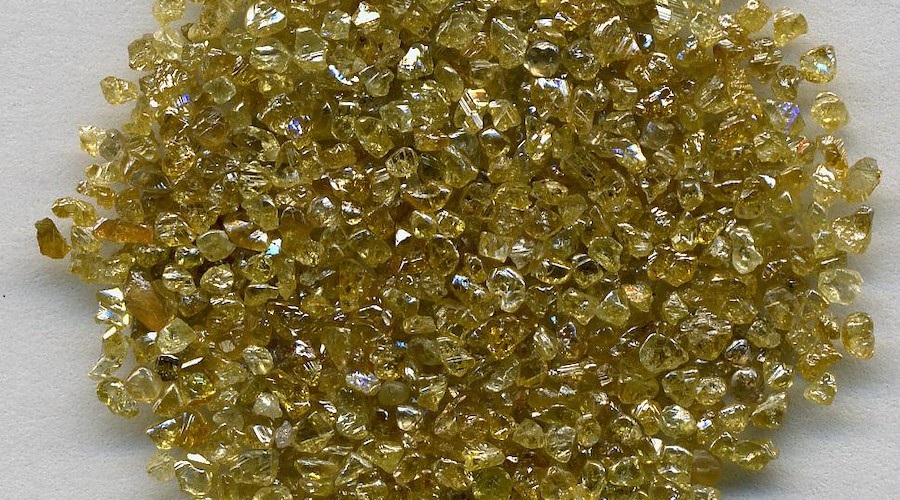
Zimbabwe Rough diamonds

Rough diamonds that were locked in a 15-year legal dispute in Zimbabwe are finally being sold.

The UK miner Vast Resources is offering parcels totaling 135,000 carats at a series of public and private tenders from now until the end of October.

Vast surrendered the gems in 2010 amid allegations it had exploited diamonds on mining claims previously owned by De Beers, which withdrew from Marange in 2006, saying it had failed to find viable reserves.

Vast Resources (then known as African Consolidated Resources) subsequently discovered massive alluvial diamond deposits there, which prompted the Zimbabwe government to revoke its mining licenses within months, and evict it.

The diamonds, held at Zimbabwe’s central bank since 2009, were finally handed back to Vast in April of this year.

They have undergone an extensive cleaning process in Dubai to remove multiple layers of metallic silicates and mineral coatings. As a result, around 6,000 carats initially classified only as industrial diamonds have been upgraded to gem quality.

In an update (on 15 September) Vast spoke of “a unique opportunity to most effectively realize value from the long-awaited parcels from the historic settlement and could open further opportunities for the company in the future”.

Source: DCLA

Tuesday, 16 September 2025

Lab Growns – without the High Pressure or Temperature

Lab Growns - without the High Pressure or Temperature

Researchers at the University of Tokyo say they’ve found a way to make tiny diamonds without the need for high temperature or high pressure conditions – unlike current lab grown technology.

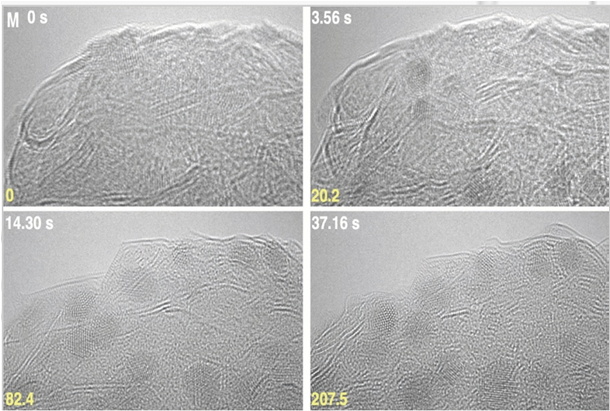
They use electron beams to break and remake bonds in adamantane (C10H16), a carbon molecule in which atoms are arranged in a pattern very similar to the atomic structure of diamond.

The process takes tens of seconds under transmission electron microscopy conditions in a vacuum (low-pressure chamber)

A team led by Professor Eiichi Nakamura, of the Department of Chemistry, has published its findings in the journal Science, in an article entitled Rapid, low-temperature nanodiamond formation by electron-beam activation of adamantane C-H bonds.

It explains how the controlled electron irradiation of adamantane produces defect-free nanodiamonds.

The breakthrough process is aimed at creating tiny diamonds for high-tech industries, scientific research, and medical fields, rather than larger gem-quality stones.

It works through gradual assembly of diamond lattice from adamantane molecules under prolonged electron irradiation, which naturally limits the size to nanodiamonds currently.

Larger diamond growth would require controlling fusion of these nanocrystals and sustained lattice perfection over much longer times and at a larger scale.

Gem quality lab growns are created either using High Pressure High Temperature (HPHT) or Chemical Vapor Deposition (CVD), which uses high temperatures and low pressure.

Source: DCLA

Monday, 15 September 2025

CIBJO U-Turn: Don’t Say Lab Grown, Say Synthetic

Don't Say Lab Grown, Say Synthetic

The World Jewellery Confederation (CIBJO) is set to reverse a decision made in 2010 – and insist that non-natural diamonds are labelled as “synthetic”.

It says the terms “laboratory-grown” and “laboratory-created” should be removed from the Diamond Blue Book – the de facto standard for diamond terminology, grading and trade practices – and from all relevant ISO Standards.

In addition, the 4Cs grading system should be used only for natural diamonds (as the GIA is now doing).

Udi Sheintal (pictured), president of CIBJO’s Diamond Commission, said the original acceptance of lab grown terminology had been well-intentioned, but proved to be misplaced.

“At the time, we believed we were acknowledging a commercial reality and extending a constructive hand to a new segment of the industry,” he said, in a special report ahead of the 2025 CIBJO Congress in Paris at the end of October.

“We hoped for a spirit of cooperation, with shared standards, ethics and transparency.”

But he said many in the synthetic diamond sector — along with some grading laboratories and major retail chains – took advantage of that inclusive approach.

“In addition, the marketing narrative around synthetic diamonds has been aggressively shaped to position them as the more ethical, sustainable, and conflict-free choice, almost always without substantiation.”

He also called for greater transparency, requiring that all descriptions and marketing of synthetic diamonds reflect the reality of their origin: they are not grown or created in a “laboratory,” but rather are manufactured in industrial facilities through artificial processes.

Source: IDEX

Sunday, 14 September 2025

US Tariffs: Patek Philippe “to Hike Prices by 15%”

Patek Philippe WATCHES

Patek Philippe will reportedly hike watch prices by 15 per cent tomorrow (Monday 15 September) in response to US reciprocal tariffs.

If confirmed, it will be Patek Philippe’s third price rise in the US this year, according to the WatchPro website.

Prices were increased in January because of soaring gold prices and the strength of the Swiss franc, and in April as a response to the US announcement of across-the-board tariffs.

Authorized dealers will also have their margins cut. Patek Philippe will be the first Swiss watchmaker to raise prices since the US introduced 39 per cent tariffs on 7 August.

Watchmakers rushed to export their goods ahead of the tariff deadline, resulting in a 6.9 per cent increase during July.

But price increases in the near future are almost inevitable as the reciprocal tariffs bite and stocks need replenishing.

One of the lowest-priced Patek Philippes, the $26,000 stainless steel Patek Philippe Aquanaut Ref. 5167A-001 (pictured) will cost $30,000 if the price increases take place.

Source: DCLA

Thursday, 11 September 2025

Indian Diamond Smuggler Jailed in Vietnam

Indian Diamond Smuggler Jailed in Vietnam

An Indian national has been jailed for seven years in Vietnam after he admitted smuggling diamonds worth $320,000 into the country.

Dapale Alkesh Kashinath, 28, said he’d been paid INR 10,000 ($120) by his employer, a Mumbai-based diamond company, to take the stones into the country without declaring them at customs.

Vietnam charges import duties of up to 27 per cent on polished diamonds and jewelry. VAT and other taxes may also apply.

It was Kashinath’s sixth or seventh smuggling trip. He would meet buyers at hotels and hand over the goods once they’d supplied coded and symbols agreed in advance with his employer.

He was apprehended at Tan Son Nhat International (pictured), Vietnam’s largest airport, in Ho Chi Minh City in October 2024.

X-rays of luggage revealed he had 15 plastic bags, containing 362 natural diamonds, hidden inside two candy boxes.

Kashinath was sentenced to seven years in prison last Friday (5 September) at Ho Chi Minh City People’s Court. An application to pay a fine instead was rejected.

Source: DCLA

Wednesday, 10 September 2025

Signet Sales Increase, Driven by Lab Growns

Kay, Zales, and Jared jewellers

Signet reported increased sales for Q2, as consumers increasingly opted for lab growns over natural diamonds.

It said 14 per cent of all the fashion jewelry items it sold during the quarter were lab grown – twice as many as the same period last year, and higher than Signet’s own expectations.

Total sales for the 13 weeks to 2 August were $1.5bn, up 3.0 per cent, and same store sales increased by 2.0 per cent, Signet said in its Second Quarter Fiscal 2026 Results.

Kay, Zales, and Jared the retailer’s three largest brands together delivered a combined 5 per cent same-store sales growth.

Adjusted operating profit for the quarter rose over 20 per cent reaching $85m, with a 24 per cent year-over-year gain.

Lab growns are viewed as a “category extender for fashion” and demand is most prominent in lower-priced products and fashion jewelry.

“Our second quarter results were driven by the expansion of on-trend fashion assortment and effective promotion and pricing strategies,” said J.K. Symancyk, Signet’s CEO.

Joan Hilson, chief operating and financial officer, said: “Reflecting second quarter results, expectations for the third quarter, and current tariff landscape, we’re raising our Fiscal 2026 guidance.

“This updated guidance also includes share repurchases to date and assumes a measured consumer environment.”

Source: DCLA

How Efforts to Control the Diamond Trade Are Hurting the Very Communities They Were Supposed to Protect

For more than two decades, global policies aimed at restricting the flow of diamonds from conflict zones most notably through the “blood dia...