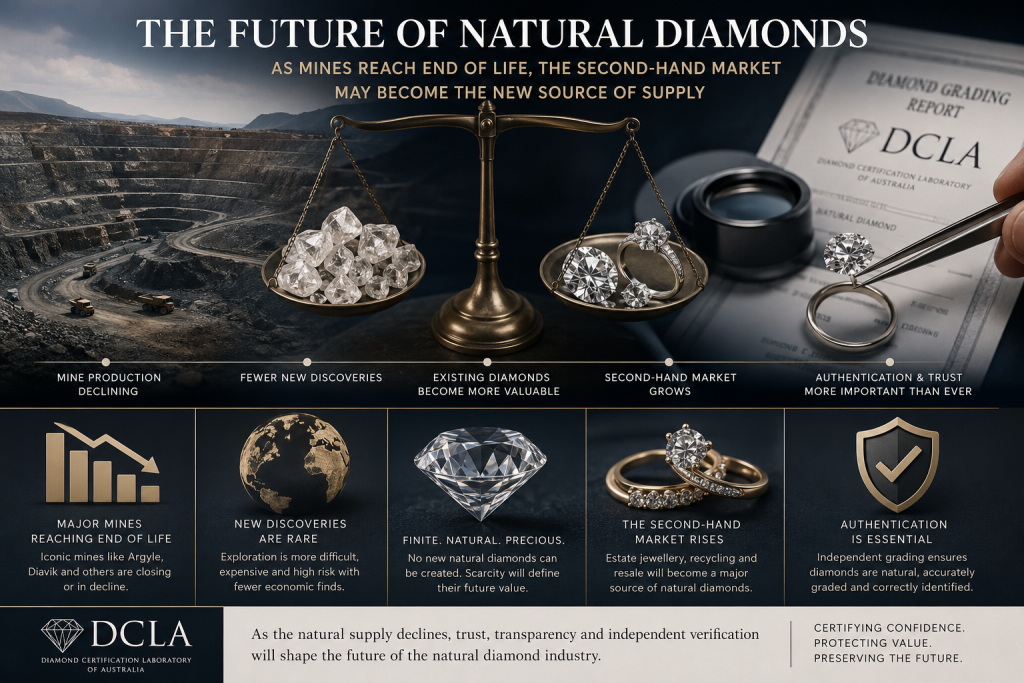
For more than 150 years, the world’s natural diamond industry has relied on a steady pipeline of newly mined diamonds entering the market. However, that era is rapidly changing. Many of the world’s most productive diamond mines are approaching the end of their economic lives, exploration success has slowed dramatically, and few major new discoveries are expected to replace the enormous production that is disappearing.
This raises an important question for the jewellery industry, collectors, and consumers alike:
Where will tomorrow’s natural diamonds come from?
The World’s Largest Diamond Mines Are Running Out
Many of the world’s iconic diamond mines are now in decline or nearing closure.
Examples include:
- Argyle Mine (Australia) – Closed in 2020 after producing more than 865 million carats over its 37-year life. Argyle supplied around 90% of the world’s rare pink diamonds and was once one of the highest-volume producers globally. Its closure permanently removed a significant source of natural diamonds from the market.
- Diavik Mine (Canada) – Scheduled to cease production around 2026–2027 after two decades of operation.
- Ekati Mine (Canada) – Although still operating, reserves continue to decline and production has fallen significantly from its peak.
- Venetia Open Pit (South Africa) – Transitioning to underground mining to extend its life, but at considerably lower production levels and substantially higher operating costs.
- Jwaneng (Botswana) – Often described as the richest diamond mine in the world, it continues to produce exceptional diamonds, although maintaining production requires increasingly expensive underground expansion projects.
- Orapa (Botswana) – One of the world’s largest diamond mines by area, but also a mature operation facing the realities of ageing reserves.
Few major discoveries have emerged over the past twenty years that are capable of replacing the millions of carats these operations once produced.
New Discoveries Are Becoming Increasingly Rare
Diamond exploration is an expensive, high-risk undertaking.
Unlike previous decades, when rich kimberlite pipes were discovered in Australia, Canada, Russia and southern Africa, today’s exploration companies face:
- Much deeper geological targets
- Increasing environmental approvals
- Higher capital costs
- Greater political uncertainty
- Reduced investor appetite
Even when a new deposit is found, bringing it into commercial production can take well over a decade and require investments measured in billions of dollars.
The result is a steadily shrinking pipeline of new natural diamonds.
Fewer Diamonds Does Not Mean Lower Demand
Although consumer preferences continue to evolve, natural diamonds remain highly sought after for fine jewellery, investment-grade stones and rare collector pieces.
Unlike laboratory-grown diamonds, every natural diamond is a finite geological resource formed between one and three billion years ago. Once mined, no new natural diamonds can be manufactured.
As mining output declines, the existing inventory of polished natural diamonds becomes increasingly important.
The Rise of the Secondary Market
Historically, relatively few diamonds returned to the market.
Natural diamonds were commonly passed through generations as family heirlooms or remained in jewellery collections for decades.
However, several factors are beginning to change this:
- An ageing population transferring wealth
- Estate jewellery entering the market
- Increased recycling by professional jewellers
- Specialist diamond buying companies
- Greater consumer awareness of resale value
- Online marketplaces making resale easier
Over time, previously owned natural diamonds may become one of the largest sources of supply for the jewellery trade.
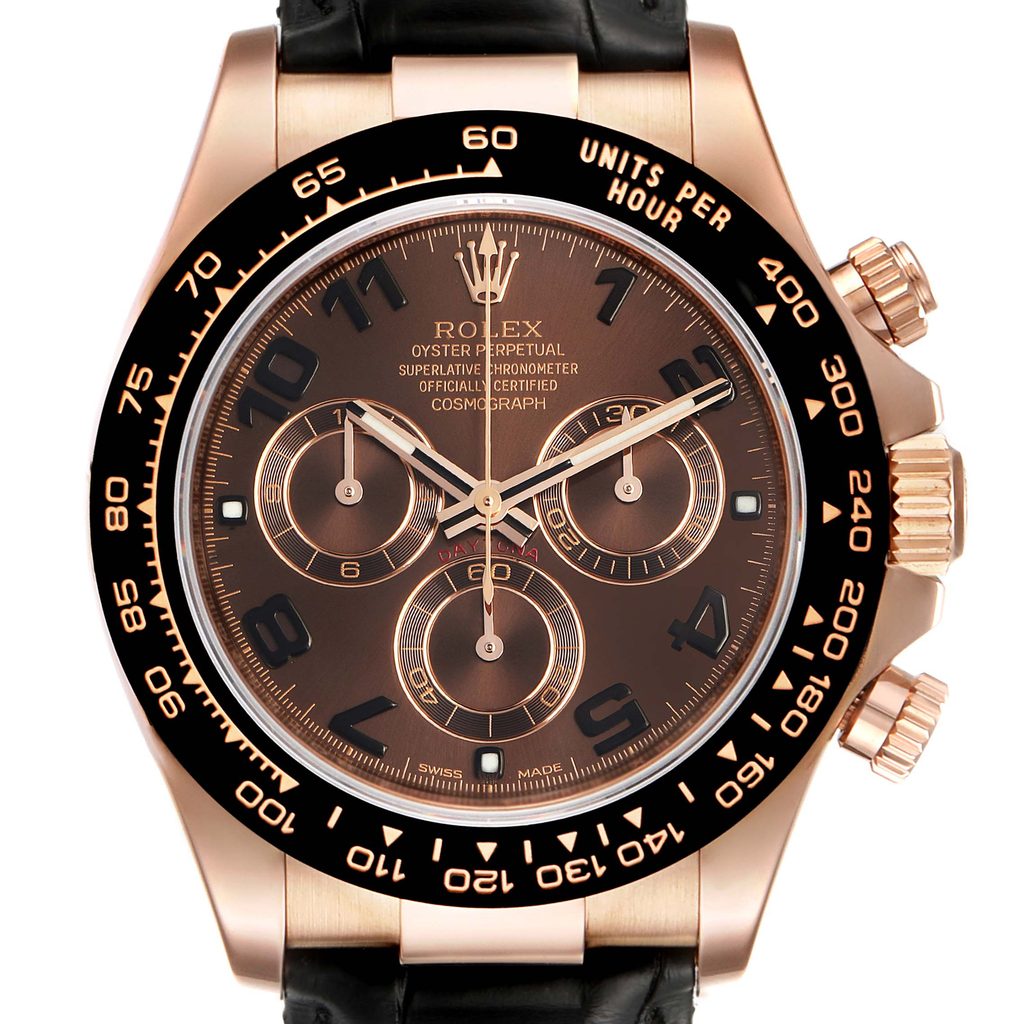
Much like antique watches, rare coins and fine art, existing natural diamonds may circulate repeatedly between owners while no meaningful replacement supply enters the market.
Recycling Diamonds Is Not New
The diamond trade has quietly recycled diamonds for centuries.
Antique European jewellery has often been dismantled and remounted multiple times as fashions changed.
Victorian diamonds became Edwardian jewellery.
Edwardian diamonds became Art Deco pieces.
Art Deco diamonds have been reset into modern engagement rings.
The diamond itself may have changed settings numerous times while remaining the same natural gemstone throughout its life.
This process is likely to accelerate as newly mined diamonds become increasingly scarce.
Authentication Will Become More Important Than Ever
As more diamonds enter the secondary market, authentication will become increasingly critical.
Consumers will want certainty that the diamond they are purchasing is:
- Natural rather than laboratory-grown
- Correctly identified
- Accurately graded
- Free from undisclosed treatments
- Properly documented
This places greater importance on independent laboratory grading.
Professional laboratories such as DCLA play an essential role in verifying the identity and quality of diamonds entering both the primary and secondary markets. Independent examination provides confidence for buyers, sellers, insurers and future owners alike.
The Growing Challenge of Laboratory-Grown Substitution
One emerging concern is the increasing number of natural diamond certificates being fraudulently paired with laboratory-grown diamonds or simulants.
As DCLA has previously reported, certificates can be separated from the original stone, creating opportunities for deliberate substitution. As secondary market activity increases, verifying that the diamond matches its accompanying grading report will become essential.
Independent examination helps protect both consumers and the integrity of the natural diamond market.
A Market That Could Resemble Fine Art
Natural diamonds possess one characteristic that laboratory-grown diamonds can never replicate—true geological scarcity.
As mine production continues to decline, natural diamonds may increasingly resemble other finite luxury assets such as fine art, vintage automobiles and rare watches.
Their value will not simply depend on beauty or craftsmanship, but also on rarity, provenance and authenticated identity.
The second-hand market is therefore likely to evolve from an occasional source of supply into a fundamental pillar of the global natural diamond industry.
Looking Ahead
The natural diamond industry is entering a period of structural change.
Mine production is expected to continue declining over the coming decades, while new discoveries remain scarce and increasingly difficult to develop. Existing polished diamonds already in private ownership represent an enormous reservoir of future supply.
As these stones gradually re-enter the marketplace through resale, estate collections and jewellery recycling, confidence in independent authentication will become more important than ever.
For laboratories such as DCLA, this evolving landscape reinforces a central responsibility: ensuring every diamond can be accurately identified, independently graded and matched to its rightful documentation. In a future where existing natural diamonds become an increasingly valuable and finite resource, trust will be as important as the diamonds themselves.
Disclaimer: This article is intended for general industry information and commentary. Market conditions, mine production and future supply forecasts are subject to change. DCLA encourages consumers and members of the jewellery trade to obtain independent laboratory verification when buying, selling or re-entering natural diamonds into the marketplace.