Meet Australia’s most trusted gemmologists, because at DCLA, expertise and transparency define every certification.
Step inside the nation’s only internationally accredited diamond grading laboratory and witness the precision behind every report.
Showing posts with label Elizabeth Taylor. Show all posts
Showing posts with label Elizabeth Taylor. Show all posts
There was a time when influence, like a diamond, was earned through rarity, pressure, and time.
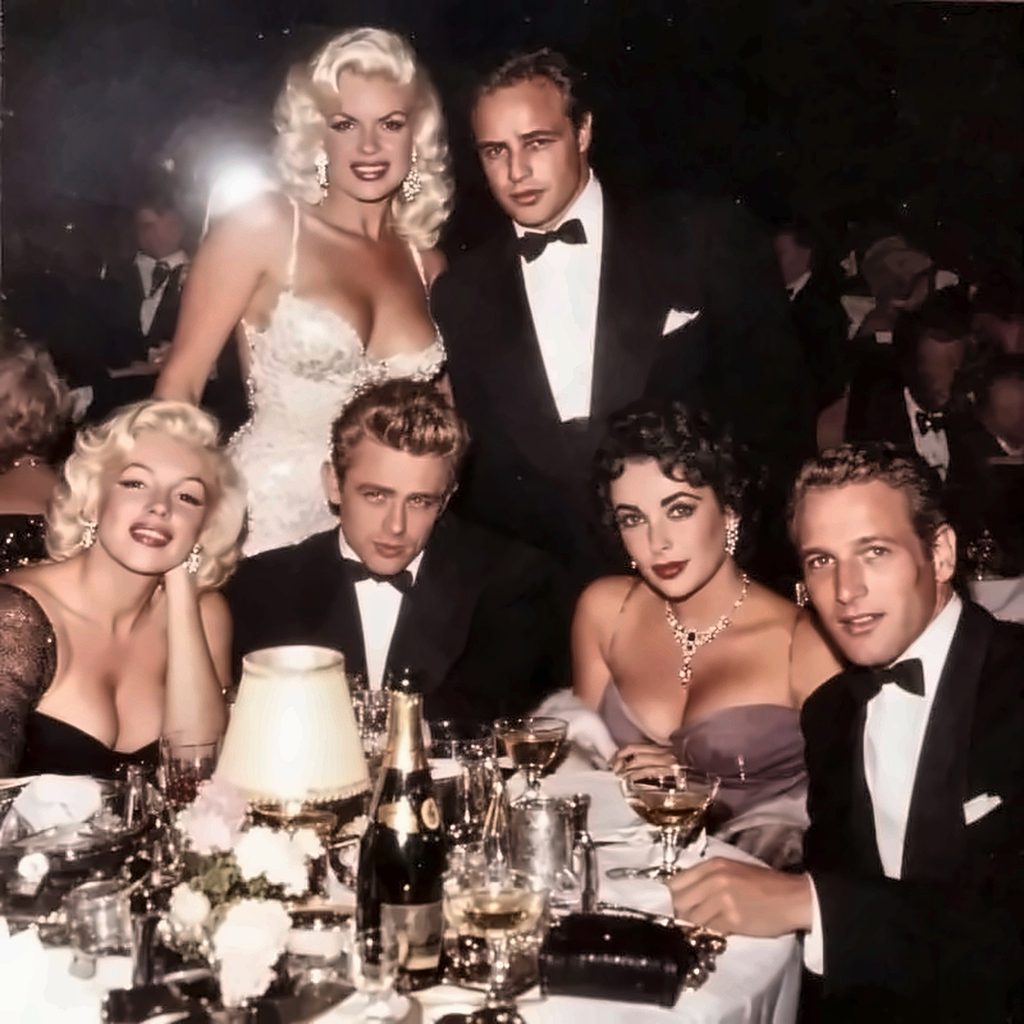
Look at any photograph of Marilyn Monroe, Elizabeth Taylor, James Dean, Marlon Brando, Paul Newman or Jayne Mansfield and you see more than celebrities. You see presence. Poise. An unforced elegance that did not need to shout. Their influence was the byproduct of talent, mystery and an almost aristocratic sense of self-possession. They did not chase relevance; relevance chased them.
Today that quality feels like a relic both in culture and in the world of diamonds.
From Icon to Content Machine, From Earth to Laboratory
The classic stars understood restraint. Allure was often found in what was withheld. Their public images were curated with care, built over years, and carried lasting cultural weight.
Modern influencing has largely abandoned those standards. Class has given way to spectacle. Quality has been replaced by volume. Value has been reduced to engagement metrics. What was once rare and carefully cultivated is now mass-produced, disposable and frequently coarse.
The same pattern has appeared in the diamond market.
Natural diamonds formed deep in the earth under extreme pressure over billions of years once stood as the ultimate symbol of rarity, permanence and prestige. They required discovery, risk and genuine scarcity. Lab-grown diamonds, by contrast, are manufactured in weeks under controlled conditions. They are chemically identical in many respects, yet they lack the geological story, the scarcity and the cultural weight that gave natural diamonds their enduring class.
The Collapse of Quality and Perceived Value
Quality once meant craft and authenticity. A star’s image, like a natural diamond’s origin, was refined through time and genuine constraint.
Today the influencer economy rewards speed, volume and constant availability. Trends last days. Personas shift weekly. The system privileges the lowest common denominator.
Lab-grown diamonds operate under a parallel logic. They offer visual similarity at a fraction of the price, but they erase the very qualities that made diamonds meaningful: rarity, natural formation and the sense that something unique has been brought into the light. When supply can be increased on demand, scarcity disappears. When origin becomes irrelevant, romance fades. The product remains, but the aura does not.
This is not merely aesthetic. It has commercial and cultural consequences. When influence is cheapened, audiences lose the ability to distinguish genuine authority from manufactured popularity. When diamonds are reduced to interchangeable stones, the language of lasting commitment and true luxury is diluted. Brands that once stood for elevation find themselves adjacent to the disposable.
Value Without Worth
True influence once carried cultural weight measured in longevity and impact. Natural diamonds carried the same kind of value: they were heirlooms, markers of genuine milestones, objects that held meaning across generations.
Much of today’s influencer economy measures value in temporary virality and affiliate codes. The lab-grown market often measures value in price per carat and production efficiency. Both trade lasting worth for immediate accessibility. The relationship becomes transactional. When the transaction ends, so does the connection whether with an audience or with a piece of jewellery.
A Path Back to Class
DCLA exists to protect confidence in diamonds through independent, internationally accredited grading. That mission has never been more relevant. In a marketplace flooded with synthetic alternatives and diluted cultural signals, the distinction between the authentic and the manufactured matters.
Class is not nostalgia. It is a competitive advantage. Quality is not an outdated luxury; it is the only durable form of value. Natural diamonds, like the iconic figures of the past, still carry the weight of genuine rarity and history. They do not need to convince the world they matter. Their origin makes the argument for them.
The same standard remains available in culture and in the diamond industry. It simply requires the courage to choose rarity over replication, substance over spectacle, and lasting value over the merely convenient.
In an age of endless content and endless production, the things that still feel rare are the ones that still feel real.
When a princess or a film star wears a jewel, the world notices. But does the average buyer want to copy them, or own something no one else in the world has?
For as long as jewellery has been worn, people have looked to the famous for cues. Royal courts set fashions across Europe for centuries, and today red-carpet events like the Oscars, the Emmys and the Met Gala do the same job, only faster, beamed instantly to millions of phones. Yet talk to any jeweller and you’ll hear another story too: more customers than ever are walking in wanting a piece that is entirely their own.
So which is it? Are jewellery buyers followers, or are they individualists? The answer, it turns out, is a bit of both.
The Diana effect
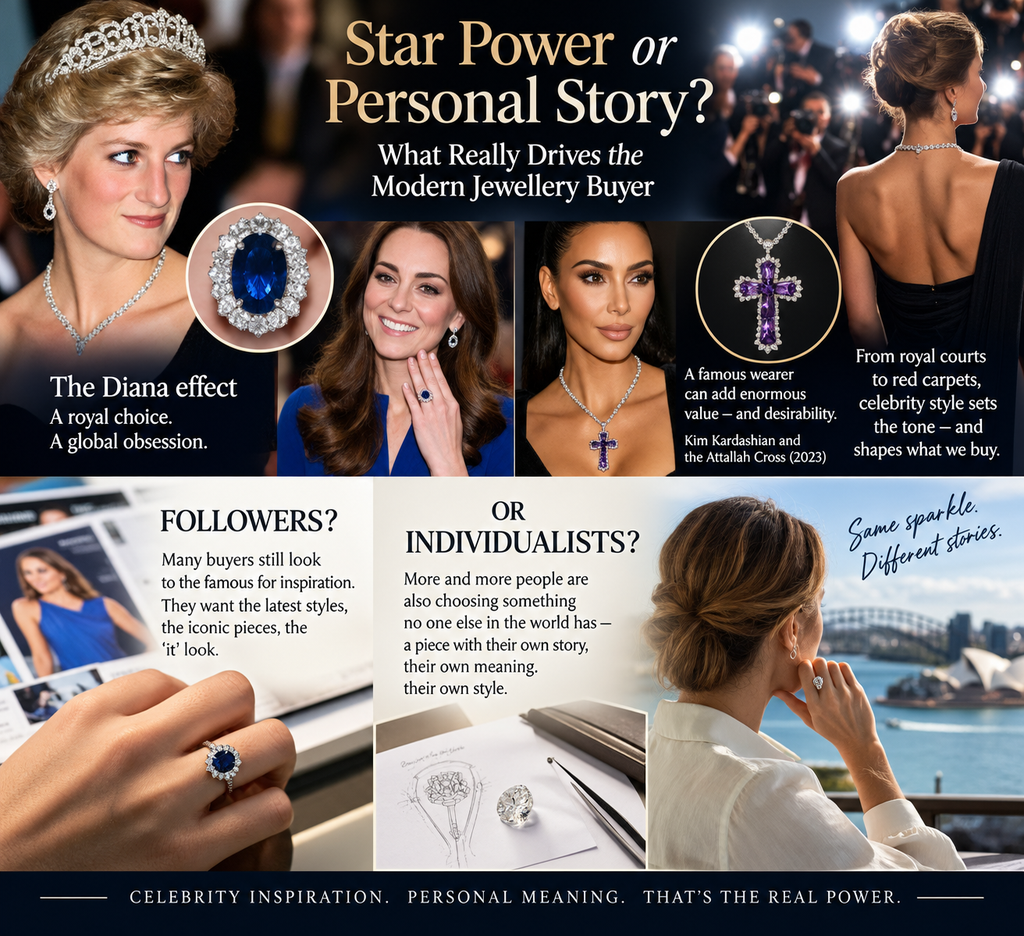
There’s no better example of celebrity influence than the engagement ring Prince Charles gave Lady Diana Spencer in 1981: a large oval Ceylon sapphire surrounded by diamonds, from the Crown Jewellers Garrard.
What’s remarkable is that the ring wasn’t a one-off commission. It was chosen from a catalogue, which at the time drew some criticism because, in theory, anyone with the money could buy the same design. Diana didn’t care. She chose it because she liked it, and in doing so she made the sapphire and diamond cluster one of the most copied engagement ring styles in history.
The ring’s influence doubled when Prince William proposed to Catherine Middleton with it in 2010. Jewellers around the world reported a surge of interest in sapphire engagement rings, and replicas at every price point flooded the market, from fine jewellery versions to inexpensive costume copies.
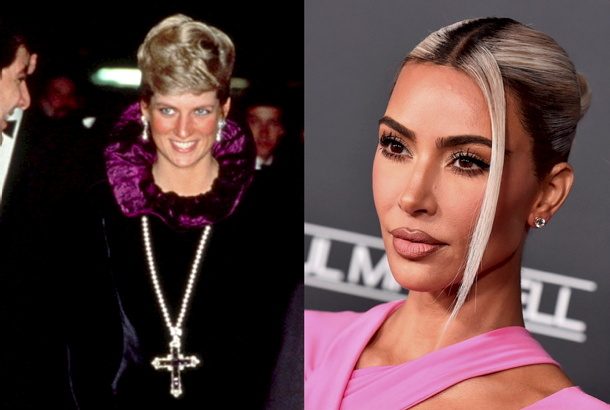
Diana’s influence continues today. In 2023, Kim Kardashian bought the Attallah Cross, an amethyst and diamond pendant Diana wore, at a Sotheby’s auction, a reminder that a jewel’s association with a famous wearer can add enormously to its desirability and value.
Hollywood’s red-carpet showroom
If royalty sets long-term trends, Hollywood sets the seasonal ones. Major jewellery houses have been lending pieces to stars for awards nights since the mid-20th century. Harry Winston, famously nicknamed “Jeweler to the Stars”, helped turn the Oscars into what is effectively the world’s most-watched jewellery showcase.
Some pieces become legends in their own right. Audrey Hepburn wore the Tiffany Yellow Diamond, a stone of more than 128 carats, in publicity photographs for Breakfast at Tiffany’s in 1961. Decades later, Lady Gaga wore the same diamond to the 2019 Oscars, and Beyoncé wore it in a Tiffany campaign, proof that a famous jewel can connect generations of fans.
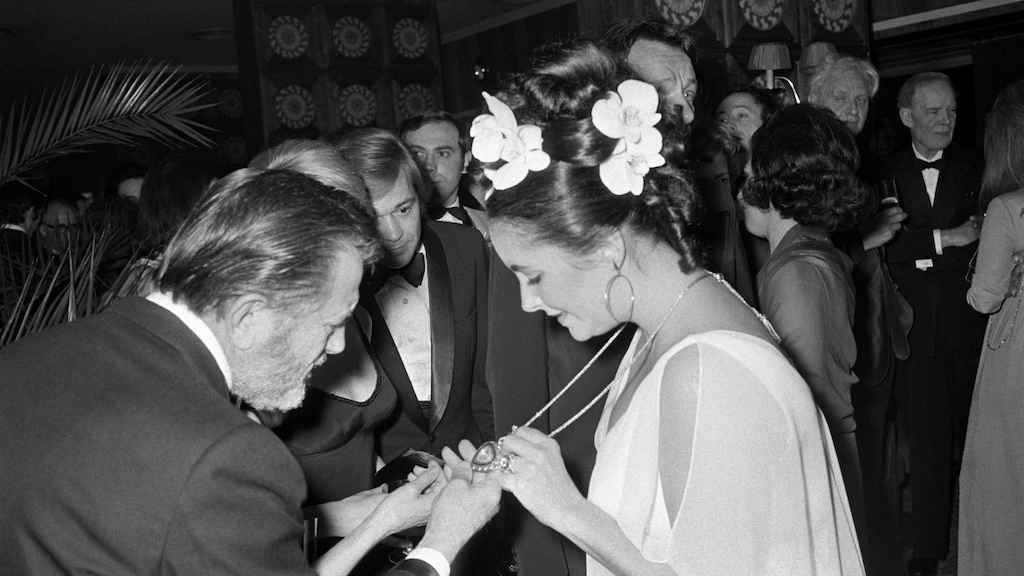
Grace Kelly’s emerald-cut Cartier diamond engagement ring helped make that clean, elegant cut a symbol of old-Hollywood glamour, a style still popular with brides today. Elizabeth Taylor, meanwhile, showed that jewellery could be as much a part of a star’s persona as her films. Her enormous diamonds, many of them gifts from Richard Burton, made bold statement stones fashionable and turned her collection into one of the most celebrated ever sold at auction.
More recently, the red carpet has shifted what men wear too. Stars such as Harry Styles and Timothée Chalamet have popularised pearl necklaces, brooches and statement pieces for men, and jewellers have noticed younger male customers asking for pieces that would have seemed unusual a decade ago.
So are buyers just followers?
Not quite. Celebrity influence tends to work on styles rather than exact pieces. Very few people want an identical copy of Diana’s ring; what they want is the feeling of it: a coloured stone, a halo of diamonds, a touch of royal romance.
Television offers a good example. When Carrie Bradshaw wore her gold “Carrie” nameplate necklace in Sex and the City, name necklaces surged in popularity. But the whole point of the trend was personalisation, since everyone’s necklace spelled a different name. The celebrity sparked the idea, and the buyer made it their own. The nameplate style also had deep roots in Black and Latino communities and hip-hop culture long before it reached mainstream TV.
The rise of the one-of-a-kind piece
Several forces are pushing buyers towards bespoke jewellery. The first is meaning. Many customers want jewellery that tells their story: a birthstone, an engraving, a grandmother’s diamond reset into a modern design, or a stone sourced from a place with personal significance.
Even the royal family has moved in this direction. Prince Harry designed Meghan Markle’s engagement ring himself, with a centre diamond from Botswana, a country meaningful to the couple, flanked by diamonds from his mother Diana’s collection. It was a celebrity ring that couldn’t really be copied, because its meaning couldn’t be copied.
Technology has made the process easier. Computer-aided design and 3D printing mean customers can see and adjust a custom design before it’s made, and bespoke work is far more accessible than it once was. Lab-grown diamonds have changed budgets too, allowing more buyers to afford a larger or more unusual custom piece than they could with a mined stone of the same size.
Social media cuts both ways. Instagram and TikTok spread celebrity trends faster than ever, but they also make people wary of wearing exactly what everyone else is wearing. Seeing the same ring a thousand times on a feed can make a buyer want something different.
An Australian twist
Australia has its own relationship with star-studded jewellery, and its own gems that buyers seek out precisely because they’re rare.
When Crown Prince Frederik of Denmark proposed to Tasmanian-born Mary Donaldson in 2003, he chose an emerald-cut diamond flanked by two rubies, the red and white echoing the colours of the Danish flag. It was a ring with a story built in, and it drew enormous interest back home. Mary became Queen of Denmark in January 2024, and her ring remains a favourite example of royal jewellery that is personal rather than simply grand.
Western Australia’s Argyle mine was for decades the world’s main source of pink diamonds before it closed in 2020. With no new supply coming out of the ground, Argyle pinks have become some of the most sought-after stones on earth. For many buyers, owning one isn’t about copying anyone; it’s about owning something almost no one else can.
Opal, Australia’s national gemstone, is a natural fit for the personalisation trend. Black opals from Lightning Ridge and the vivid stones of Coober Pedy are never alike, so every opal ring is, by definition, one of a kind. And as male celebrities make pearls fashionable again, Australian South Sea pearls from Broome, prized for their size and lustre, are well placed to benefit from a trend that started on the world’s red carpets.
The verdict: inspired, not identical
Most jewellery buyers sit somewhere in the middle. Celebrities and fashion set the mood: they tell us sapphires are romantic, yellow diamonds are glamorous, and pearls are cool again. But when it comes to a piece a person will wear every day for the rest of their life, most want their own twist on the trend.
For jewellers, the lesson is clear. Keep an eye on the red carpet, because that’s where customers’ ideas are born. But be ready to turn that inspiration into something personal, because the modern buyer doesn’t just want to look like a star. They want a piece that could only ever belong to them.
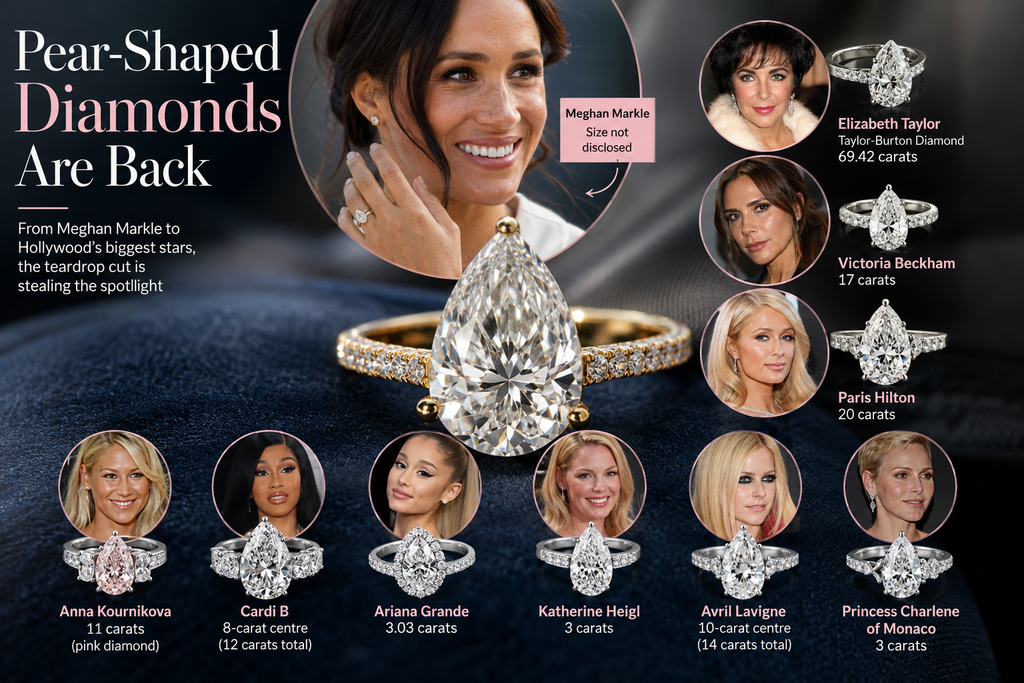
When Meghan Markle recently appeared wearing a previously unseen pear-shaped diamond ring on her right hand, jewellery watchers were quick to take notice. The Duchess of Sussex showcased the striking ring while promoting her As Ever lifestyle brand, adding another high-profile name to a growing list of celebrities and royals who have embraced the distinctive diamond shape.
The identity of the ring’s designer and the exact weight of Meghan’s diamond have not been publicly confirmed. However, jewellery experts have noted that the stone appears substantial, and its appearance has once again put the pear-shaped diamond firmly in the spotlight.
And Meghan is certainly not alone.
From Hollywood actresses and pop stars to royalty and sporting legends, some of the world’s most recognisable women have chosen pear-shaped diamonds.
From teardrop to timeless
The pear shape, sometimes called a teardrop cut, combines characteristics of the round brilliant and marquise cuts. Its rounded end gives the stone brilliance, while the pointed tip creates a distinctive elongated silhouette.
The shape dates back centuries, with its development traditionally associated with Flemish diamond cutter Lodewyk van Bercken in the 1400s.
For years, however, the shape carried an unfortunate reputation because of its resemblance to a tear. Some believed that wearing a “teardrop” diamond could symbolise tears or sadness.
Modern jewellery buyers appear far less concerned with the old superstition.
Today, the pear is increasingly associated with individuality, elegance and glamour. Its elongated outline can also create impressive visual spread, making a diamond appear larger than another stone of the same carat weight.
Elizabeth Taylor set the standard
Long before today’s celebrity engagement rings, one woman demonstrated just how spectacular a pear-shaped diamond could be.
Elizabeth Taylor’s legendary Taylor-Burton Diamond weighed 69.42 carats when it was acquired for her by Richard Burton in 1969.
The diamond was cut from a remarkable 240.80-carat rough stone discovered at South Africa’s Premier Mine in 1966. Harry Winston and his cutters transformed it into a 69.42-carat pear-shaped diamond graded E-F colour and Internally Flawless clarity by GIA.
Richard Burton famously acquired the diamond from Cartier for approximately US$1.1 million, after Cartier had purchased it at auction for US$1.05 million.
Taylor initially wore the stone as a ring before having it transformed into a spectacular necklace. The diamond became one of the most recognisable jewels in Hollywood history.
It was later sold by Taylor, and the stone was subsequently recut to 68 carats.
The Taylor-Burton remains perhaps the ultimate example of how a pear-shaped diamond can become much more than jewellery — it can become part of popular culture.
Victoria Beckham’s 17-carat statement
Victoria Beckham has also demonstrated the appeal of the pear shape.
David Beckham gave Victoria a spectacular 17-carat pear-shaped diamond set in platinum. The stone became one of the most recognisable pieces in her extensive engagement-ring collection and was reportedly worth millions of dollars.
Victoria later repurposed the diamond as a pendant, wearing it at the wedding celebrations of her son Brooklyn Beckham and Nicola Peltz.
It is a perfect example of another advantage of exceptional diamonds: a great stone can be redesigned and worn in completely different ways without losing its identity.
Anna Kournikova’s extraordinary pink pear
One of the most unusual celebrity pear-shaped diamonds belongs to former tennis star Anna Kournikova.
In 2004, Kournikova was photographed wearing an extraordinary 11-carat natural pink pear-shaped diamond, reportedly from Australia’s Argyle mine. The stone was flanked by two trillion-cut white diamonds.
The ring attracted enormous attention, although Kournikova and Enrique Iglesias never publicly confirmed whether the ring represented a formal engagement.
The combination of a large pear shape and natural pink colour made the ring particularly remarkable — especially given the rarity of larger natural pink diamonds.
Paris Hilton went even bigger
Paris Hilton’s engagement ring from Chris Zylka became another celebrity pear-shaped sensation.
The centre stone was widely reported at 20 carats, surrounded by approximately two carats of smaller diamonds, giving the entire ring a reported total of around 22 carats. The ring was valued at approximately US$2 million at the time.
The enormous pear-shaped stone quickly became one of the most talked-about celebrity engagement rings of 2018.
Cardi B: 8-carat pear with a spectacular setting
Cardi B’s engagement ring from Offset took the pear shape in an entirely different direction.
The centre diamond was reported at 8 carats, with two additional one-carat pear-shaped diamonds on either side. Two diamond halos surrounded the centre stone, including white and pink diamonds.
The entire ring has been estimated at approximately 12 carats of diamonds.
Rather than relying solely on the size of the centre stone, the design uses multiple pear-shaped diamonds and coloured diamonds to create a much larger visual impact.
Ariana Grande chose a more delicate pear
Ariana Grande has also worn one of the most recognisable modern pear-shaped celebrity rings.
When Pete Davidson proposed to Grande in 2018, he presented her with a 3.03-carat pear-shaped diamond, reportedly VVS1 clarity, set in platinum with a small diamond halo. The ring was custom-made by jeweller Greg Yuna and was reported to be worth approximately US$93,000.
The engagement was short-lived, but the ring became one of the defining celebrity pear-shaped designs of its era.
Katherine Heigl keeps it classic
Actress Katherine Heigl chose a considerably more understated version.
Her engagement ring from Josh Kelley features a 3-carat pear-shaped diamond set on a platinum band.
It demonstrates why the pear shape remains so versatile. The same basic cut can look spectacular at 20 carats or elegant and understated at three.
Avril Lavigne’s 14-carat showstopper
Singer Avril Lavigne was presented with an enormous pear-shaped engagement ring by Chad Kroeger in 2012.
Reports put the entire ring at 14 carats, with the centre pear-shaped diamond estimated at approximately 10 carats and around four carats of side diamonds.
The ring was a perfect match for Lavigne’s more unconventional style and demonstrated how the pear can work equally well for a vintage-inspired or contemporary design.
Princess Charlene brings the pear into royalty
The pear shape has also found its way into royal jewellery.
Princess Charlene of Monaco received a 3-carat pear-shaped diamond from Prince Albert II when they became engaged. The stone is surrounded by smaller diamonds arranged in a distinctive geometric design and was reportedly created by Parisian jeweller Repossi.
The ring is particularly interesting because it combines the traditional brilliance of the pear shape with a modern architectural setting.
The celebrity pear-shaped diamond list
Some of the better-known examples include:
Celebrity / Royal
Reported pear diamond size
Elizabeth Taylor – Taylor-Burton
69.42 carats
Paris Hilton
20 carats
Victoria Beckham
17 carats
Avril Lavigne
Approx. 10-carat centre / 14 carats total
Anna Kournikova
11 carats
Cardi B
8-carat centre
Ariana Grande
3.03 carats
Katherine Heigl
3 carats
Princess Charlene of Monaco
3 carats
Meghan Markle
Exact size not publicly confirmed
These figures should be viewed carefully. Celebrity jewellery is often reported from expert estimates rather than laboratory certificates, and some reports quote the centre stone while others quote the total diamond weight of the entire ring.
Why are pear-shaped diamonds becoming popular again?
There is a practical reason behind the renewed interest.
A well-proportioned pear-shaped diamond has considerable surface area for its weight. Its elongated outline can make it appear larger on the finger than a round diamond of the same carat weight.
It also gives buyers something different.
The round brilliant remains the benchmark for traditional diamond engagement rings, while oval, cushion, emerald and radiant cuts have all developed strong followings. The pear sits somewhere between classic and unconventional.
It has the brilliance people expect from a brilliant-cut diamond, but its asymmetrical outline gives it considerably more personality.
For jewellery buyers, that combination is increasingly attractive.
And perhaps that explains why Meghan Markle’s latest appearance has attracted so much attention.
The pear-shaped diamond may once have been dismissed as the “teardrop” cut. Today, it is increasingly being seen as a statement of individuality.
From Elizabeth Taylor’s legendary 69.42-carat jewel to Victoria Beckham’s 17-carat diamond, Anna Kournikova’s rare pink stone and the spectacular rings worn by Paris Hilton and Cardi B, the pear shape has already established an extraordinary celebrity history.
Meghan Markle may simply be the latest star to remind the world that, when it comes to diamonds, sometimes the most distinctive shape is the one that stands out from the crowd.
Sources checked:DCLA, GIA for the Taylor-Burton specifications and history; Vogue and Natural Diamonds for Victoria Beckham; Natural Diamonds for Anna Kournikova; Town & Country for Paris Hilton; Us Weekly and specialist jewellery sources for Cardi B, Ariana Grande, Katherine Heigl and Avril Lavigne; ELLE for Meghan Markle’s current pear-shaped ring.
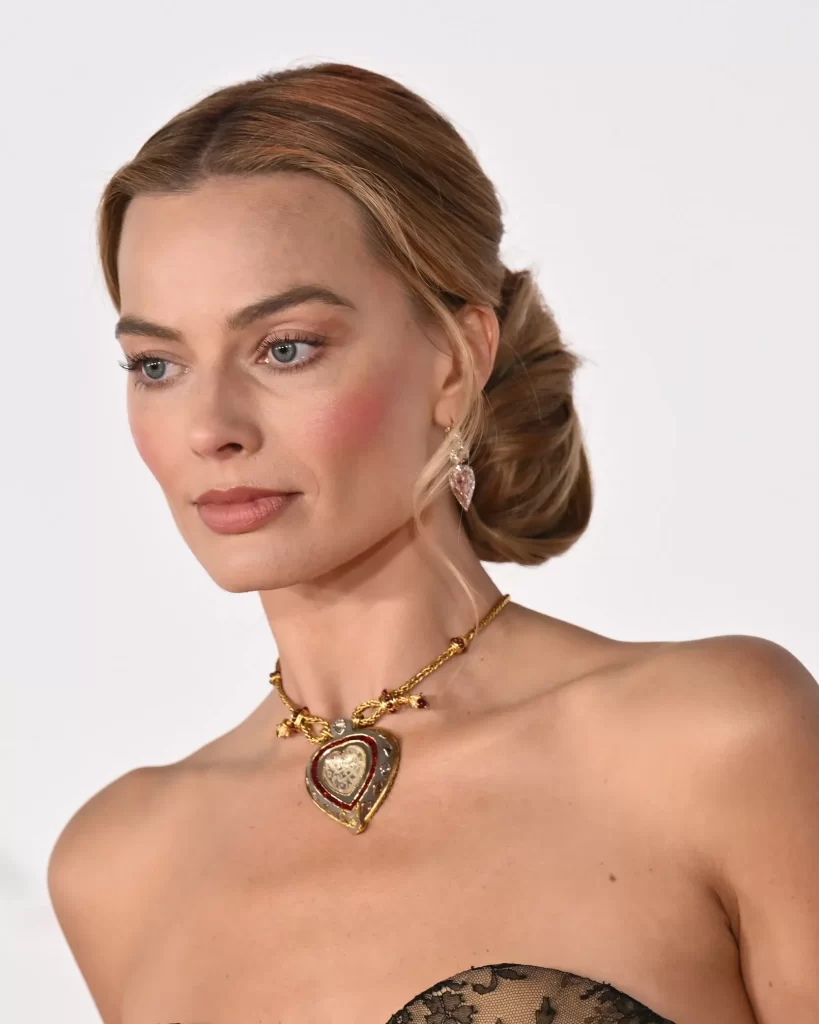
At the world premiere of Wuthering Heights in Los Angeles, Margot Robbie delivered a masterclass in red-carpet storytelling by wearing one of the most legendary jewels in history: Elizabeth Taylor’s heart-shaped Taj Mahal Diamond, set in its iconic Cartier necklace.
The choice was far more than a glamorous nod to vintage jewellery. By adorning the historic diamond, Robbie underscored director Emerald Fennell’s vision of Wuthering Heights as not merely a faithful adaptation of Emily Brontë’s gothic novel, but a stylised homage to Old Hollywood passion, excess and epic love stories. On screen, Robbie and Jacob Elordi embody the turbulent romance of Catherine and Heathcliff—off screen, the Taj Mahal Diamond evokes one of cinema’s most famous real-life love affairs: Elizabeth Taylor and Richard Burton.
A Masterstroke of Method Dressing
The inspired jewellery moment was orchestrated by Robbie’s stylist, Andrew Mukamal, renowned for his meticulously curated fashion narratives, including the global Barbie press tour. The concept began months earlier, when The Elizabeth Taylor Estate invited Mukamal to explore its unparalleled jewellery archives.
“We were thrilled when Andrew got in touch, and we offered him the Taj Mahal Diamond for Margot Robbie to wear to the world premiere of Wuthering Heights,” said Tim Mendelson, Trustee of The Elizabeth Taylor Estate. “Elizabeth deeply cherished the symbolism of jewellery. No other piece in her collection is more powerfully associated with epic, undeniable and tempestuous love that transcends time—even death—than the Taj Mahal Diamond.”
The Taj Mahal Diamond: A Jewel of Legendary Love
Few diamonds carry a narrative as rich as the Taj Mahal Diamond. Often described as a talisman of enduring devotion, the jewel perfectly mirrors the emotional intensity associated with both Wuthering Heights and Taylor’s own life.
Elizabeth Taylor and Richard Burton’s famously tempestuous romance began on the set of Cleopatra in 1962 and quickly became one of the most scrutinised relationships of the 20th century. Their love was marked not only by passion and public drama, but by extraordinary jewels, including the 69.42-carat Taylor-Burton Diamond, the 33.19-carat Krupp Diamond (later renamed the Elizabeth Taylor Diamond), and the Taj Mahal Diamond itself.
An Origin Rooted in Eternal Devotion
The romance of the Taj Mahal Diamond stretches back centuries. The heart-shaped, table-cut diamond is inscribed in Parsi with the words “Love is Everlasting”, alongside the name of Nur Jahan, wife of Mughal Emperor Jahangir. The jewel was later passed to their son, Emperor Shah Jahan, who is believed to have gifted it to his beloved wife, Mumtaz Mahal.
Following Mumtaz Mahal’s death in childbirth in 1631, Shah Jahan commissioned the construction of the Taj Mahal, one of the world’s most enduring monuments to love. Completed over 20 years, the white marble mausoleum remains a masterpiece of Islamic art—and the emotional origin of the diamond’s name and symbolism.
Cartier Craftsmanship and Elizabeth Taylor’s Ownership
In 1971, Cartier acquired the Taj Mahal Diamond, mounting it in jade and accenting it with table-cut diamonds and red gemstones. Celebrated Cartier designer Alfred Durante later created a woven gold and ruby necklace inspired by the original silk cord, complete with rondelles, an adjustable slide and a distinctive tassel.
The jewel was presented to Richard Burton and Elizabeth Taylor in 1972 by Cartier president Michael Thomas during a stopover in New York. Burton ultimately gifted the necklace to Taylor for her 40th birthday during a lavish celebration in Budapest, attended by cultural icons including Princess Grace Kelly, Ringo Starr and Michael Caine.
From Elizabeth Taylor to Margot Robbie: A New Chapter in Jewellery History
More than fifty years later, the Taj Mahal Diamond continues to captivate. Worn choker-style by Margot Robbie, with the tassel trailing elegantly down her back, the necklace once again became the centre of attention—sparking conversations, admiration and awe, just as it did when Elizabeth Taylor first wore it.
By choosing this extraordinary diamond, Robbie has added a new chapter to one of jewellery history’s greatest love stories, proving that truly iconic jewels are not just objects of beauty, but vessels of memory, emotion and timeless romance.
For the diamond world, moments like these reaffirm why provenance, craftsmanship and history remain as valuable as the gemstones themselves.
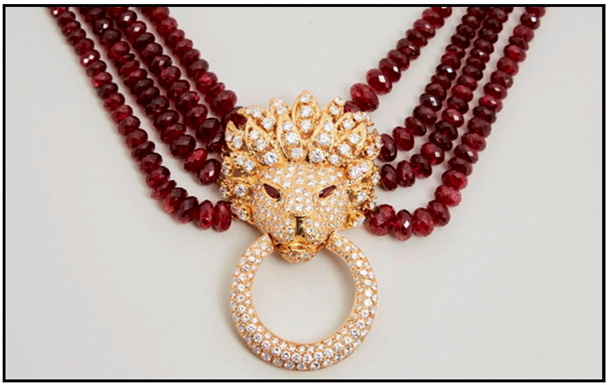
Jewelry from the collection of screen icon Elizabeth Taylor are to be sold at a Beverly Hills auction.
The highlight is a ruby, diamond, and gold necklace (pictured) with lion’s face design and matching earrings. Estimate $100,000 to $200,000.
There’s also a 1935 Art Deco emerald and diamond brooch – old mine-cut and European cut – mounted in platinum and gold, with an estimate of $20.000 to $30,000.
And a gold and diamond Star of David pendant necklace designed by Theo Fennell and marking her conversion to Judaism in 1959. Estimate $20,000 to $30,000.
They’ll be offered for sale at Bold Luxury: The Limelight Edit auction by Julien’s Auctions, on 27 March 27 at The Peninsula Beverly Hills, along with fashion and other items owned by Marilyn Monroe, Cher, Victoria Beckham and Amy Winehouse.
“Bold Luxury is not just an auction — it’s an invitation to step into the limelight and own a tangible piece of cultural history,” said Martin Nolan, co-founder and executive director of Julien’s Auctions.
Kim Kardashian has debuted an iconic piece of jewelry – the amethyst and diamond pendant famously worn by the late Princess Diana.
She paid $197,000 at Sotheby’s London for the for the Attallah Cross in January.
It belonged to the late prominent Palestinian-British businessman Naim Ibrahim Attallah, who bought it in the 1980s and often loaned it to the late princess.
Kardashian, 44, and wore it in public for the first time at the LACMA Art+Film Gala in Los Angeles earlier this month.
It was the first time the necklace had been worn in public since Diana’s death in 1997.
The fleuree cross, circa 1920, is set with a square-cut amethyst, accented by approximately 5.25 carats of circular-cut diamonds.
Kardashian has, over the years, bought and worn jewelry that belonged to Marilyn Monroe, Janet Jackson, Jackie Kennedy and Elizabeth Taylor.