When the choice is yours, what matters most: rarity, size, beauty or simply the diamond you fall in love with?
There was a time when choosing a diamond seemed straightforward.
You selected a shape, a size, a colour and a clarity, and the decision was largely about finding the finest natural diamond within your budget.
Today, there is another choice.
Natural or laboratory-grown?
And for many jewellery buyers, that choice creates an entirely new question:
Would you rather own a smaller exceptional natural diamond, or a significantly larger laboratory-grown diamond of outstanding quality for the same price?
There is no wrong answer.
Both are diamonds.
Both can be extraordinarily beautiful.
Both can be cut to exceptional standards.
And both can become part of a piece of jewellery that is treasured for a lifetime.
The difference is not whether one is a “real” diamond and the other is not.
The difference is where the diamond came from — and what that means to you.
A Diamond Is More Than Its Size
Walk into a diamond showroom and the first thing you may notice is size.
A two-carat diamond naturally commands attention beside a one-carat diamond.
But experienced diamond buyers know that size is only one part of the story.
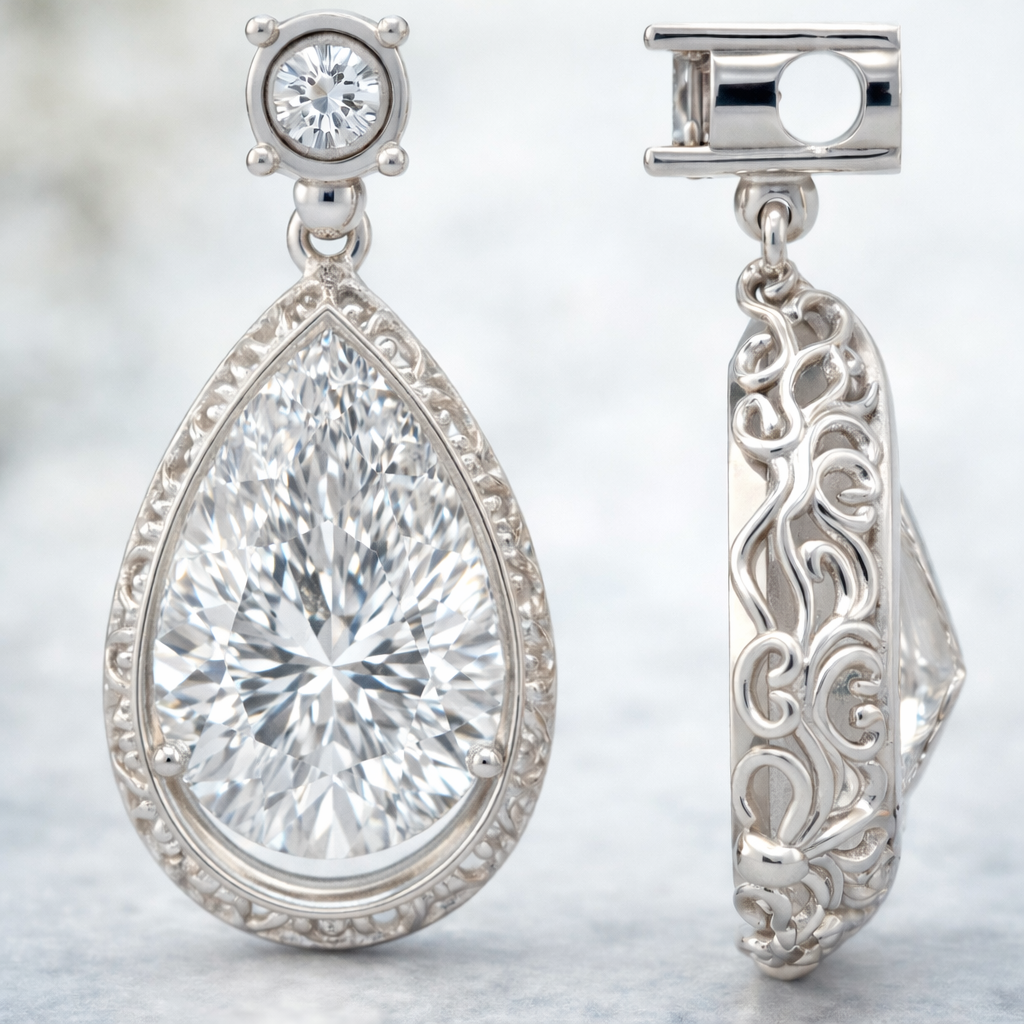
A diamond’s beauty comes from the relationship between its carat weight, colour, clarity and cut.
The quality of the cut determines how effectively the stone handles light. The proportions, symmetry and polish can transform the way a diamond performs, creating the flashes of brilliance and fire that make a beautifully cut diamond so captivating.
This is why a smaller diamond with exceptional proportions can sometimes appear more beautiful than a considerably larger stone that has been compromised in other areas.
At DCLA, our approach is simple:
Look beyond the number on the scale and understand the diamond itself.
The Natural Diamond: A Story Written by Nature
For the natural diamond buyer, the attraction often begins long before the diamond reaches a jewellery case.
A natural diamond is a product of nature and geological time.
Created deep within the Earth under extraordinary conditions, natural diamonds can take billions of years to form before geological forces eventually bring them closer to the surface.
Every natural diamond is therefore a geological individual.
Its crystal growth, inclusions, colour and characteristics tell part of its story.
For many people, this is what makes a natural diamond so special.
You are not simply buying a beautiful gemstone.
You are buying something created by nature on a timescale almost impossible for us to comprehend.
And when exceptional size, colour, clarity or unusual characteristics are combined, natural diamonds can become extraordinarily rare.
That rarity is one of the great attractions of the natural diamond.
The Laboratory-Grown Diamond: Modern Diamond Creation
Laboratory-grown diamonds offer a completely different story.
Rather than being formed naturally within the Earth, they are created using advanced technology under controlled conditions.
The result is still a diamond.
Laboratory-grown diamonds possess the same fundamental carbon crystal structure as natural diamonds and can display the same extraordinary brilliance, fire and durability.
For the consumer, one of the most compelling advantages is choice.
A laboratory-grown diamond can allow a buyer to consider a significantly larger stone, or a higher colour and clarity grade, for a similar budget to a smaller natural diamond.
And this is where the decision becomes personal.
The $10,000 Question
Imagine you have a budget of $10,000 for an engagement ring.
You could choose a beautifully cut natural diamond of perhaps a smaller size, with excellent colour and clarity.
Or you could choose a considerably larger laboratory-grown diamond with exceptional colour, clarity and cut.
Which would you choose?
There is no universal answer.
One buyer may look at the natural diamond and think:
“This is the one. I love the fact that nature created it.”
Another may look at the larger laboratory-grown diamond and think:
“This is exactly what I want. I love the size, beauty and quality.”
Neither buyer is wrong.
They simply value different things.
What Does Your Diamond Mean to You?
This is perhaps the most important question of all.
A diamond is rarely purchased simply because it is a transparent crystal with a high refractive index.
It is purchased because it means something.
An engagement ring represents a promise.
An anniversary diamond represents years together.
A family jewel can represent generations.
And sometimes a diamond is simply something beautiful that you want to own and wear.
For one person, the romance is in rarity and natural origin.
For another, it is in size and exceptional beauty.
For another, it may be the knowledge that modern technology has made an extraordinary diamond accessible at a particular price.
There is no laboratory report that can tell you which of those feelings is the right one.
Price Changes the Conversation
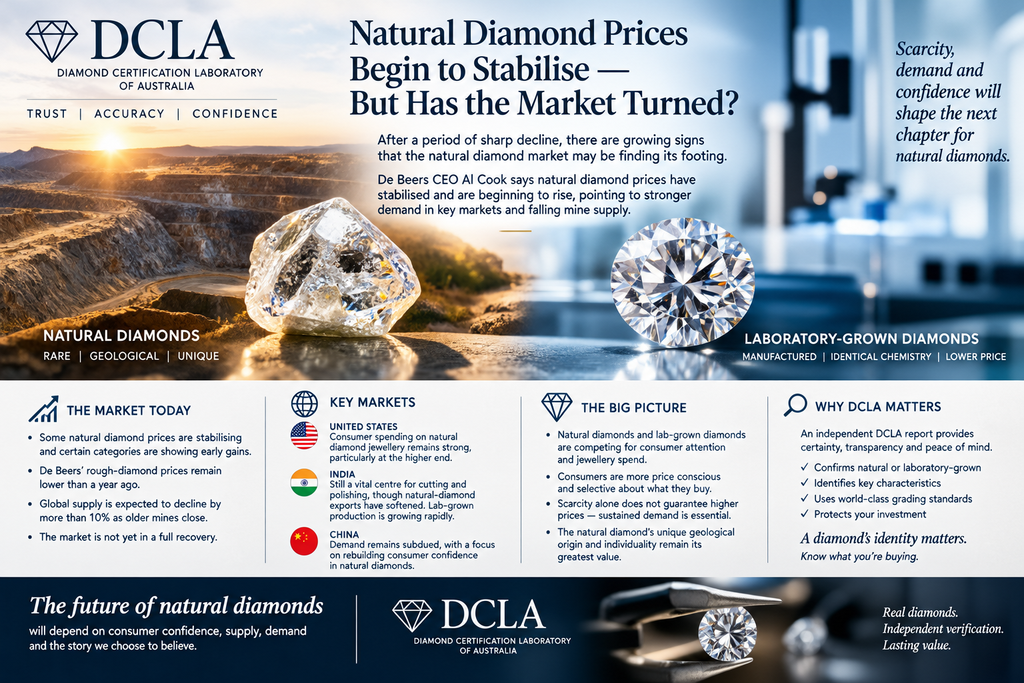
The growing availability of laboratory-grown diamonds has dramatically changed the diamond market.
Laboratory-grown diamonds can now be produced at increasing scale, and this has placed considerable pressure on their prices.
That creates an important distinction for consumers.
A laboratory-grown diamond may offer substantially more size for the same initial purchase price, but buyers should not automatically assume that the two categories will behave in the same way in the secondary market.
Natural diamonds and laboratory-grown diamonds have different supply characteristics and different market dynamics.
This is why DCLA believes consumers should understand what they are buying, why it is priced as it is, and what makes that particular diamond desirable.
A diamond should first and foremost be bought because you love it.
The Four Cs Still Matter
Whatever your choice of origin, quality remains important.
Cut
For many buyers, cut is the heart of diamond beauty.
A beautifully proportioned diamond can return light with remarkable intensity, producing brilliance, fire and scintillation.
Colour
Colour can range from completely colourless through to diamonds with increasingly visible body colour.
The difference between individual grades may be subtle to the eye, yet significant in the marketplace.
Clarity
Natural diamonds contain characteristics created during their geological formation, while laboratory-grown diamonds can have characteristics associated with their growth process.
Clarity is not simply about finding a diamond with the fewest inclusions.
It is about understanding what is present and how it affects the appearance and beauty of the stone.
Carat
Carat measures weight, not beauty.
A larger diamond is not automatically a better diamond.
The most beautiful diamond is the one where all of its characteristics work together.
Why Independent Diamond Certification Matters
Whether you choose natural or laboratory-grown, you should know exactly what you are buying.
A professional diamond grading report provides an independent record of the stone’s characteristics, including its measurements, carat weight, colour, clarity and other important identifying features.
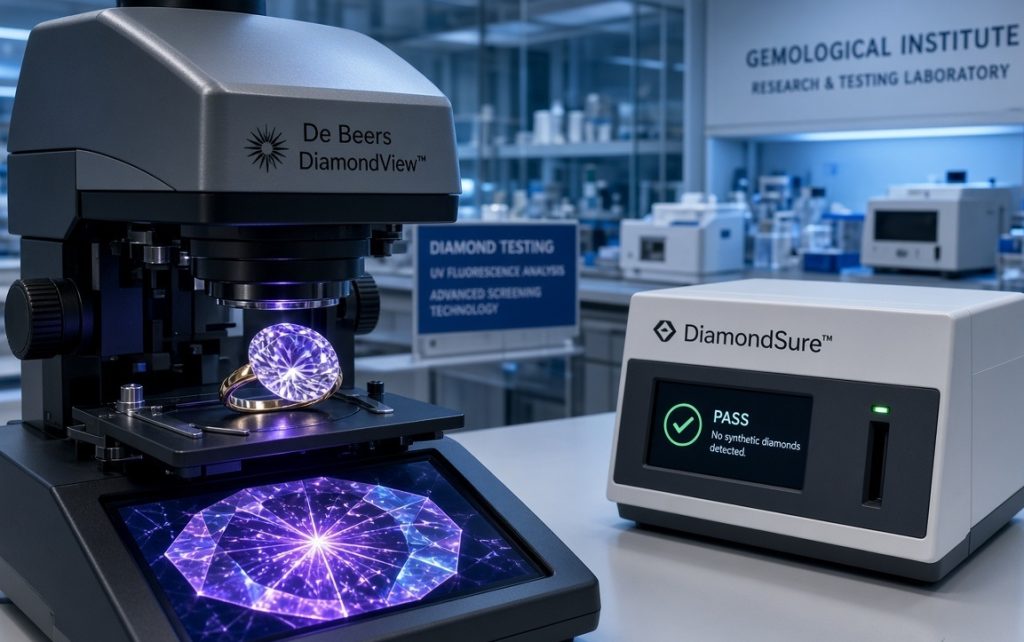
It also establishes whether the diamond is natural or laboratory-grown.
This is where the expertise of an independent laboratory becomes particularly valuable.
At the DCLA Diamond Exchange, diamonds are examined by experienced diamond professionals using recognised grading methodologies and advanced technology.
Explore the DCLA Diamond Grading Reports to understand how an individual diamond is documented and assessed.
For consumers comparing stones, DCLA also provides access to both Natural Diamond and Laboratory-Grown Diamond resources.
The Luxury of Choice
Perhaps the greatest change in today’s diamond market is that consumers have more choice than ever before.
You can choose a natural diamond because of its rarity, geological history and connection to nature.
You can choose a laboratory-grown diamond because it allows you to maximise size, colour and clarity within your budget.
Or you can simply choose the diamond that makes you stop and look twice.
That moment matters.
Because ultimately, the most important diamond is not necessarily the biggest.
It is not necessarily the rarest.
And it is not necessarily the most expensive.
It is the one you want to own.
Natural or Laboratory-Grown?
So, if you were offered a choice between:
A smaller, exceptional natural diamond
or
A much larger, exceptional laboratory-grown diamond
for approximately the same price, what would you choose?
The answer belongs to you.
At DCLA, we do not believe consumers should be told what they must value.
Our role is to provide the expertise, independent information and professional diamond assessment that allow you to make an informed decision.
Because a diamond is intensely personal.
Choose the diamond that speaks to you.
Whether its story began billions of years ago beneath the Earth or in a modern laboratory, what matters most is that you understand its story — and that you love the diamond you choose.
DCLA Diamond Exchange
Independent diamond expertise. Professional assessment. Knowledge you can trust.
Explore the DCLA Diamond Exchange and discover the difference that independent diamond expertise can make.