Showing posts with label natural color diamonds. Show all posts

Sunday, 9 August 2026

Natural or Laboratory-Grown? How Can You Tell What Diamond Is in Your Ring?

 Buying a diamond is a significant investment, and for many people, understanding exactly what they own is just as important as the beauty of the stone itself.

Buying a diamond is a significant investment, and for many people, understanding exactly what they own is just as important as the beauty of the stone itself.

Today, consumers have more choice than ever. Alongside natural diamonds, laboratory-grown diamonds are widely available and can look virtually identical to the unaided eye. Both can be beautiful, durable and suitable for jewellery — but they are not the same type of diamond, and their values, origins and market characteristics can be very different.

So, if you already own a diamond ring, or you are considering buying one, how can you tell whether the diamond is natural or laboratory-grown?

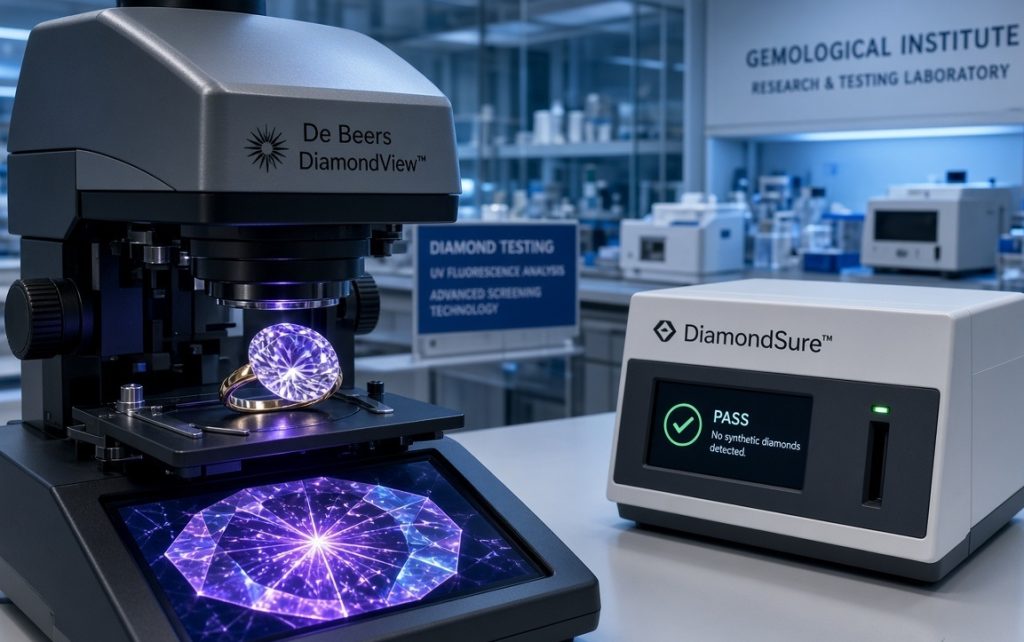
The short answer is: you generally cannot tell reliably by looking at the diamond or using a basic diamond tester.

Why Natural and Laboratory-Grown Diamonds Look So Similar

A laboratory-grown diamond is not simply a diamond imitation.

Unlike cubic zirconia or many diamond simulants, laboratory-grown diamonds have essentially the same chemical composition and crystal structure as natural diamonds. They are created using advanced technology that replicates some of the conditions under which diamonds form naturally.

The two main laboratory-growing technologies are:

  • HPHT — High Pressure High Temperature
  • CVD — Chemical Vapour Deposition

Because laboratory-grown diamonds are genuine crystalline diamond material, many traditional diamond testing instruments will identify them as diamond.

That is where the confusion can begin.

A tester telling you that your stone is a diamond does not necessarily tell you whether it is a natural diamond or a laboratory-grown diamond.


What Can a Basic Diamond Tester Tell You?

Many jewellery stores, pawnbrokers and consumers use handheld diamond testers.

These devices are useful as a first screening tool. Depending on the type of tester, they may measure properties such as thermal conductivity or electrical conductivity to determine whether a stone behaves like diamond.

For example, a basic thermal diamond tester may indicate:

“Diamond.”

That can be useful information — but it does not necessarily mean:

“Natural diamond.”

A laboratory-grown diamond can also test as diamond because it is diamond.

The limitation is important

A basic diamond tester is generally designed to distinguish diamond from certain simulants. It is not a definitive origin test.

This means a consumer should be cautious about relying on a handheld tester as proof that a diamond is natural.

Some more advanced screening instruments can identify characteristics associated with laboratory-grown diamonds and can help separate natural diamonds from laboratory-grown stones. However, screening is still different from issuing an independent grading report.


Can You Tell by Looking at the Diamond?

In most cases, no.

Natural and laboratory-grown diamonds can both display:

  • Excellent brilliance
  • Fire and scintillation
  • Similar colour grades
  • Similar clarity characteristics
  • Similar cuts and proportions
  • Exceptional hardness

To the unaided eye, even an experienced jewellery professional may not be able to determine the origin of a diamond simply by examining it.

This is particularly important when buying a second-hand ring, inherited jewellery or a diamond without documentation.

The fact that a diamond looks beautiful does not tell you whether it is natural or laboratory-grown.


What About a Loupe?

A jeweller’s loupe can reveal inclusions and other characteristics inside a diamond, and an experienced gemmologist may sometimes recognise features that suggest a particular origin.

However, a loupe is not a substitute for laboratory testing.

Laboratory-grown diamonds can contain distinctive growth features, and natural diamonds can contain a wide variety of inclusions and characteristics. Some observations can raise suspicion or indicate that further testing is required, but visual examination alone should not be treated as definitive proof of origin.


What About the Laser Inscription?

One of the most useful things a consumer can check is the laser inscription on the diamond’s girdle.

Many diamonds accompanied by a laboratory report have a microscopic inscription on the edge of the stone corresponding to the report number.

If your diamond has a report, a jeweller or gemmologist can use magnification to examine the girdle and compare the inscription with the report.

However, consumers should understand that an inscription alone is not proof of a diamond’s identity. It needs to correspond with the actual laboratory report and the characteristics of the stone.

If there is no report, an inscription by itself provides very limited protection.


Why an Independent Diamond Laboratory Report Matters

This is where an independent gemmological laboratory becomes extremely important.

A professional laboratory can examine the diamond using sophisticated equipment and gemmological techniques that go far beyond a basic handheld tester.

Depending on the laboratory and the examination required, testing may assess characteristics such as:

  • Natural or laboratory-grown origin
  • Diamond quality
  • Colour
  • Clarity
  • Cut and proportions
  • Fluorescence
  • Inclusions
  • Treatments
  • Growth characteristics
  • Other identifying features

The result is an independent report that documents the characteristics of the stone.

This creates something extremely valuable for the consumer:

A documented identity for your diamond.


Why This Protects You When Buying a Diamond

Imagine purchasing a diamond ring today for a significant amount of money.

The salesperson tells you that the centre stone is a natural diamond.

You take the ring home, but there is no independent laboratory report.

Years later, you decide to sell, upgrade or insure the ring.

How do you prove what the diamond actually is?

This is where problems can arise.

Without independent documentation, you may be relying on:

  • The original seller’s description
  • An old invoice
  • A valuation
  • Your own understanding of the stone
  • A basic diamond tester
  • A verbal representation of the diamond’s origin

None of these provides the same level of independent evidence as a recognised laboratory report.


A Valuation Is Not the Same as a Diamond Grading Report

This distinction is often misunderstood.

A valuation primarily addresses the monetary value of an item for a particular purpose, such as insurance or estate planning.

A diamond grading report documents the gemmological characteristics of the diamond.

These are different services.

For example, a valuation might state that a ring has an estimated replacement value of a particular amount. It does not necessarily establish, to the same level of gemmological certainty, whether the centre diamond is natural or laboratory-grown.

For consumers buying a significant diamond, having the diamond independently examined and documented can therefore be extremely important.


Natural Diamond or Laboratory-Grown Diamond — Why the Difference Matters

There is nothing inherently wrong with choosing a laboratory-grown diamond.

For some consumers, a laboratory-grown diamond may provide the opportunity to purchase a larger or higher-specification diamond for a particular budget.

Others specifically want a natural diamond because of its geological origin, rarity, history and established place within the natural diamond market.

The important point is choice and transparency.

A customer should know exactly what they are buying and what they are paying for.

A laboratory-grown diamond should be represented as laboratory-grown.

A natural diamond should be represented as natural.

The consumer should never have to guess.


What Should You Do Before Buying?

If you are purchasing a significant diamond, DCLA recommends asking a few straightforward questions:

1. Is the diamond natural or laboratory-grown?

Do not rely solely on verbal assurances.

2. Is there an independent laboratory report?

Ask to see the original report and check that it corresponds with the diamond.

3. Does the diamond have a report number inscription?

If so, have the inscription checked under magnification.

4. Does the report describe the actual diamond?

The report should correspond to the stone’s identifying characteristics.

5. If there is no report, can the diamond be independently examined?

For a valuable diamond, independent verification can provide significant peace of mind.


What If You Already Own a Diamond Without a Report?

Don’t panic.

If you have an engagement ring, inherited diamond, family jewellery or a diamond purchased many years ago without documentation, it does not automatically mean there is a problem.

You can have the diamond examined by a suitably qualified gemmological laboratory.

Professional testing can help establish whether the stone is natural or laboratory-grown and document its characteristics.

This can be particularly valuable if you are considering:

  • Selling the diamond
  • Upgrading your jewellery
  • Obtaining insurance
  • Estate planning
  • Dividing an inheritance
  • Purchasing a replacement
  • Establishing what you actually own

The Bottom Line: Don’t Test the Diamond — Verify It

A basic diamond tester can be useful.

A loupe can be useful.

An experienced jeweller can be useful.

But none of these should be confused with a comprehensive independent laboratory examination.

A diamond tester can tell you that a stone behaves like diamond. It does not necessarily tell you whether that diamond came from the earth or was grown in a laboratory.

When the origin and quality of a diamond matter, independent laboratory testing and documentation provide the strongest form of consumer protection.

DCLA — Independent Diamond Expertise

The Diamond Certification Laboratory of Australia (DCLA) provides professional diamond and gemmological services designed to give consumers, jewellers, insurers and industry professionals greater confidence in the diamonds they buy, sell and own.

Whether you are purchasing a new diamond, checking an existing engagement ring or looking to understand the characteristics and origin of a family diamond, independent examination can give you something a simple tester cannot:

documented confidence in what your diamond actually is.

When it comes to a significant diamond purchase, don’t simply ask, “Does it test as a diamond?”

Ask the more important question:

“Can I independently verify exactly what this diamond is?”

Sunday, 5 July 2026

The Natural Diamond Market Evolves as Consumer Preferences Shift

 Taylor Swift following her engagement to Travis Kelce

The natural diamond industry continues to adapt to one of the most significant changes in its modern history as laboratory grown diamonds reshape consumer buying habits and pricing expectations across the jewellery sector.

Laboratory grown diamonds, which possess the same chemical and physical properties as natural diamonds, have become widely available at substantially lower prices. Their rapid growth during and after the pandemic accelerated changes within the diamond market, placing considerable pressure on commercial quality natural diamonds and fundamentally altering consumer perceptions of value.

Rather than experiencing the short term disruption many industry observers initially predicted, the market has entered a period of structural change. Commercial grade natural diamonds continue to face pricing challenges, while exceptional natural diamonds remain highly sought after. Large, rare and unusually coloured natural diamonds continue to command strong premiums, reflecting the enduring importance of rarity and provenance.

Individuality Becomes the New Definition of Luxury

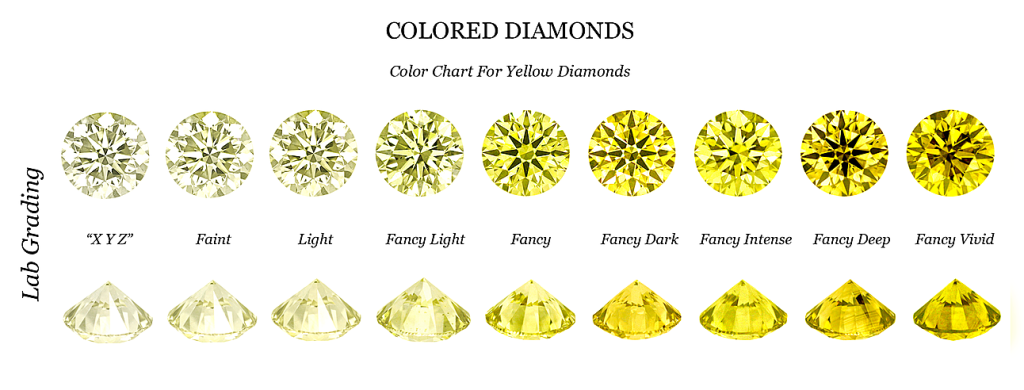
While colourless diamonds have traditionally been regarded as the benchmark of quality, increasing numbers of buyers are now embracing diamonds with warmer colour tones.Champagne, light yellow and other naturally warm coloured diamonds

Alongside these broader market changes, consumer tastes are also evolving. While colourless diamonds have traditionally been regarded as the benchmark of quality, increasing numbers of buyers are now embracing diamonds with warmer colour tones.

Champagne, light yellow and other naturally warm coloured diamonds are attracting growing interest, particularly among younger consumers who value individuality and authenticity over traditional grading ideals. Rather than viewing warmer colours as imperfections, many now appreciate them as unique expressions of nature that offer distinctive beauty and excellent value.

This shift represents a broader change in luxury purchasing behaviour. Consumers increasingly seek jewellery that reflects personal style instead of conventional standards, creating new opportunities for naturally coloured diamonds that were once overlooked.

Celebrity Influence Reinforces the Trend

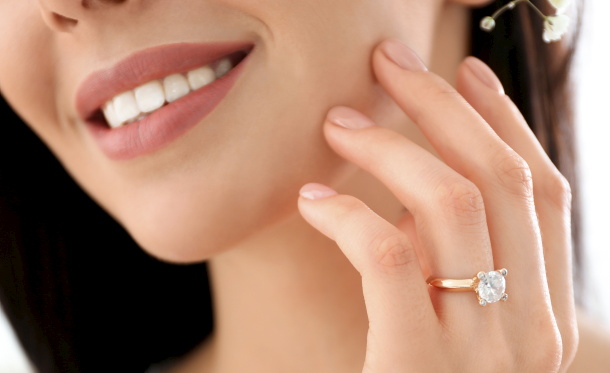
Celebrity engagement rings continue to influence consumer preferences, and one of the most discussed examples has been the engagement ring worn by Taylor Swift following her engagement to Travis Kelce.

Industry observers have noted that the distinctive natural diamond chosen for the ring has contributed to growing interest in unique diamond selections rather than traditional colourless stones. As personalised jewellery continues to gain popularity, engagement rings featuring warmer colour grades and distinctive characteristics are becoming increasingly desirable.

Natural Diamonds Continue to Differentiate Themselves

While laboratory grown diamonds have established a significant position within the jewellery market, they serve a different consumer proposition from natural diamonds. The rarity, geological origin and finite supply of natural diamonds remain their defining characteristics.

As the market continues to mature, the distinction between laboratory grown and natural diamonds is becoming clearer. Laboratory grown diamonds are increasingly viewed as a manufactured jewellery product, while natural diamonds continue to represent rarity, individuality and a unique connection to the Earth’s history.

For consumers, understanding these differences is becoming increasingly important. For the industry, transparency, education and independent grading remain essential to maintaining confidence in both categories.

DCLA continues to support the jewellery industry through independent diamond grading, accurate identification and consumer education, ensuring buyers have confidence in the products they purchase and the information they receive.

Source: DCLA

Sunday, 21 June 2026

Natural Diamonds Face a Defining Period of Change and Opportunity

 Marketing Remains Critical for Natural Diamond Demand

The natural diamond industry is entering a crucial period of transformation, with market leaders highlighting the key forces that will shape demand, supply and consumer confidence over the next five years.

According to analysis from De Beers, rebuilding demand for natural diamonds will depend on several important industry priorities, including stronger marketing, clearer differentiation from lab grown diamonds and a more balanced supply environment.

Marketing Remains Critical for Natural Diamond Demand

De Beers believes effective marketing will play a central role in restoring consumer desire for natural diamonds. After a period of changing consumer behaviour and economic uncertainty, the industry must continue to communicate the unique emotional value, rarity and enduring legacy of natural diamonds.

Building a stronger connection with younger consumers will be essential to ensuring natural diamonds maintain their position as symbols of love, commitment and achievement.

Lab Grown Diamond Pricing Faces Growing Pressure

The rapid growth of synthetic lab grown diamonds has created a new competitive landscape for the diamond industry.

However, current retail margins on lab grown diamonds are expected to face increasing pressure as competition expands and production continues to rise. As prices decline, the industry believes consumers will increasingly focus on understanding the differences between natural diamonds and laboratory created alternatives.

Differentiation Becomes Key to Consumer Confidence

Clear education and transparency will be vital for the future of the diamond market.

Natural diamonds are formed over billions of years beneath the earth’s surface, while lab grown diamonds are created through technological processes in controlled environments. Ensuring consumers understand these differences will be important in maintaining confidence and value perception.

Independent grading and certification from recognised laboratories such as DCLA will continue to play an important role in providing consumers with trust and assurance when purchasing natural diamonds.

Declining Rough Diamond Supply Could Support Long Term Market Balance

Another major factor shaping the future of natural diamonds is declining global rough diamond production.

With several major mines reaching maturity and fewer large discoveries entering production, supply is expected to reduce over the medium to long term. A tighter supply environment could help support a healthier balance between availability and demand.

Russia Introduces New Rough Diamond Export Duty

Russia is set to introduce an 8% export duty on rough diamonds weighing 0.45 carats or more from September 1.

The new measure, announced through a government decree, adds another layer of complexity to the global rough diamond supply chain. Russia remains one of the world’s largest diamond producers, meaning changes to its export policies can influence international market dynamics.

AWDC Launches First Sale of Traceable Artisanal Diamonds from Congo

The Antwerp World Diamond Centre has completed its first sale of artisanally mined rough diamonds from the Democratic Republic of Congo through the OrigemA programme.

Established in 2022 as a partnership between Belgium and the DRC, OrigemA aims to connect small scale Congolese miners with international markets by providing fully traceable artisanal diamonds.

The programme is designed to improve market access for artisanal miners while ensuring they receive fair value for their production. The DRC accounts for a significant share of global artisanal diamond output, making responsible sourcing initiatives increasingly important for the future of the industry.

Petra Diamonds Faces Ongoing Industry Pressure

Petra Diamonds continues to experience the challenges affecting many mid tier diamond producers as the industry works through a prolonged period of market disruption.

Lower rough diamond prices, weaker luxury demand in key markets and increased competition from lab grown diamonds have created financial pressure across the sector.

The company’s restructuring challenges highlight the broader issues facing producers with concentrated operations and single commodity exposure. The coming years are expected to test the resilience of diamond miners as the industry adjusts to changing consumer demand and evolving market conditions.

The Future of Natural Diamonds

The next five years will be a defining period for the natural diamond industry.

Success will depend on strengthening consumer confidence, improving education, supporting responsible sourcing and reinforcing the unique value of natural diamonds.

While the market faces significant challenges, declining supply, stronger differentiation and renewed storytelling around natural diamonds could create the foundation for a more balanced and sustainable future.

Source: DCLA

Sunday, 16 February 2025

Average US Engagement Ring Costs $6,750

Young bride wearing beautiful engagement ring, closeup

The average price of a natural diamond engagement ring in the US last year was $6,750.

And the average size of the stone was 1.07 carats, according to a new report by the New York-based Natural Diamond Council.

It provides a detailed analysis of the shift to larger, higher quality diamonds in its downloadable 20-page Natural Diamond Trends: A 2024 Overview.

Round brilliants remain by far the most popular shapes in diamond jewelry, at 81.7 per cent, but that figure is slipping slightly. 

Among fancy shapes for all diamond jewelry, princess and cushion showed the biggest increases, albeit from a very low base (2.1 per cent and 1.0 per cent market share respectively).

The most common color for an engagement diamond was H and the most common clarity was SI1, with bridal representing 33 per cent of all natural diamond sales in the US. 

The average price of wedding sets increased 31 per cent in 2024, the report said.

“The increase was mainly due to a rise in the average size of diamonds and a notable change in the type of metal used.”

The average price of natural diamond jewelry sold across all product categories grew 2.7% to $2,360 in 2024.

The report, the latest in a series uncovering the trends, origins and impacts of natural diamonds, was jointly produced with Tenoris.

Source: IDEX

Sunday, 24 November 2024

Positive Step to a $100m Natural Diamond Campaign

$100m Natural Diamond Campaign

Key players have taken “a very important step in the right direction” to raising $100m for the long-term promotion of natural diamonds, according to Yoram Dvash, president of the World Federation of Diamond Bourses (WFDB).

He also said he was cautiously optimistic for the holiday season as prices had started to stabilize globally, inventories were reducing and De Beers and the World Diamond Council (WDC) had embarked on multimillion-dollar advertising campaigns.

Dvash (pictured) said trade bodies had reacted very positively o his call for a $100m marketing campaign after what he described as a “brainstorming session” at the Dubai Diamond Conference earlier this month.

The Antwerp World Diamond Council (AWDC) and India’s Gem & Jewellery Export Promotion Council (GJEPC), had agreed to start looking into funding campaigns by the Natural Diamond Council, he said, in collaboration with the WFDB, IDMA (International Diamond Manufacturers Association) and CIBJO (World Jewellery Confederation). More trade bodies are expected to follow suit.

Dvash said he’d called for the industry to unite behind a major and sustained marketing campaign over the next five years to create demand for natural diamonds some weeks ago, and had been pleased by their response.

“It seems that we have found the golden formula that would enable the industry to raise $100m for generic advertising of natural diamonds,” he said.

Earlier this month he said there hadn’t been a major generic marketing campaign for natural diamonds for almost 20 years, when De Beers halted its “A Diamond is Forever” promotion.

“An entire generation of consumers has come of age without having been exposed to promotional campaigns with positive messages about natural diamonds,” he said in a letter to all the WFDB’s 29 member bourses.

Source: DCLA

Monday, 19 August 2019

It’s The Right Time to Buy Natural Color Diamonds


It’s a good time to buy natural color diamonds. “The recent price declines in the white goods created an overall negative psychological effect on all diamonds. This is probably the reason we also witnessed a decline of 0.1% in the Fancy Color Index in Q2,” said Fancy Color Research Foundation (FCRF) advisory board member Eden Rachminov.
According to the FCRF, yellow diamonds displayed a decline of 0.8% vis-a-vis the 0.2% increase in the second quarter of 2018. The prices of yellow diamonds declined by 0.8% overall in this quarter, primarily influenced by the 1–3 cts. categories, with the sharpest downturn of 2.7% in the 1 ct. category.
Blue diamonds showed a 0.3% decrease in the second quarter of 2019 compared to a 1.5% increase in the same quarter in 2018. Blue diamond prices decreased overall by 0.3%, affected mainly by the decline of 0.9% in the weight category of 8–10 cts.
Only pink diamonds showed an upturn of 0.4% in the second quarter of 2019, compared to a 0.5% decrease in the same quarter in 2018. The pink category continued to outperform all other categories, showing an increase of 0.4%. All fancy vivid pinks rose by 1.3%, with fancy vivid pinks of 2 and 3 cts. showing a rise in the second quarter of 2019, increasing by 2.8% and 2.6%, respectively.
Despite the temporary psychological negative effect at the moment, the long-term price trend for natural color diamonds looks positive. According to research by Knight Frank, within the last 10 years, the price of colored diamonds went up by 85%, outperforming some “classical” luxury investment objects such as art and watches. “It’s definitely a good time to buy colored diamonds now,” says Rachminov.
One of the opportunities to buy is the upcoming True Colors auction by Alrosa, the worlds’ largest diamond miner. The diamonds will be available for viewing during the September Hong Kong Jewellery & Gem Fair (Sept. 16–20). For the first time, the auction will be conducted via the Alrosa online platform diamonds.alrosa. The first True Colors auction was conducted in 2018. It finished with a total sale of 210 diamonds. The bidding was very active, and most of the lots were sold for well above their starting prices.
At this year’s auction, ALROSA is offering a comprehensive origin story for every stone for the first time. Thanks to ALROSA’s traceability programmes, the consumers can witness the diamonds’ fascinating journey from mine and market. “With a closed production cycle, the company can guarantee the origin of every polished diamond, especially since it has its own unique ID,” revealed the miner.
This year, the collection includes about 200 polished diamonds of various shapes and colors, and all have GIA certificates. Each of them is a masterpiece of diamond production created by skillful professionals who put hearts into their work, keep the traditions, and know what a real Russian cut is: Russian cut describes both the origin of the diamond and the location where it was cut.
Alrosa operates its own in-house cutting and polishing branch, Diamonds of Alrosa. Beginning in 2018, it concentrated on fancy colored and unique diamonds. Alrosa’s goal is to become the leader in the colored diamonds market. Being the largest miner, Alrosa expects to be the largest producer of colored diamonds by volume.
Source: DCLA

It’s The Right Time to Buy Natural Color Diamonds


It’s a good time to buy natural color diamonds. “The recent price declines in the white goods created an overall negative psychological effect on all diamonds. This is probably the reason we also witnessed a decline of 0.1% in the Fancy Color Index in Q2,” said Fancy Color Research Foundation (FCRF) advisory board member Eden Rachminov.
According to the FCRF, yellow diamonds displayed a decline of 0.8% vis-a-vis the 0.2% increase in the second quarter of 2018. The prices of yellow diamonds declined by 0.8% overall in this quarter, primarily influenced by the 1–3 cts. categories, with the sharpest downturn of 2.7% in the 1 ct. category.
Blue diamonds showed a 0.3% decrease in the second quarter of 2019 compared to a 1.5% increase in the same quarter in 2018. Blue diamond prices decreased overall by 0.3%, affected mainly by the decline of 0.9% in the weight category of 8–10 cts.
Only pink diamonds showed an upturn of 0.4% in the second quarter of 2019, compared to a 0.5% decrease in the same quarter in 2018. The pink category continued to outperform all other categories, showing an increase of 0.4%. All fancy vivid pinks rose by 1.3%, with fancy vivid pinks of 2 and 3 cts. showing a rise in the second quarter of 2019, increasing by 2.8% and 2.6%, respectively.
Despite the temporary psychological negative effect at the moment, the long-term price trend for natural color diamonds looks positive. According to research by Knight Frank, within the last 10 years, the price of colored diamonds went up by 85%, outperforming some “classical” luxury investment objects such as art and watches. “It’s definitely a good time to buy colored diamonds now,” says Rachminov.
One of the opportunities to buy is the upcoming True Colors auction by Alrosa, the worlds’ largest diamond miner. The diamonds will be available for viewing during the September Hong Kong Jewellery & Gem Fair (Sept. 16–20). For the first time, the auction will be conducted via the Alrosa online platform diamonds.alrosa. The first True Colors auction was conducted in 2018. It finished with a total sale of 210 diamonds. The bidding was very active, and most of the lots were sold for well above their starting prices.
At this year’s auction, ALROSA is offering a comprehensive origin story for every stone for the first time. Thanks to ALROSA’s traceability programmes, the consumers can witness the diamonds’ fascinating journey from mine and market. “With a closed production cycle, the company can guarantee the origin of every polished diamond, especially since it has its own unique ID,” revealed the miner.
This year, the collection includes about 200 polished diamonds of various shapes and colors, and all have GIA certificates. Each of them is a masterpiece of diamond production created by skillful professionals who put hearts into their work, keep the traditions, and know what a real Russian cut is: Russian cut describes both the origin of the diamond and the location where it was cut.
Alrosa operates its own in-house cutting and polishing branch, Diamonds of Alrosa. Beginning in 2018, it concentrated on fancy colored and unique diamonds. Alrosa’s goal is to become the leader in the colored diamonds market. Being the largest miner, Alrosa expects to be the largest producer of colored diamonds by volume.
Source: DCLA

Selling a Diamond? Here’s the Paperwork You Need to Know About

  Selling a diamond is very different from selling an ordinary piece of jewellery. A diamond can be worth thousands, tens of thousands, or c...