Wednesday, 23 July 2025

Gem Diamonds to cut jobs, salaries amid industry crisis

Gem Diamonds to cut jobs, salaries amid industry crisis

Gem Diamonds has become the latest casualty in a deepening crisis engulfing the global diamond industry, announcing sweeping cost-cutting measures as the market buckles under falling prices and the growing popularity of lab-grown alternatives.

The Africa-focused diamond producer reported a 43% drop in revenue to $44.7 million for the first half of its financial year. Carat sales fell 22% to 44,360, while the average price per carat plunged 26% to $1,008.

In response, it said it would reduce operating costs by $1.4 million to $1.6 million per month and cut around 250 jobs, or 20% of its workforce, at its Letšeng mine in Lesotho. Executives have also taken voluntary salary reductions.

“Considering the prolonged weakness in global diamond prices, compounded by a weak dollar and ongoing US tariff uncertainties, Gem has implemented decisive measures to conserve cash and protect shareholder value,” the company said.

Despite meeting production targets, Gem Diamonds admitted it has not been shielded from sustained pressure on rough diamond prices and adverse currency movements. Investors reacted accordingly, with the company’s shares falling more than 20% in early trading on the London Stock Exchange. They partially rebound to 5.5 pence in late trading, valuing the company at £7.7 million ($10 million).

Gem Diamonds’ measures mirrors those of its peers. just last week, Burgundy Diamond Mines (ASX: BDM) halted open pit operations at its Ekati mine in Canada’s Northwest Territories, triggering mass layoffs.

All three operating diamond mines in the region — Ekati, Diavik and Gahcho Kué — are now facing eventual closure, with Diavik scheduled to close in 2026 and Gahcho Kué expected to cease operations by 2030. Ekati’s long-term future remains uncertain.

Getting worse
Signs of a worsening crisis in the diamond sector were already clear in the first three months of 2025. De Beers, the world’s largest producer by value, saw a 44% drop in revenue in Q1 and is sitting on $2 billion in unsold inventory. It plans to cut over 1,000 jobs at its Debswana joint venture in Botswana.

Russia’s Alrosa, hampered by sanctions, reported a 77% plunge in profits and has halted production at key sites.

Petra Diamonds (LON: PDL) is fighting to survive after a 30% drop in sales and the sudden departure of its CEO.

Lucapa (ASX:LOM) entered voluntary administration in Australia, and Sierra Leone’s Koidu Limited shuttered operations and laid off more than 1,000 employees after losing $16 million to labour strikes.

Even Lucara (TSX: LUC), which operates in both Botswana and Canada, has flagged a “going concern” risk despite hitting production records.

All eyes are now on De Beers. Once synonymous with manufactured scarcity and aggressive branding, the company is up for sale. Parent company Anglo American (LON: AAL) has cut its valuation by $4.5 billion in just over a year. No buyers have emerged, but Botswana is reportedly pushing to take a controlling stake.

Source: DCLA

Tuesday, 22 July 2025

Botswana President: “De Beers is Not Doing its Job”

Botswana President

Botswana president Duma Boko has criticized De Beers for “not doing its job” in an unusually forthright attack.

“Maybe we should take over and sell them (the diamonds) ourselves,” he told an audience last week on a visit to Lesotho, while lamenting his country’s struggling economy.

His comments come just six months after his government signed a long-overdue 10-year sales and mining agreement with De Beers.

His predecessor Mokgweetsi Masisi had threatened on several occasions to walk away from a deal that has been in place since 1969, as he demanded a greater share of the diamonds.

Boko, who swept to power in a surprise victory last October, was seen as less combative in his dealings with De Beers, and quickly got the deal signed, after Masisi’s delays.

But Boko’s comments last week indicate a growing frustration as Botswana battles poverty and high unemployment.

He said diamonds discovered and recovered in Botswana should benefit Botswana.

“So if the diamonds are there, how is the country broke?” he said.

“Now they’re not being sold. Who is selling them? De Beers. Ah, then De Beers is not doing its job. Maybe we should take over and sell them ourselves.

“That’s what we should do. And that would be deemed very radical.

“But the country needs the money and it has the diamonds and somebody who’s supposed to be selling the diamonds is not doing the job.

“Oh, no, and we are simply sitting on our laurels folding up our arms and hoping beyond hope …

“We will take the diamonds and see what we can do with them. They are ours. These diamonds are ours. And so before the end of this year, something very drastic in that space will happen. If it doesn’t happen, we will die trying. By all means.”

We have approached De Beers for comment.

Source: DCLA

Steady Decline in Number of US Jewelry Businesses

Steady Decline in Number of US Jewelry Businesses

The number of US jewelry businesses shrank yet again in Q2, according to the latest update from the Jewelers Board of Trade (JBT), which provides commercial credit information.

The figures show a long-term decline continuing at a steady rate, with figures for the last four quarters showing a year-on-year fall of around 3 per cent in the total number of retailers, wholesalers and manufacturers.

The JBT statistics take account of new businesses as well as ceased operations.

The biggest decline, in percentage terms, was manufacturers. There are 104 fewer today than there were a year ago, down 4.7 per cent to 2,104.

There are 516 fewer retailers, down 3.0 per cent to 16,873, and 86 fewer wholesalers, down 2.6 per cent to 3,241.

During Q2 there were 28 closures due to mergers or takeovers, three bankruptcies and 143 businesses that ceased activity for other reasons.

In addition, 561 company credit ratings were downgraded in Q2 2025, and 639 upgraded – compared to 633 downgrades and 663 upgrades in the same quarter previous year.

JBT also provides figures for Canada, which has a far smaller jewelry sector. It shrank by 1.8 per cent.

Source: DCLA

Monday, 21 July 2025

Future of natural diamonds depends on industry unity – WFDB

World Federation of Diamond Bourses

World Federation of Diamond Bourses (WFDB) president Yoram Dvash has raised concern about the “meteoric” rise in the penetration of synthetic diamonds into the market, which he believes threatens the value and future of the natural diamond.

He explains that synthetic diamonds started as a marginal phenomenon but has become an unprecedented flood. In less than a decade, lab-grown diamonds have grown to comprise 20% of global jewellery sales.

In the US, which Dvash deems the world’s most important jewellery market, most new engagement rings now include synthetic diamonds, owing to their falling prices and the difficulty to distinguish them from natural diamonds.

For Dvash, this trend is not just about displaced natural diamond sales but changes in values and culture. “It is about the loss of the sense of intrinsic worth, wonder and uniqueness that have underpinned the natural diamond for generations,” he says.

He urges all key players in the industry to make a concerted effort on a global scale to restore the natural diamond to centre stage.

Dvash says he is encouraged about the industry recognising the importance of working together to raise the image of the natural diamond, as demonstrated at the WFDB’s President’s Meeting in June.

He mentions that during the event speeches, panels and private conversations, mining companies, international organisations, retailers and diamond exchanges all expressed a willingness to invest more effort and resources to encourage natural diamond consumption.

Some of the commitments made by natural diamond industry members include signing the Luanda Accord, De Beers committing to invest in raising the desirability of natural diamonds through educational and marketing campaigns, and the Natural Diamond Council (NDC) establishing a new educational website to enable jewellery salespeople to be better informed to communicate the unique value of natural diamonds to customers.

The Luanda Accord was signed following the WFDB President’s Meeting by African diamond-producing countries and industry stakeholders. It involves an agreement to pool resources and boost global marketing efforts for natural diamonds.

All parties to the accord have agreed to contribute 1% of their rough diamond sales revenue to a fund managed by the NDC.

The WFDB itself launched a campaign using original videos to promote the emotional significance of natural diamonds.

Dvash expresses gratitude at the industry coming together at this important juncture, especially to uphold natural diamonds as a symbol, not just a product. “Its future depends on our unity,” he concludes.

Source: DCLA

Sunday, 20 July 2025

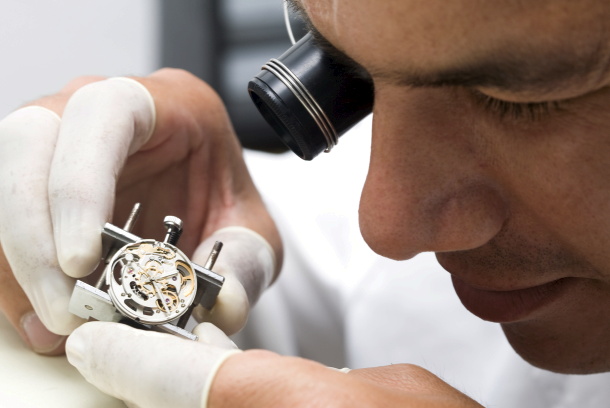
Thousands of Swiss Watchmakers’ Jobs at Risk

Swiss Watchmakers

Thousands of Swiss watchmakers are facing an uncertain future from 1 August, when the state-funded furlough program comes to an end.

Employers will have to find a way to pay their salary, or let them go.

The furlough scheme, widely used during the Covid pandemic, was never intended to meet such long-term needs as the ongoing decline in demand for luxury watches.

The industry has been relying heavily on support from the government, which has until now covered 80 per cent of furloughed workers’ salaries.

But a decline in global demand since the second half of 2023 shows little sign of recovery.

Smaller and mid-market brands are feeling the squeeze more than large, high-end brands such as Rolex, Patek Philippe, and may be forced to lay off staff.

Watchmakers avoid permanent job losses wherever possible, because of the difficulties in recruiting skilled workers when demand picks up.

Many watchmaking companies have put workers on short-time working even if they have been able to avoid temporary retrenchments.

Swiss watch exports were down 2.8 per cent by value in 2024, according to the Federation of the Swiss Watch Industry, with sales in China down by almost 26 per cent.

Last September we reported that Girard-Perregaux and Ulysse Nardin, (sold off by the Kering Group), had put 15 per cent of their workforce on short-time working and that 40 companies – mostly tool, machinery or component suppliers – applied for permission to cut their workers’ hours in Jura, one of Switzerland’s 26 cantons.

Source: DCLA

Thursday, 17 July 2025

Hundreds of Layoffs at Loss-Making Ekati

Hundreds of Layoffs at Loss-Making Ekati

Hundreds of workers have been laid off at the loss-making Ekati diamond mine, in Canada’s Northwest Territories, as owners Burgundy say falling prices have made some of its operations “sub-economic”.

Open pit work at Point Lake kimberlite pipe has been suspended, although operations are continuing at the underground Misery mine 2km away.

Burgundy, the Australian miner that bought Ekati for $136m in 2023, said yesterday (Wednesday 16 July) that “several hundred employees and contractors” were affected, but did not provide an exact figure.

The company requested a trading halt on the Australian Securities Exchange ahead of the layoff announcement.

Workers reportedly learned of the job losses when rotation flights to the remote were cancelled on Wednesday morning – ahead of the actual announcement.

The job losses at Ekati follow layoffs elsewhere in diamond mining, notably the loss of several hundred more jobs at the state-owned Zimbabwe Consolidated Diamond Company (ZCDC).

Ekati, together with Canada’s two other mines – Diavik and Gahcho Kue – is facing the possibility of closure before the end of its lifetime because of dwindling prices. Diavik is due to close in 2029.

Diamond mining is key to NWT’s economy, representing over a quarter of its GDP, but miners have been hit hard by the downturn. Diavik mine lost CAD 127m (USD 94.6m) in 2024.

Source: DCLA

Wednesday, 16 July 2025

Signet Slips in NRF Retail Rankings

Signet Slips in NRF Retail Rankings

Signet slipped from 67th to 69th place in the NRF’s annual rankings of the biggest grossing retailers in the US.

Sales shrank by 5 per cent, down to $6.21bn, according to National Retail Federation figures released last Thursday (10 July).

Signet, the world’s largest retailer of diamond jewelry, which includes Kay Jewelers, Zales, Jared and Banter by Piercing Pagoda, peaked in 56th position in 2023.

In 2020, when the Covid pandemic hit, it was 98th, in 2021 it was 78th and in 2022 it was 66th. 

Walmart tops the 2025 NRF list, as it has done without exception since the 1990s, with US retail sales of $568.70 bn, representing a year-on-year sales growth of 7 per cent.

Amazon is second ($273.66bn, 9 per cent growth) and Costco is third ($273.66bn, 4 per cent growth).

The list, compiled by data, research, and analytics company Kantar, presents “a picture of ongoing, steady trends and few real surprises,” said NRF.

“In the midst of economic and political uncertainty, perhaps there’s some comfort in a ‘relatively static’ retail environment.”

In a separate ranking, National Jeweler magazine’s annual State of the Majors report published in May, Signet remained the biggest-grossing jeweler in North America.

Sales slipped from $6.7bn in 2023 to $6.3bn, according to figures obtained by National Jeweler. Watch and jewelry sales at second-placed Walmart were down slightly from $3.58bn to $3.52bn.

Source: DCLA

De Beers Group extends Desert diamonds into bridal with a new palette of lighter hues

  De Beers Group today announces the next chapter of Desert diamonds: an extension of the industry-wide beacon concept into the bridal marke...