
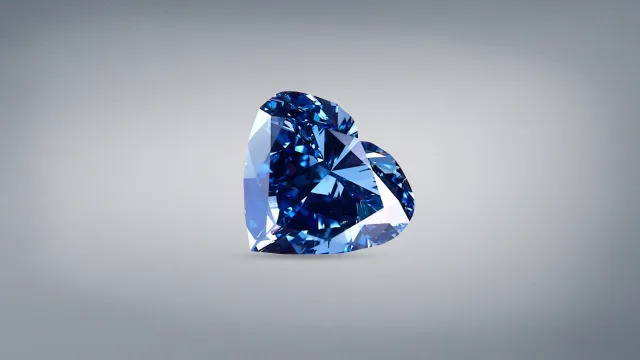
Among the world’s most exceptional gemstones, few diamonds capture the imagination quite like the Heart of Eternity Diamond. A 27.64 carat Fancy Vivid Blue heart shaped diamond, this extraordinary gem represents one of the rarest combinations in the diamond world: exceptional size, intense colour, remarkable clarity, and a story filled with mystery, intrigue, and immense value.
Blue diamonds are among the rarest natural diamonds ever discovered. Their colour comes from trace amounts of boron trapped within the diamond crystal structure during formation deep beneath the Earth’s surface. Unlike traditional colourless diamonds, where rarity is often measured by size and clarity, coloured diamonds are judged by the strength and beauty of their colour, with vivid blues commanding extraordinary premiums.
The Heart of Eternity Diamond sits at the highest level of this category, officially graded Fancy Vivid Blue by the Gemological Institute of America (GIA), placing it among the finest blue diamonds ever evaluated.
A Diamond Born from One of the World’s Most Famous Mines
The story of the Heart of Eternity Diamond begins at the legendary Cullinan Diamond Mine in South Africa, formerly known as the Premier Diamond Mine.
This historic mine has produced some of the most important diamonds in history, including the famous Cullinan Diamond, discovered in 1905. The Cullinan Diamond weighed an extraordinary 3,106 carats in rough form and was later cut into nine major diamonds, many of which became part of the British Crown Jewels.
The same geological conditions that created the Cullinan Diamond also produced some of the world’s most valuable blue diamonds, including the Heart of Eternity.
A Gemstone From a Category of Extreme Rarity
At 27.64 carats, the Heart of Eternity is not the largest blue diamond ever discovered, but its combination of size, colour, and shape places it in a category occupied by only a handful of legendary stones.
Natural blue diamonds represent only a tiny fraction of all diamonds mined worldwide. Within that group, stones with a vivid blue colour, significant carat weight, and exceptional quality are almost impossible to replace.
The heart shape adds another layer of uniqueness. While round brilliant diamonds dominate the market for maximum brilliance, a perfectly executed heart shaped diamond requires exceptional rough material and highly skilled cutting to preserve both beauty and weight.
The Mystery Behind the Diamond
The Heart of Eternity Diamond was revealed to the world in the late 1990s after being cut from a much larger rough blue diamond. It became part of the collection of De Beers, which showcased the stone as one of the most remarkable examples of natural blue diamond beauty.
The diamond later attracted significant attention when reports linked it to private ownership and high profile collectors. Like many of the world’s greatest diamonds, its current ownership has remained surrounded by secrecy, adding to its legendary status.
A Value That Could Reach Historic Levels Today
When exceptional blue diamonds appear at auction, they frequently achieve some of the highest prices ever recorded for gemstones.
The famous Blue Moon of Josephine, a 12.03 carat Fancy Vivid Blue diamond, sold for more than US$48 million in 2015, setting a record price per carat at the time.
The Heart of Eternity Diamond is more than twice the size of the Blue Moon of Josephine, while also possessing the highly desirable Fancy Vivid Blue classification. If a diamond of this quality entered the market today, many experts believe it could command a valuation reaching hundreds of millions of dollars.
Why the Heart of Eternity Matters to the Diamond World
The Heart of Eternity Diamond represents more than just a beautiful gemstone. It is a geological miracle, created over billions of years under extreme conditions, then transformed by human craftsmanship into a piece of natural art.
For diamond professionals and collectors, stones like the Heart of Eternity demonstrate why exceptional natural diamonds remain among the world’s most sought after assets. Their rarity cannot be manufactured, their history cannot be replicated, and their value is driven by the simple reality that there are only a few truly exceptional examples in existence.
At DCLA, the study, grading, and understanding of diamonds is built around recognising these unique characteristics. Every extraordinary diamond tells a story, from its formation deep within the Earth to the moment it is revealed as one of nature’s rarest creations.




No comments:
Post a Comment