
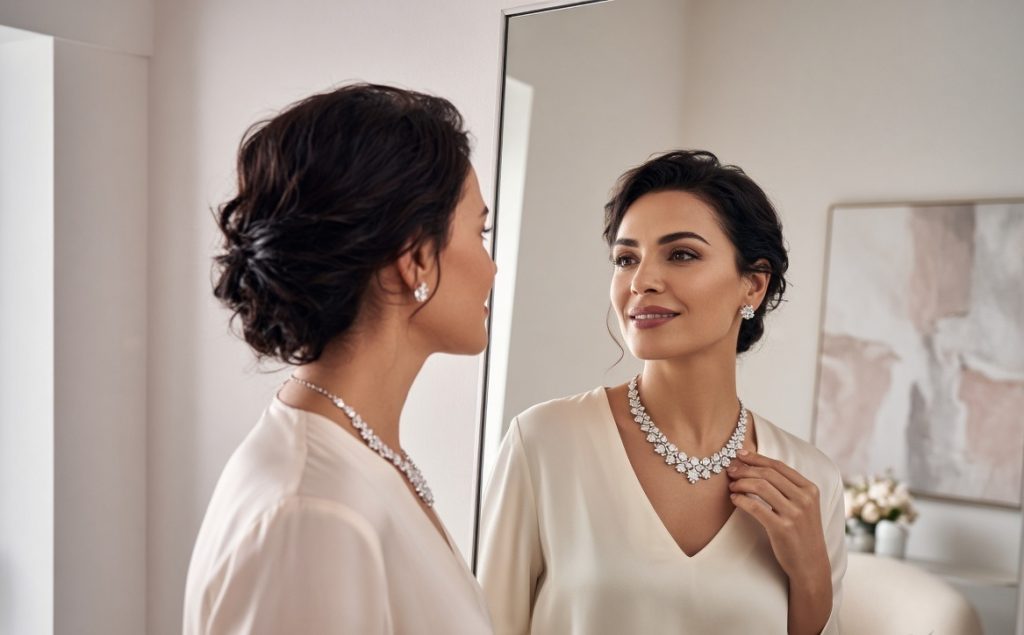
Swarovski’s chief executive has told the Financial Times that falling prices for laboratory-grown diamonds are enabling more women to buy diamond jewellery for themselves, rather than waiting for it to be given as a romantic gift.
The comments highlight a wider shift in the way consumers relate to diamonds and fine jewellery. Traditionally associated with engagements, anniversaries and other relationship milestones, diamond jewellery is increasingly being positioned as a form of personal expression, self-reward and financial independence. The romance of the diamond is not disappearing; it is becoming more personal and less dependent on a partner or a formal occasion.
Laboratory-grown diamonds have accelerated this change. As production costs and retail prices have fallen, diamond-set jewellery has become accessible to a broader customer base. Consumers who may previously have considered diamond jewellery unattainable can now enter the category at a lower price point, while those purchasing for themselves can choose pieces based on personal style rather than the expectations attached to a traditional gift.
For Swarovski, which operates across crystal, fashion jewellery and fine jewellery, laboratory-grown diamonds provide an opportunity to move further into the premium sector without the price barriers associated with natural stones. The company can present diamonds as contemporary, wearable and attainable appealing to customers who may be buying a meaningful piece to mark a personal achievement, career milestone or simply a moment of self-indulgence.
This shift towards self-purchase is one of the most closely watched developments in jewellery and watches. Brands ranging from De Beers to newer laboratory-grown specialists are adapting their communications to focus less exclusively on romance between couples and more on individuality, empowerment and personal reward. The message is increasingly that a diamond does not need to be given by someone else to be emotionally significant.
The trend also creates challenges for the natural diamond sector. Producers are already facing pressure from weaker rough-diamond prices, changing consumer expectations and growing scrutiny around provenance and sustainability. If consumers buying for themselves increasingly choose laboratory-grown diamonds because of their affordability and compatibility with modern messaging, natural diamond companies will need to work harder to communicate the value of rarity, origin, longevity and heritage.
The key question for the industry is whether self-purchase becomes a permanent pillar of jewellery marketing rather than a temporary response to changing consumer behaviour. As the boundaries between romantic gifting and personal luxury continue to blur, the meaning of the diamond itself is evolving from a symbol primarily of commitment between two people to one that can also represent ambition, independence and self-expression.
For the DCLA, this changing relationship with diamonds underlines the importance of communicating the distinct qualities of natural diamonds while recognising the broader cultural shift taking place across the jewellery market. The future of the category may depend on its ability to preserve the emotional power of the diamond while expanding the occasions, customers and stories connected to it.



No comments:
Post a Comment