
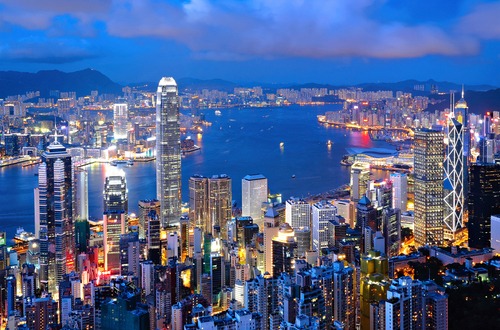
Hong Kong’s jewellery and watch industry is experiencing a remarkable recovery, with sales jumping more than 20% in September 2026. The figures provide an interesting contrast to the retail environments in Australia and the United States, where higher borrowing costs, household debt and the rising cost of doing business are putting pressure on retailers, forcing some well-known businesses to close stores or restructure.
The contrasting results raise an important question: why are some economies and retail sectors performing considerably better than others?
Hong Kong jewellery sales lead the retail recovery
Sales of jewellery, watches and valuable gifts in Hong Kong increased by 20.3% year on year in September 2026, reaching HK$4.706 billion (approximately US$603 million), according to provisional figures released by the Hong Kong Census and Statistics Department on November 3.
Sales volume also increased by 7%, indicating that the growth reflects increased purchasing activity rather than simply higher prices.
The jewellery and watch category was the strongest-performing major retail sector during the month, comfortably outperforming Hong Kong’s overall retail market, where sales value increased by 6.4%.
The positive trend has been building throughout the year. For the first nine months of 2026, jewellery, watch and valuable gift sales rose 22.4% to HK$45.82 billion (approximately US$5.87 billion), while sales volume increased by 6.8%.
Interest rates: A significant difference between the three markets
One potential explanation for the different retail environments is the cost of borrowing and the impact of monetary policy on households and businesses.
As of November 6, 2026, the respective central bank policy rates are:
- United States: Federal Reserve target range of 3.75% to 4.00%.
- Australia: Reserve Bank of Australia cash rate of 4.85%, following a 0.25 percentage point increase on November 3.
- Hong Kong: Hong Kong Monetary Authority base rate of 4.25%, following the US Federal Reserve’s October decision to leave rates unchanged.
These figures are not directly equivalent to the mortgage, business lending or consumer borrowing rates paid in each market, but they provide an indication of the different monetary conditions.
Australia currently has the highest policy rate of the three. Higher interest rates can place considerable pressure on Australian households, particularly those carrying large mortgages, while also increasing financing costs for businesses.
When households devote more of their income to mortgage repayments, utilities, food and other essential expenses, discretionary purchases are often among the first areas where spending is reduced. Jewellery, watches and luxury goods can be particularly affected.
For retailers, higher borrowing costs can also make it more expensive to finance stock, maintain premises, employ staff and manage day-to-day operations.
In the United States, although the Federal Reserve’s policy rate is lower than Australia’s, American consumers continue to face significant household debt, financing costs and pressure from the cost of living.
Hong Kong’s situation is different. Its currency is linked to the US dollar through a currency peg, meaning its monetary conditions are closely influenced by Federal Reserve policy. Its base rate therefore broadly follows US interest rate movements, although local banking and interbank market conditions also influence actual borrowing costs.
Australia and the United States: Retailers under pressure
Across Australia, retailers are navigating a difficult combination of high household expenses, mortgage repayments, wages, commercial rents and operating costs.
The result is increasing pressure on discretionary retail spending. When consumers become more cautious, businesses selling non-essential products can experience a significant reduction in demand.
The United States is facing its own retail challenges, with a number of established retail chains announcing store closures, restructuring programmes and changes to their business models.
It is important to recognise that store closures do not necessarily mean an entire economy is contracting. Retailers also close locations because of changing shopping habits, online competition, lease costs and corporate restructuring. However, the broader trend highlights the difficulties facing traditional retail businesses.
Why is Hong Kong performing differently?
Hong Kong’s strong jewellery sales suggest that consumer demand can remain resilient even when global economic conditions are uncertain.
Its position as an international financial and luxury shopping centre, established tourism market and major destination for jewellery and watch trading provides advantages that are not necessarily shared by Australia or the United States.
Tourism and visitor spending can also contribute significantly to luxury retail performance. The earlier arrival of the Mid-Autumn Festival helped support visitor numbers and spending in September.
The Hong Kong government has also reported a broader retail recovery, with total retail sales increasing for the 17th consecutive month.
What does this mean for the jewellery and diamond industry?
The jewellery industry is particularly sensitive to consumer confidence, disposable income and access to credit. However, the market is not uniform.
Hong Kong’s latest figures demonstrate that demand for luxury jewellery and watches can grow strongly even while other developed economies experience retail difficulties.
For Australian jewellers, diamond dealers and retailers, the challenge is to understand the changing economic environment and adapt accordingly.
For consumers, it is also worth remembering that jewellery and watches represent different types of purchases. A luxury watch or branded jewellery piece may carry a substantial retail premium, while the underlying value of precious metals and diamonds depends on their individual characteristics and prevailing market conditions.
The bigger economic picture
The comparison between Hong Kong, Australia and the United States demonstrates that global economic conditions do not affect every country equally.
Interest rates, government policy, taxation, consumer confidence, debt levels, tourism and business operating costs all contribute to economic performance.
Hong Kong’s 20.3% increase in jewellery and watch sales is an encouraging sign for the international luxury market. Meanwhile, the challenges facing Australian and American retailers demonstrate how quickly consumer spending can be affected when the cost of living and doing business increases.
Ultimately, a healthy retail economy depends on more than just headline growth figures. It requires consumers with disposable income, businesses that can operate profitably and an economic environment that encourages spending, investment and long-term confidence.
Source: DCLA


